



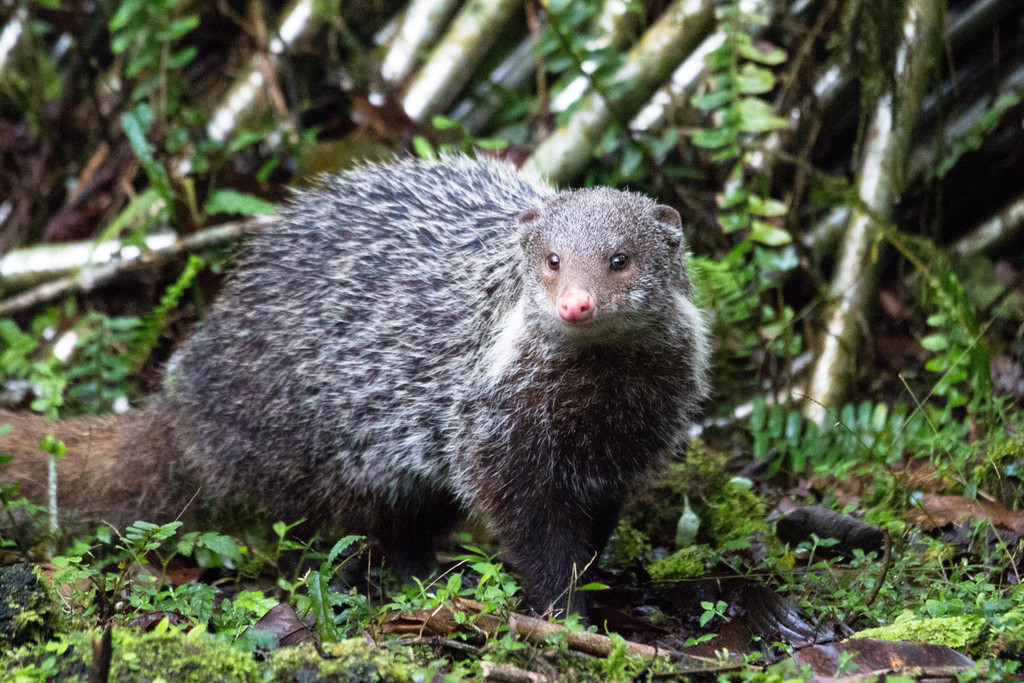
A stealthy forager of riverbanks, wetlands, and muddy forest trails in the heart of Tano
🔍 Quick Facts
- Common Name: Crab-eating Mongoose
- Scientific Name: Herpestes urva
- Family: Herpestidae
- IUCN Status: Least Concern (globally)
- Activity: Nocturnal or crepuscular (active at dusk and dawn)
- Habitat: Forested streams, riverbanks, swamps, and wet lowland forests
- Size: 1–1.3 kg; ~40–50 cm body length, with a long bushy tail
⚠️ Note: While Herpestes urva is native to Asia, in West Africa a closely related species known as the Marsh Mongoose (Atilax paludinosus) fills a very similar ecological niche. This article combines elements of both, as they are often confused or interchanged in ecological records.
🌍 Distribution and Habitat
In West Africa, the mongoose most often associated with riverine habitats is the Marsh Mongoose, but local communities often refer to it as a “crab hunter” or “water mongoose.”
In the Tano River Basin, it inhabits:
- Riverbanks, especially in the Tanoé-Ehy Forest wetlands
- Marshes, oxbow lakes, and flooded forest trails
- Occasionally near human settlements, scavenging or hunting crabs and rodents
They are rarely seen, but leave behind distinct muddy tracks and droppings full of shell fragments.
🦝 Appearance
- Coat: Dark brown to black fur, often sleek and water-repellent
- Tail: Long, bushy, and dark, aiding in balance
- Snout: Long and pointed, perfect for probing crevices
- Feet: Partially webbed toes, well-suited for walking in mud or shallow water
Its look is similar to other mongooses but adapted for amphibious life.
🌿 Behavior and Diet
- Solitary and elusive, moving silently at dusk or dawn
- Diet:
- Crabs, frogs, fish, insects, snails
- Occasionally small rodents, birds, and fruit
- Excellent swimmer and climber, can dive and dig with ease
Leaves behind twisted droppings containing shell bits near waterholes or under bridges.
🐣 Reproduction
- Breeds once or twice a year
- Likely gives birth to 2–4 pups in a burrow or hidden nest
- Offspring stay with the mother until they can hunt on their own
- Little is known about mating rituals in the wild
🧭 Ecological Role
The crab-eating mongoose is a:
- Natural pest controller, reducing crab, snail, and rodent populations
- Scavenger, helping clean up carrion along rivers
- Prey to leopards, pythons, and large raptors
Its foraging shapes the shoreline micro-ecosystem, especially in tidal or marsh zones.
⚠️ Threats
Although adaptable, it faces threats in the Tano River basin:
- 🏞 Habitat loss from wetland draining and farming
- 🛢 Pollution from gold mining affecting aquatic prey
- 🧱 Trapping and hunting in some rural areas
- ❌ Human conflict, especially when it raids poultry or fish traps
🌊 Why It Matters for the Tano River
The presence of a crab-eating mongoose near the Tano River signals:
- A functioning riverbank ecosystem
- Healthy populations of crabs, amphibians, and aquatic insects
- A reminder that not all river wildlife swims or flies — some slink silently in the mud
Its role connects land and water, helping maintain the natural balance along the river’s edge.
🔗 Seen mongoose tracks or shells scattered in the forest? Heard stories of water-going animals near the riverbanks? Help us map their presence at [TanoRiver.com/submit]


