



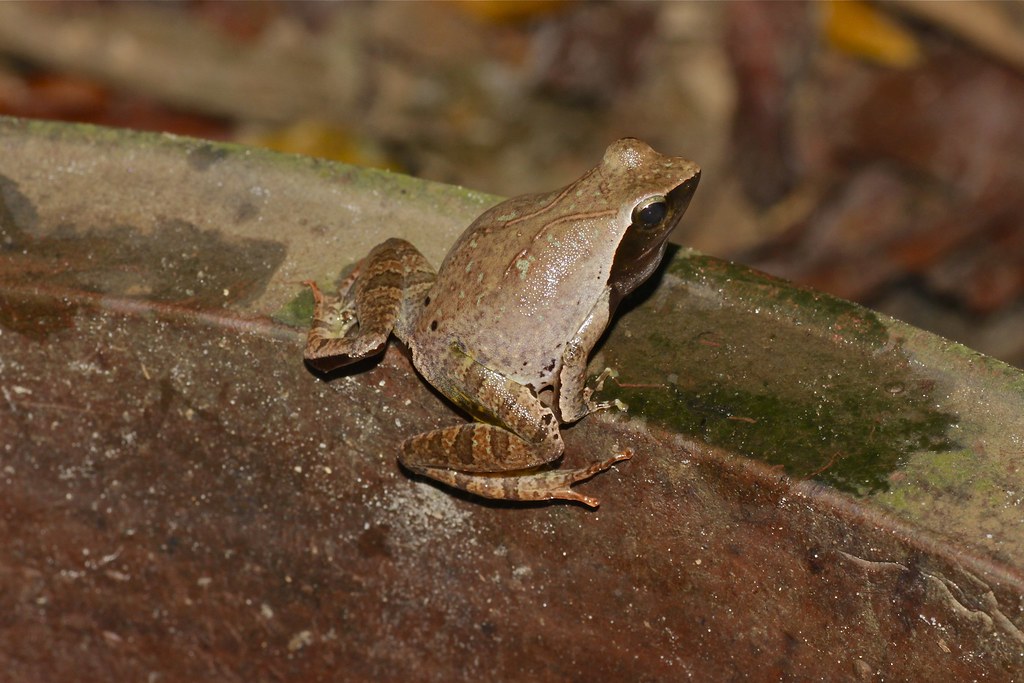
A tiny forest-floor jumper, hiding in plain sight among the wet leaves of the Tano Basin
🔍 Quick Facts
- Common Name: Folded-Limb Puddle Frog
- Scientific Name: Phrynobatrachus plicatus
- Family: Phrynobatrachidae (African puddle frogs)
- IUCN Status: Least Concern, but habitat-sensitive
- Size: ~16–23 mm (very small)
- Activity: Diurnal and nocturnal
- Habitat: Lowland rainforest floor, near pools, puddles, and swampy clearings
🌍 Distribution and Habitat
Phrynobatrachus plicatus is found in West Africa, with known populations in:
- Côte d’Ivoire, Ghana, Liberia, and Sierra Leone
In the Tano River Basin, it is likely to occur:
- On the moist forest floor of the Tanoé-Ehy Forest Reserve
- Around temporary puddles, leaf litter, and small depressions that collect water
- In cleared patches with partial canopy — not deep swamp, but moist and shaded
It is a terrestrial species, adapted to microhabitats formed after rain.
🐸 Appearance
- Color: Usually brown or grey with dark blotches or mottling, often irregular
- Size: Among the smallest frogs in the region
- Limbs: Short, with a characteristic folded hindlimb posture when at rest
- Skin: Smooth or finely granular
- Eyes: Prominent, helping it detect prey and threats
Its camouflage allows it to vanish among the wet leaf litter of the forest.
🌿 Behavior and Ecology
- Forages mostly at ground level, hopping through underbrush
- Diet: Tiny invertebrates — ants, mites, springtails, gnats
- Activity: Peak activity occurs after rains, both day and night
- Vocalization: Likely produces soft chirping or clicking, though little is recorded
It is cryptic and rarely seen, except during short breeding periods.
🪺 Breeding
- Breeds in ephemeral puddles and rain-fed pools
- Eggs are laid directly in water
- Tadpoles are aquatic but develop rapidly to match the temporary nature of their habitat
- Reproduction is likely opportunistic, based on rainfall availability
🧭 Ecological Importance
Despite its small size, Phrynobatrachus plicatus plays an important role in:
- Invertebrate regulation, feeding on micro-pests
- Serving as prey for reptiles, birds, and larger amphibians
- Acting as an indicator of environmental health, especially in disturbed forests
Its presence suggests a forest still rich in microhabitat diversity.
⚠️ Conservation Concerns
Though listed as Least Concern, local populations are vulnerable due to:
- 🌳 Habitat loss from deforestation and land conversion
- 🧱 Soil compaction and erosion, which destroys micro-pools
- 🛢 Contamination from mining and pesticide runoff
- 🔇 Research neglect, as tiny frogs are often overlooked
In the Tano Basin, it relies on clean rainwater puddles and leaf-litter cover.
🌊 Why It Matters for the Tano River
The Folded-Limb Puddle Frog is:
- A symbol of forest-floor resilience
- An unseen actor in nutrient cycling and food webs
- A reminder that protecting the river means protecting even the smallest life at its edge
Its call may be faint, but its message is strong: every drop of forest water matters.
🔗 Seen tiny frogs on the ground after rain? Know a place where puddles come alive with life? Help us document local frogs at [TanoRiver.com/submit]


