



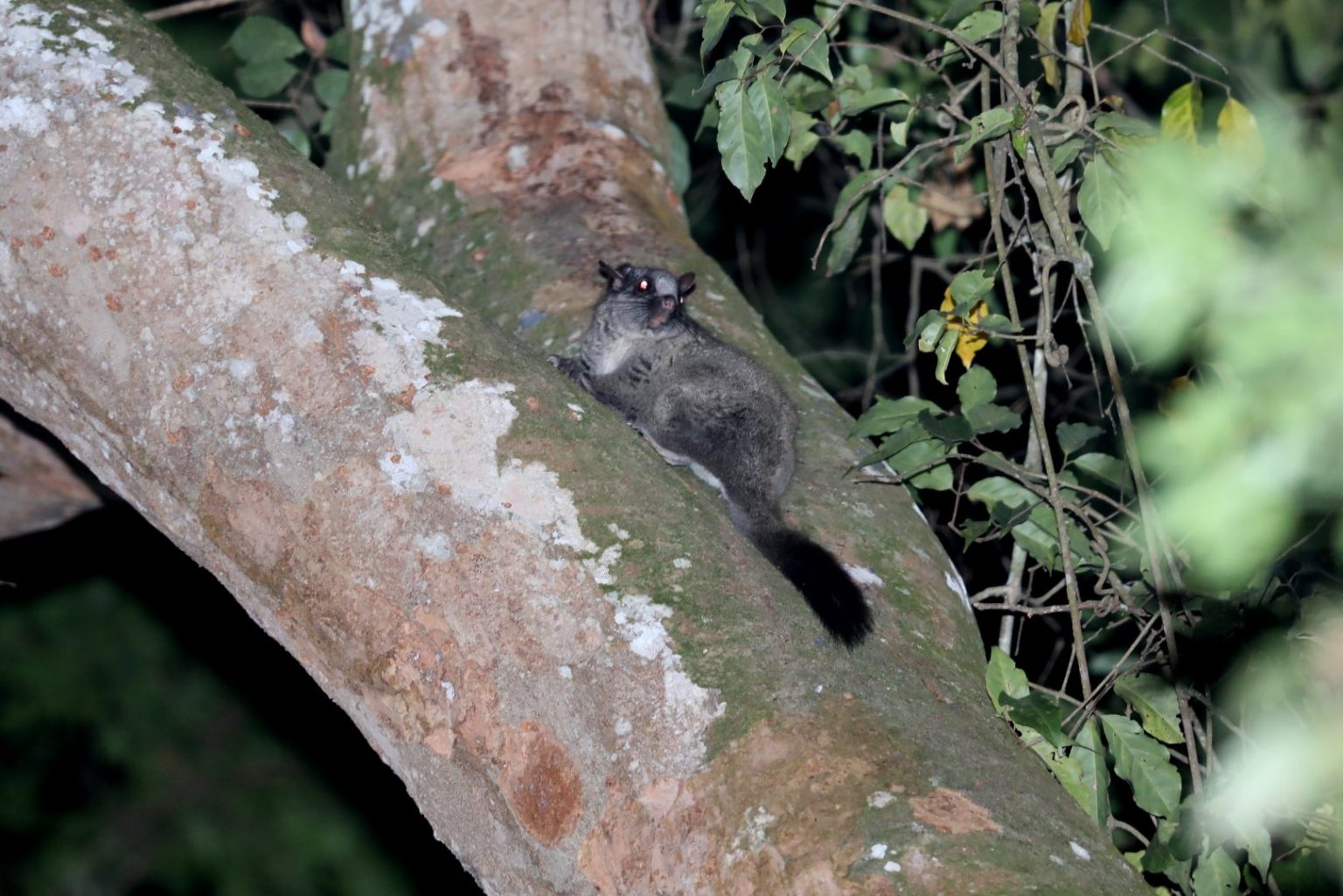
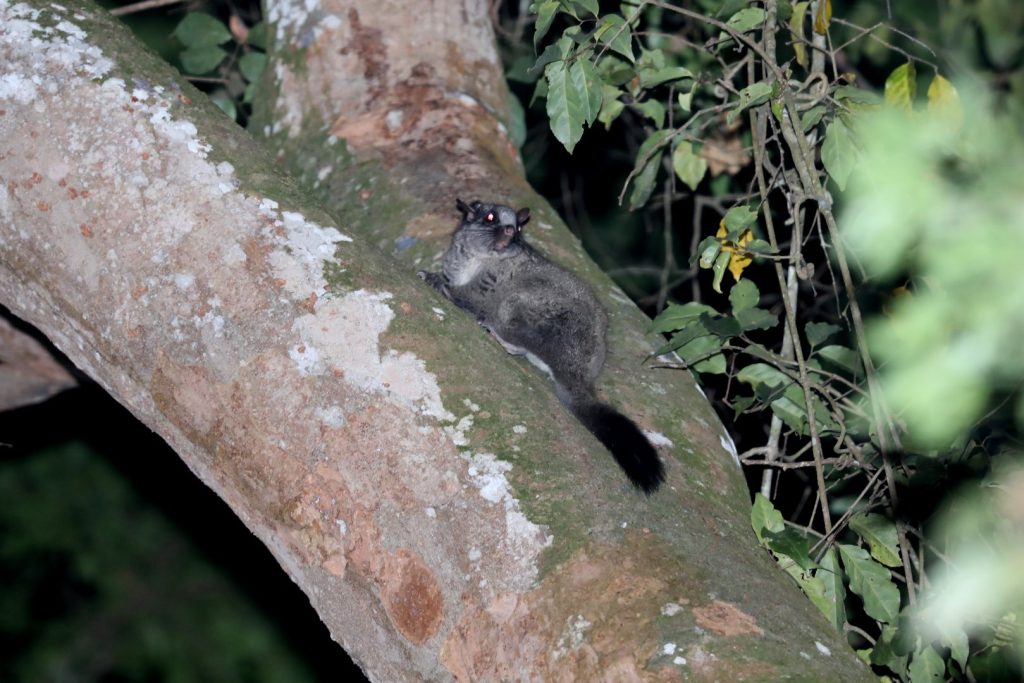
A tiny, big-eyed jumper in the treetops of the Tano night
🔍 Quick Facts
- Common Name: Prince Demidoff’s Bushbaby
- Scientific Name: Galagoides demidovii
- Family: Galagidae (bushbabies or galagos)
- IUCN Status: Least Concern
- Activity: Nocturnal
- Habitat: Lowland and swamp forests, forest edges
- Size: ~12–15 cm body, ~18 cm tail
- Weight: 50–85 grams
🌍 Distribution and Habitat
This species is widespread in West and Central Africa, including:
- Ghana, Côte d’Ivoire, Liberia, Nigeria, and Cameroon
In the Tano River region, it may inhabit:
- The Tanoé-Ehy Forest Reserve
- Riparian woodlands, secondary forest patches, and farm–forest edges
- Tree canopies along quiet, undisturbed river zones
It is one of the smallest primates in Africa, and among the most difficult to observe.
🐒 Appearance and Adaptations
- Fur: Reddish-brown to grey-brown, soft and dense
- Eyes: Very large and reflective, adapted for night vision
- Tail: Long, bushy, and used for balance
- Ears: Thin and mobile — foldable when sleeping
Its lightweight body and strong hind limbs allow it to leap many times its length.
🌿 Behavior and Ecology
- Strictly nocturnal: Active at dusk and dawn
- Moves in quick, silent bounds through shrubs and lower branches
- Diet: Insects (especially moths and beetles), tree gums, and fruits
- Emits high-pitched calls, often described as whistles or clicks
Spends the day sleeping in leaf nests, vine tangles, or natural hollows.
🐣 Reproduction
- Breeds seasonally
- Females typically give birth to 1–2 young
- Newborns are left in nests while the mother forages, returning frequently to nurse
Young bushbabies cling to the mother’s belly when traveling at night.
🧭 Ecological Role
Prince Demidoff’s Bushbaby contributes to:
- Pest control by eating insects
- Seed dispersal from fruits
- Tree health by feeding on gums and pruning branches
It is an indicator of healthy understory and mid-canopy structure.
⚠️ Conservation Concerns
While listed as Least Concern, it faces growing threats in places like the Tano Basin:
- 🌳 Deforestation for farming, logging, and mining
- 🔥 Habitat fragmentation, isolating populations
- 🪤 Vulnerability to snaring or bushmeat hunting, though rarely targeted
Its secretive nature means declines may go unnoticed without focused surveys.
🌊 Why It Matters for the Tano River
This bushbaby is:
- A tiny ambassador of forest nocturnal life
- Proof that primates do not only live in daylight
- A symbol of hidden biodiversity, thriving quietly under the canopy
To protect the Prince Demidoff’s Bushbaby is to preserve the nightlife of the forest — and all its delicate rhythms.
🔗 Have you heard high-pitched chirps in the forest after dark? Seen tiny glowing eyes in your flashlight beam? Share your sightings at [TanoRiver.com/submit]


