



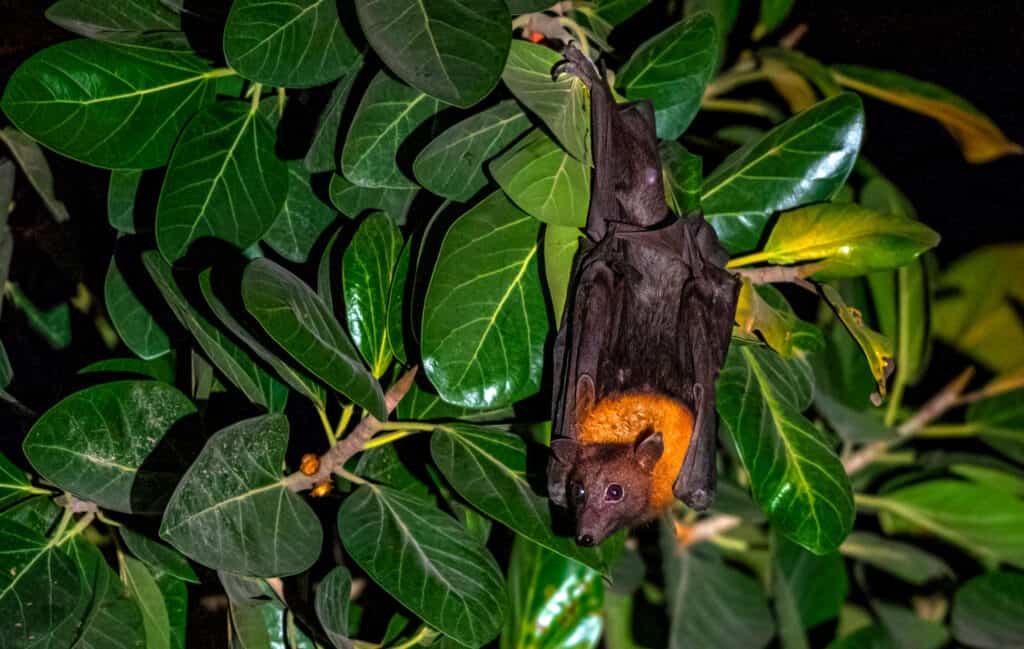
A rare forest pollinator fluttering through the shadows of the Tano canopy
🔍 Quick Facts
- Common Name: Zenker’s Fruit Bat
- Scientific Name: Scotonycteris zenkeri
- Family: Pteropodidae (Old World Fruit Bats)
- IUCN Status: Near Threatened
- Activity: Nocturnal
- Habitat: Tropical lowland forests and swampy undergrowth
- Weight: ~30–60 grams
🌍 Distribution and Habitat
Zenker’s Fruit Bat is found in the Upper Guinean rainforest belt of West Africa, including:
- Côte d’Ivoire, Ghana, Liberia, Nigeria, and Sierra Leone
In the Tano River region, it may occur:
- In the Tanoé-Ehy Forest Reserve, a biodiversity hotspot
- Within swamp forests, canopy gaps, and fruiting tree zones
- Roosting in dense foliage, palms, or under broad leaves
It is rarely seen and was once considered one of Africa’s most elusive fruit bats.
🦇 Appearance
- Size: Small for a fruit bat
- Fur: Soft, greyish-brown to reddish-brown, often with white markings
- Wings: Narrow and rounded for maneuvering through forest clutter
- Face: Short muzzle, large eyes, and small rounded ears
It resembles a cross between a mini flying fox and a forest shrew, with a gentle expression and delicate body.
🌿 Behavior and Ecology
- Nocturnal and frugivorous (fruit-eating)
- Feeds on:
- Figs, guavas, breadfruit, and wild berries
- Occasionally visits flowering trees for nectar
- Plays a vital role in pollination and seed dispersal, especially in dense forest interiors
Often flies low under the canopy, zigzagging through vines and branches.
🪺 Roosting and Reproduction
- Roosts solitarily or in small groups
- Hides in leafy tangles, tree cavities, or beneath large leaves
- Breeding season poorly understood, but likely tied to fruiting peaks
Due to its rarity, very little is known about its reproductive biology in the wild.
🧭 Ecological Importance
Zenker’s Fruit Bat is a key forest pollinator and seed disperser:
- Helps regenerate forests by spreading seeds over wide areas
- Pollinates night-blooming trees that depend on bats
- Supports biodiversity from canopy to understory
Its feeding helps maintain the health and connectivity of tropical ecosystems like those in the Tano basin.
⚠️ Conservation Concerns
Listed as Near Threatened, the Zenker’s Fruit Bat is vulnerable to:
- 🌳 Deforestation, especially of old-growth fruiting trees
- 🛢️ Habitat degradation from mining and agriculture
- 🔥 Forest fragmentation, reducing feeding and roosting range
- ❌ Lack of data, making protection efforts difficult
Its disappearance would signal a deeper breakdown in the forest’s pollination network.
🌊 Why It Matters for the Tano River
Zenker’s Fruit Bat is:
- A quiet architect of the forest, spreading life with every flight
- An indicator of undisturbed tropical habitats
- A symbol of the hidden biodiversity still thriving in the Tano region
Though rarely seen, it is everywhere the forest bears fruit.
🔗 Have you noticed unusual bats in fruit trees near your village or farm? Share your stories, photos, or audio recordings at [TanoRiver.com/submit]


