



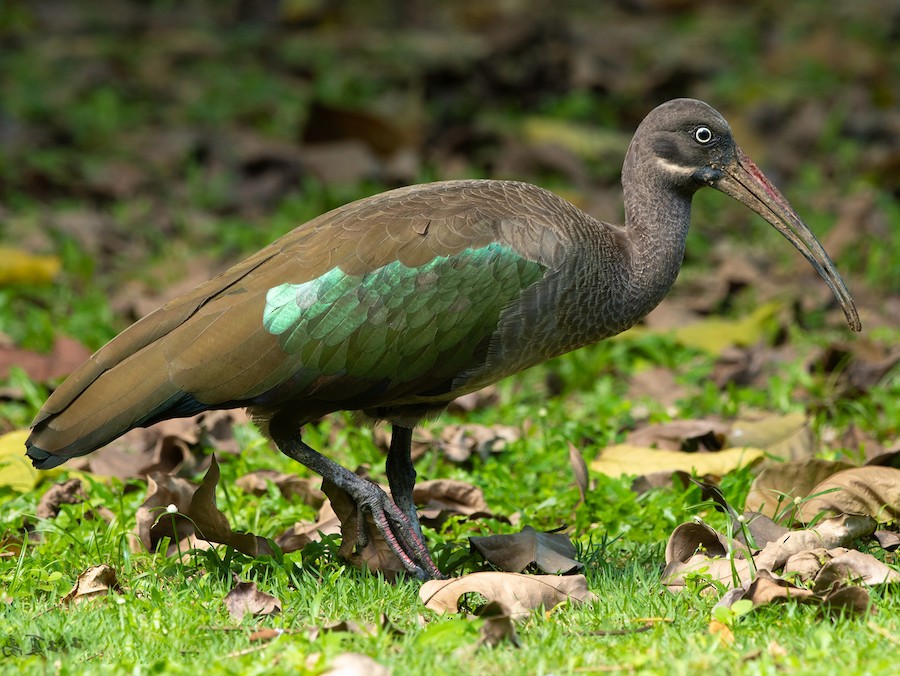
A loud voice at dawn, a graceful presence at the Tano’s muddy edges
🔎 Scientific Name: Bostrychia hagedash
Common names: Hadada ibis, Laughing ibis
Family: Threskiornithidae
IUCN Status: Least Concern
🌍 Distribution and Habitat
The Hadada ibis is found throughout sub-Saharan Africa, thriving in both wild and urban landscapes.
🏞️ In the Tano River region, it frequents:
- Riverbanks, flooded fields, and wetlands near:
- The Tano’s forested edges
- Rice paddies, agricultural margins, and savanna mosaics
- Also observed near village peripheries, roosting in tall trees
It adapts well to human-modified environments, making it one of the most recognizable wading birds of the region.
🐦 Physical Description
- Size: 65–75 cm (25–30 inches) in length
- Coloration:
- Generally grey-brown with a metallic green-purple sheen on the wings
- Long, curved black bill with a reddish base
- Bare face and large wings
- In flight: Broad wings and slow flapping, with loud calls echoing overhead
📣 The Famous Call
- The Hadada is named for its distinctive “haa-haa-haa-de-dah” call, often heard at:
- Dawn and dusk
- When disturbed or flying over homes
- Its call is used in folklore to announce rain, visitors, or warnings
To many, the Hadada’s cry marks the rhythm of rural life.
🌿 Behavior and Ecology
- Feeding habits:
- Forages in moist soil and muddy ground, using its long bill to probe for:
- Earthworms, insects, snails, grubs, and small crustaceans
- Forages in moist soil and muddy ground, using its long bill to probe for:
- Activity:
- Diurnal, often active in the early morning
- Feeds in groups or alone, walking slowly with rhythmic pecking
- Roosting:
- Sleeps in tall trees near water or human dwellings
- Returns to traditional roosting sites each night
🪹 Nesting and Breeding
- Nests in trees, using sticks, grass, and leaves
- Both parents build the nest and care for the chicks
- Female lays 2–4 eggs, incubated for ~3 weeks
- Chicks fledge at 6–7 weeks and remain dependent for some time
They may reuse nests over multiple seasons.
🌱 Ecological Role
- Soil aerators: Their foraging disturbs the soil, helping with nutrient cycling
- Control insect populations, including agricultural pests
- Serve as prey for larger raptors and scavengers when nesting
Hadadas are important indicators of wetland health and biodiversity.
🧭 Cultural Significance
In many African cultures, the Hadada:
- Is associated with rain, change, or ancestral presence
- Is sometimes seen as a “watcher” or announcer of spirits
- Its call is mimicked in traditional songs and used in children’s games
Among farmers, it’s known as a natural pest controller.
⚠️ Conservation Notes
- Not currently threatened, but impacted by:
- Wetland degradation, especially from mining and agriculture
- Pollution and use of herbicides in fields
- Loss of roosting trees due to deforestation
They are resilient, but their populations rely on clean, shallow wetlands and tree cover.
🌊 Why It Matters for the Tano River
The Hadada Ibis is:
- A familiar and vocal guardian of wetlands
- A daily presence in both rural communities and forest edges
- A reflection of the delicate connection between people, wetlands, and wildlife
Its call at dawn is more than sound — it’s a reminder that the river is awake, alive, and listening.
🔗 Do you hear the Hadada in your village at sunrise? Share your memory or recording at [TanoRiver.com/submit]


