




A sacred spirit of the forest, now fighting for survival in the shadows of the Tano
🔎 Scientific Name: Cercopithecus roloway
Common names: Roloway monkey, White-bearded guenon
Family: Cercopithecidae (Old World monkeys)
IUCN Status: Critically Endangered
🌍 Habitat and Distribution
The Roloway monkey is one of the most endangered primates in Africa. It is endemic to:
- Southeastern Ghana and southwestern Côte d’Ivoire
🏞️ In the Tano River region, it is:
- Confined to the Tanoé-Ehy Swamp Forest and nearby remnants of Upper Guinean rainforest
- Once widespread, now restricted to isolated patches of dense forest, including:
- Flooded swamp forests
- Evergreen lowland forests near lagoons
- Undisturbed canopy zones near sacred groves
🐒 Physical Characteristics
- Size: Head-body length 40–55 cm; tail about the same length or longer
- Weight: Males ~6–7 kg; females slightly smaller
- Distinctive features:
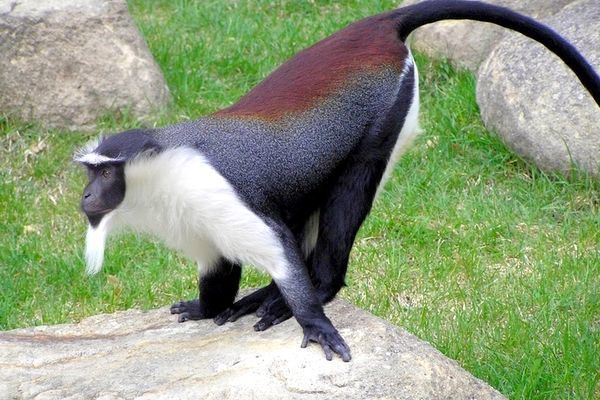
- Black body with a white throat and long white beard
- White stripe along the thigh and a reddish perineum
- Expressive brown eyes and a high-arched brow
The white beard and throat tuft make it one of the most visually striking guenons in the world.
🧬 Behavior and Ecology
- Diurnal and arboreal: active during the day, living in the forest canopy
- Social structure:
- Lives in small troops of 5–15 individuals
- Group includes one dominant male and multiple females with offspring
- Diet:
- Omnivorous, with a preference for:
- Fruits, flowers, seeds
- Occasional insects, young leaves, and resin
- Omnivorous, with a preference for:
- Role in ecosystem:
- Important seed dispersers, contributing to forest regeneration
They are silent and elusive, often staying high in the trees to avoid predators.
🧙🏾♀️ Cultural and Spiritual Role
In many Akan and Nzema traditions, the Roloway monkey is:
- Regarded as a symbol of forest wisdom and balance
- Protected in some areas by traditional taboos and totemic beliefs
- Referred to as a “child of the sacred groves”, especially near ancestral forests linked to the river god Ta Kora
Local legends tell of the monkey as a watcher of the forest, signaling danger and reminding humans of their duties to nature.
⚠️ Threats to Survival
The Roloway monkey is critically endangered due to:
- 🪓 Deforestation:
- Logging, agricultural expansion, and cocoa farming
- Destruction of key forest corridors along the Tano and its tributaries
- 💣 Hunting for bushmeat:
- Despite protective laws, they are targeted for their meat and fur
- Slow reproduction and small troop size make recovery difficult
- 🏗️ Mining and Wetland Loss:
- Gold mining (including illegal galamsey) damages the forest buffer zones
- Wetlands critical for seasonal movement and safety are being drained
Less than 200 individuals are believed to survive in the wild today — most in unprotected or poorly enforced regions.
🛡️ Conservation Efforts
- 🌿 Tanoé-Ehy Forest Community Reserve (Côte d’Ivoire):
- One of the last strongholds of the species
- Protected by local communities and NGOs
- Area includes key wetlands and sacred groves
- 🐾 Primate conservation programs:
- Led by groups like WAPCA (West African Primate Conservation Action)
- Focused on habitat restoration, anti-poaching patrols, and community education
- 🧒🏿 Local engagement:
- Conservation tied to cultural storytelling, youth education, and forest tourism alternatives
🌊 Why It Matters for the Tano River
The Roloway monkey is:
- A living link between forest and river
- A spirit of the canopy, sacred to both culture and ecology
- A flagship species whose protection preserves the entire wetland ecosystem
To lose it would be to lose a voice in the forest, a being that watched over the Tano long before roads and chainsaws came.
🔗 Have you seen or heard stories about the Roloway monkey? Help raise awareness by sharing at [TanoRiver.com/submit]


