



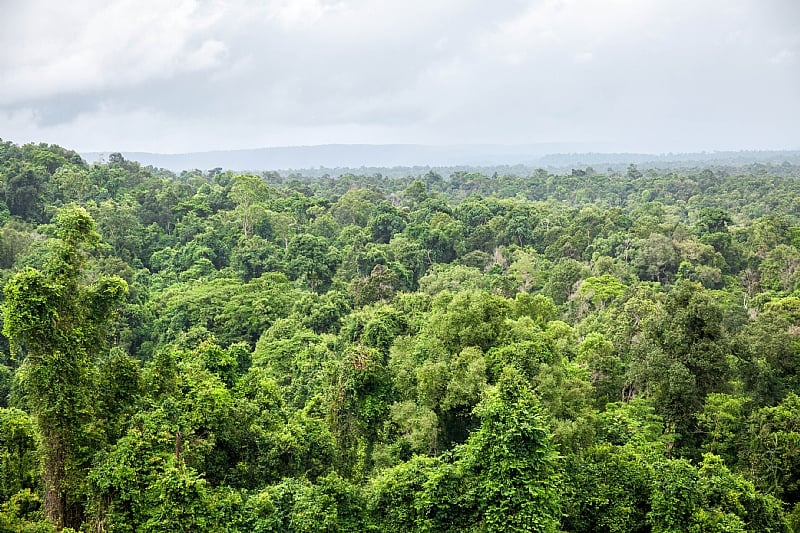
Nestled in the southwestern corner of Ghana, bordering Côte d’Ivoire, the Boin Tano Forest Reserve is a jewel of biodiversity and ecological resilience. More than a forest, it is a living testimony to the interconnectedness of land, water, culture, and wildlife in the Tano River Basin. As the Tano River winds through this lush landscape, it gives life to ecosystems ancient and rare—and to traditions deeply rooted in African heritage.
📍 Location and Overview
The Boin Tano Forest Reserve lies within the Western Region of Ghana, specifically across the Aowin/Suaman and Jomoro Districts, not far from the Ghana-Côte d’Ivoire border. It covers approximately 129 square kilometers (12,940 hectares) and forms a critical ecological corridor linking inland forests with the riparian habitats of the Tano River.
Established in 1968, the reserve falls under the jurisdiction of the Ghana Forestry Commission and is classified as a tropical moist semi-deciduous forest—a zone rich in canopy trees, undergrowth species, and diverse fauna.
🌿 Ecological Significance
A Vital Part of the Tano River Ecosystem
The Tano River, which originates in Ghana and flows westward into Côte d’Ivoire, runs directly through the reserve. This hydrological connection sustains a mosaic of aquatic, semi-aquatic, and terrestrial ecosystems. The reserve acts as a natural buffer, regulating water quality, preventing erosion, and supporting spawning grounds for fish and amphibians.
During the rainy season, parts of the forest flood, creating seasonal wetlands that become breeding sanctuaries for amphibians and migratory birds. These dynamics make the Boin Tano Forest not just a forest—but a living, breathing extension of the river itself.
🐾 Biodiversity: A Refuge for the Rare
The Boin Tano Forest Reserve is one of Ghana’s remaining strongholds for rare, threatened, and endemic species. Many of its inhabitants are either endangered or found in only a handful of ecosystems across West Africa.
Mammals
- Diana Monkey (Cercopithecus diana) – Vulnerable, and one of the most charismatic primates in the region.
- Olive Colobus Monkey (Procolobus verus) – Endangered, extremely elusive and dependent on intact forest canopies.
- Yellow-backed Duiker and Black Duiker – shrouded in the shadows of the understory.
- Bongo Antelope, Palm Civet, Golden Cat, and African Brush-tailed Porcupine.
- Occasional presence of African forest elephants and hippopotamuses near riverine areas.
Amphibians & Reptiles
- Bobiri Reed Frog (Hyperolius bobirensis) – Endangered.
- Big-eyed Forest Tree Frog (Leptopelis macrotis) – Vulnerable.
- West African Slender-snouted Crocodile (Mecistops cataphractus) – Critically Endangered.
- Dwarf Crocodile, hinge-backed tortoise, and numerous endemic lizards and snakes.
Birds
- White-breasted Guineafowl (Agelastes meleagrides) – a rare species dependent on undisturbed forest floor.
- Yellow-bearded Greenbul, hornbills, and a host of Palearctic migratory birds during specific seasons.
- The forest is recognized as an Important Bird Area (IBA) due to its avian diversity.
⛔ Environmental Threats
Despite its ecological value, the Boin Tano Forest Reserve is under siege from a number of anthropogenic pressures:
1. Illegal Mining (Galamsey)
Unregulated gold mining near and within the reserve, particularly along the Tano River, results in:
- Mercury and heavy metal pollution
- Destruction of aquatic habitats
- Forest degradation and human-wildlife conflict
2. Logging and Agricultural Encroachment
Timber extraction and conversion of forest lands to cocoa farms or palm oil plantations continue to reduce forest cover and fragment wildlife corridors.
3. Poaching and Bushmeat Trade
Several protected species, including primates and antelopes, are hunted for food or sale, threatening population sustainability.
💚 Conservation Efforts and Community Involvement
The Ghana Forestry Commission oversees forest protection, but resources and enforcement capacity remain limited. However, efforts are underway to build a more sustainable conservation model, including:
- Community Forest Management: Empowering local communities as co-managers and stewards.
- Eco-education Initiatives: Educating schools and youth groups on the importance of forest and river ecosystems.
- International Support: NGOs and global partners are gradually offering support for biodiversity monitoring, mapping, and policy enforcement.
There is a growing call to integrate Boin Tano Forest Reserve into transboundary conservation planning, linking it with protected areas in Côte d’Ivoire and creating a unified ecological network across the Tano River Basin.
🧭 Cultural and Spiritual Importance
For centuries, the Tano River has been considered sacred by Akan communities. It is not just a river—it is a deity. Known as Tano Kɔkɔrɛ, the river is invoked in rituals, oral traditions, and as a symbol of ancestral protection. The forests surrounding the river—including Boin Tano—are therefore sacred groves in their own right.
Protecting the forest is not only an environmental act—it is also a cultural and spiritual responsibility.
📢 Call to Action
The Boin Tano Forest Reserve is more than a cluster of trees. It is a sanctuary of West African biodiversity, a guardian of water, and a custodian of cultural memory. Preserving it is essential not only for the survival of endangered species but also for the survival of our values, heritage, and humanity.
Join us in The Tano River Collective Project as we work to:
- Document the species of the Boin Tano Forest
- Promote conservation through community education
- Support sustainable alternatives to illegal mining
- Advocate for stronger cross-border protection policies
Let the forest speak. Let the river flow free.
🌍 www.TanoRiver.com
Protecting the Sacred River. Preserving Life.


