



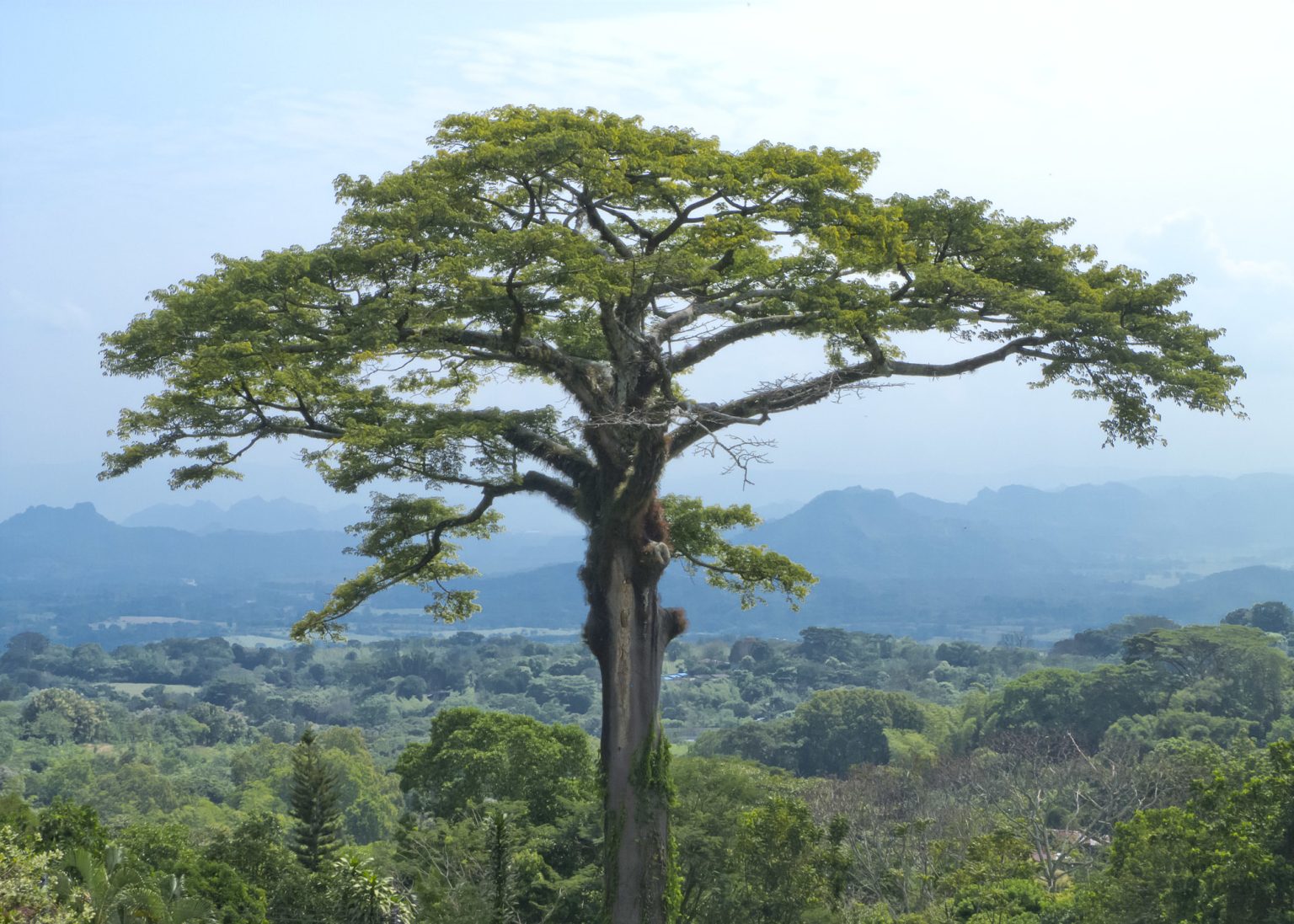

A sacred giant of West African forests and a pillar of Tano River spirituality
🔎 Scientific Name: Ceiba pentandra
Common names: Kapok tree, Silk-cotton tree, Fromager (French), Onyina (Akan), Sɔsɔ (Baoulé)
Family: Malvaceae (cotton family)
📍 Distribution and Habitat
Native to West Africa, Ceiba pentandra thrives in:
- Lowland tropical rainforests
- Moist savanna-forest transition zones
- Riparian belts and sacred groves
In the Tano River Basin (both Ghana and Côte d’Ivoire), this iconic tree is frequently found:
- Near villages and shrines
- Along riverbanks
- In sacred forest patches where human activity is restricted
It is revered by Akan, Nzema, and Baoulé peoples, often protected by custom and spiritual belief.
🌿 Botanical Characteristics
- Height: Can exceed 60 meters (200 feet)
- Trunk: Massive, straight, often with buttress roots and spiny bark
- Leaves: Palmate (like fingers on a hand), shed during dry season
- Flowers: Large, creamy-white, open at night, pollinated by bats
- Fruits: Woody pods filled with silky fibers (kapok) and black seeds
Its towering presence makes it one of the most visually commanding trees in the Tano region.
🌍 Ecological Role
- Supports pollinators such as bats, bees, and birds
- Its hollow trunks and branches provide nesting space for owls, hornbills, and small mammals
- Buttress roots help stabilize the soil and absorb floodwaters
- The kapok fibers help disperse seeds by wind
In many forests along the Tano, it acts as a keystone species, anchoring the forest canopy.
🧙🏽♂️ Spiritual and Cultural Significance
The Kapok tree is considered sacred in many cultures along the Tano:
- It is often regarded as the abode of spirits, ancestors, or forest deities
- Cutting it down is taboo in many villages without ritual permission
- Used as a site for libations, prayers, and sacrifices
- Some trees serve as “talking trees” where elders hold council
In Akan belief systems, such trees may serve as portals between the human and spirit world, especially when found near rivers, crossroads, or cemeteries.
🪵 Practical Uses
Though often protected, parts of the Kapok tree are sometimes used:
- Kapok fiber (from the fruit):
- Used for stuffing mattresses, pillows, life vests
- Lightweight, water-resistant, and highly flammable
- Seeds: Oil extracted for soap and medicinal uses
- Bark: Sometimes used in traditional medicine for fever, wounds, or spiritual cleansing
Its wood, though soft, is used for drums, canoe paddles, and ritual carvings — but cutting the tree is done only with deep respect.
⚠️ Threats
While not endangered, Ceiba pentandra faces:
- Pressure from deforestation, especially as land is cleared for agriculture and mining
- Spiritual disconnection, as younger generations abandon traditional taboos
- Timber harvesting in areas where protections are weak
🌱 Why It Matters for the Tano River
As one of the sacred trees of the Tano Basin, the Kapok tree connects:
- Nature and spirit
- Past and present
- People and the river
Preserving Ceiba pentandra is about protecting the intangible heritage of the river — the beliefs, rituals, and forest guardians that give the Tano its soul.
🔗 Do you have sacred Ceiba trees in your village? Share a photo or story at [TanoRiver.com/submit]


