



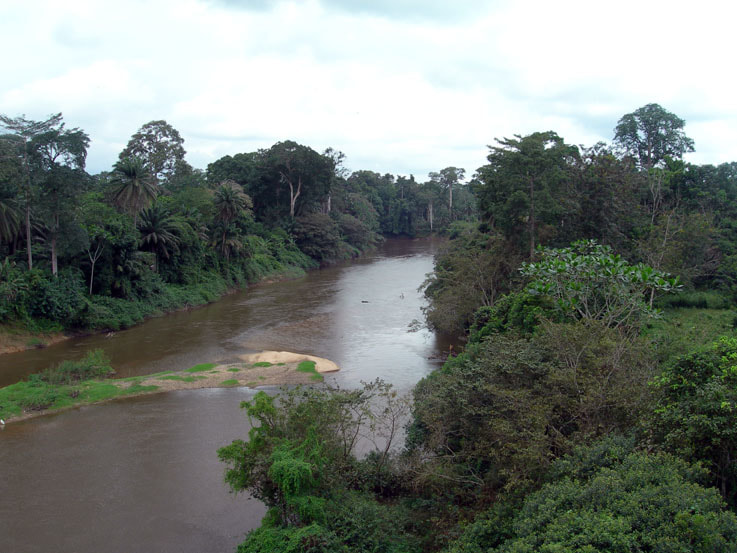
The green guardians of a sacred West African waterway
Contents
🌳 1. Riparian Forest Trees (Along the Riverbanks)
These species grow alongside the river, stabilizing the banks and providing shade, habitat, and erosion control.
- Milicia excelsa (Iroko tree)
– Tall hardwood tree, sacred in many communities
– Used for canoes, drums, and construction - Cola nitida / Cola acuminata (Kola nut trees)
– Culturally important; nuts used in ceremonies
– Common in southern Ghana and Côte d’Ivoire - Nauclea diderrichii (African peach / Opepe)
– Riverine hardwood tree; supports soil retention
– Flowers attract pollinators - Ceiba pentandra (Kapok tree)
– Towering, sacred tree in Akan and Nzema culture
– Provides cotton-like fiber, symbolic in rituals - Raphia hookeri (Raffia palm)
– Found in swampy zones and riverbanks
– Used for weaving mats, baskets, and palm wine
🌴 2. Mangroves and Estuarine Plants (Tano River Mouth)
In the Tendo, Ehy, and Aby lagoons, where freshwater meets the sea, you find coastal wetland vegetation:
- Rhizophora racemosa (Red mangrove)
– Forms dense root structures that prevent erosion
– Breeding grounds for fish and crabs - Avicennia germinans (Black mangrove)
– Tolerates saline water; vital to estuary health - Nymphaea lotus (Water lily)
– Aquatic plant in calm sections of the river and swamps
– Symbolic in African spirituality - Pistia stratiotes (Water lettuce)
– Floating plant, often seen in shallow river sections
– Helps oxygenate water but can overgrow if unchecked
🌲 3. Tanoé-Ehy Swamp Forest Trees (Côte d’Ivoire)
This zone holds some of the last intact swamp forests in West Africa. Notable tree species include:
- Alstonia boonei (Chewing stick tree)
– Medicinal bark, important in traditional healing - Uapaca spp. (Bush pear trees)
– Found in swampy or semi-flooded zones
– Fruits eaten by wildlife and people - Lophira alata (Azobé / Ironwood)
– Dense, water-resistant wood
– Found in old-growth wet forests - Elaeis guineensis (African oil palm)
– Native but increasingly cultivated
– Source of oil, but overexpansion threatens biodiversity
🍃 4. Medicinal and Sacred Plants
- Tetrapleura tetraptera (Aidan fruit / Prekese)
– Used in traditional medicine and rituals - Ocimum gratissimum (African basil)
– Fragrant herb used for purification and healing - Vernonia amygdalina (Bitter leaf)
– Widely used in cooking and for treating fevers
🌱 5. Grasslands and Wetland Flora
In periodically flooded zones and plains, especially in the middle basin, you’ll find:
- Cyperus papyrus (Papyrus reed)
- Panicum spp. (Riverbank grasses)
- Ferns and mosses in shaded, humid areas
- Floating fern (Azolla spp.) – key to water health and nitrogen fixing
🌍 Why This Matters
These plants:
- Regulate the river’s flow and prevent flooding
- Provide food, medicine, and income to riverside communities
- Create habitats for birds, fish, primates, and insects
- Are part of spiritual beliefs and traditional practices
Many of these species are now threatened by illegal mining, deforestation, and climate change.


