



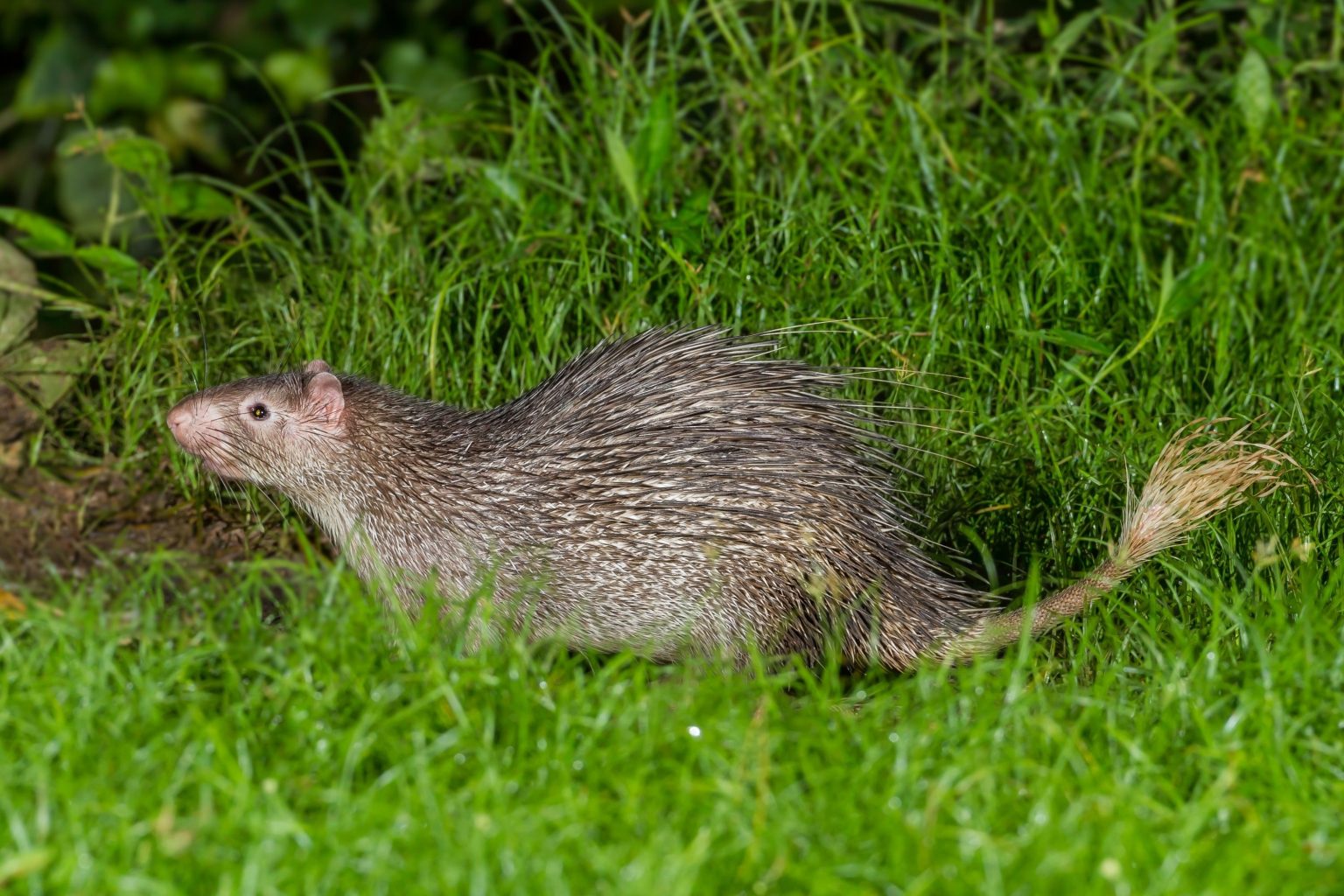
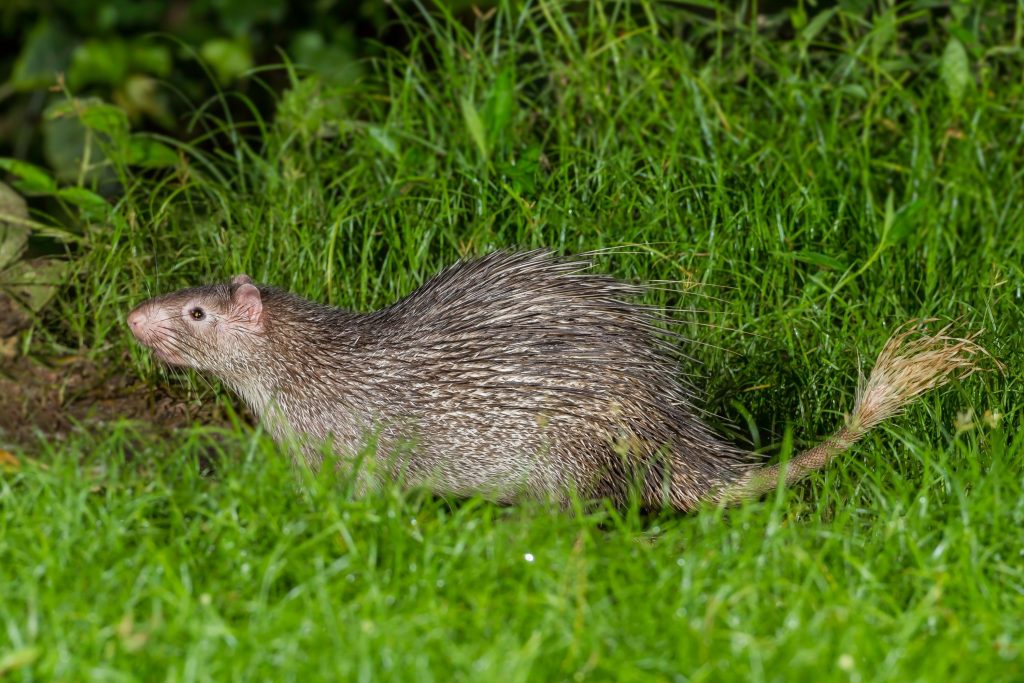
Also known as: Soft-spined Porcupine, Forest Porcupine
📍 Habitat
This porcupine inhabits dense tropical rainforests, forest edges, and swamp forests, including areas around the Tano River, the Boin Tano Forest Reserve, and the Tanoé-Ehy wetlands. It prefers humid, closed-canopy zones with abundant undergrowth and root systems.
It is often found near burrows, hollow logs, or rocky crevices where it can hide during the day.
⚠️ Conservation Status
- IUCN Red List: Least Concern, but locally overhunted
- Main threats:
- Hunting for bushmeat, especially in Ghana and Côte d’Ivoire
- Habitat degradation from mining, logging, and agriculture
- Low reproductive rate makes population recovery slow
🧬 Description
- Medium-sized rodent weighing up to 4–6 kg (9–13 lbs)
- Covered in coarse hairs and short quills, with a distinctive brush-like tail
- Tail quills can rattle when agitated, used as a warning
- Not as heavily armored as other porcupines but agile and quiet
🧠 Behavior
- Nocturnal and shy
- Lives in pairs or small family groups, often reusing burrows
- Feeds on roots, tubers, fallen fruits, bark, and some invertebrates
- Emits grunts, hisses, and tail rattling sounds when threatened
🌿 Ecological Role
- Forest floor recycler: spreads seeds, breaks up soil layers, disperses fungi
- Helps aerate the soil through digging
- Preyed upon by large carnivores, eagles, and humans
- Considered a bioindicator for healthy, undisturbed forest ecosystems
✨ Cultural Significance
Among Akan and other West African peoples, the brush-tailed porcupine is respected for its quiet strength and resourcefulness. In some folk tales, it is portrayed as a symbol of humility and perseverance, living simply but defending itself with determination when needed.
Its quills are occasionally used in ritual or symbolic crafts, representing protection, warning, and patience.
🔥 Conservation Needs
- Regulate bushmeat hunting in protected areas
- Educate communities on its slow reproduction and ecological role
- Support sustainable forest use and reforestation
- Promote as a flagship species in biodiversity corridors like Boin Tano


