



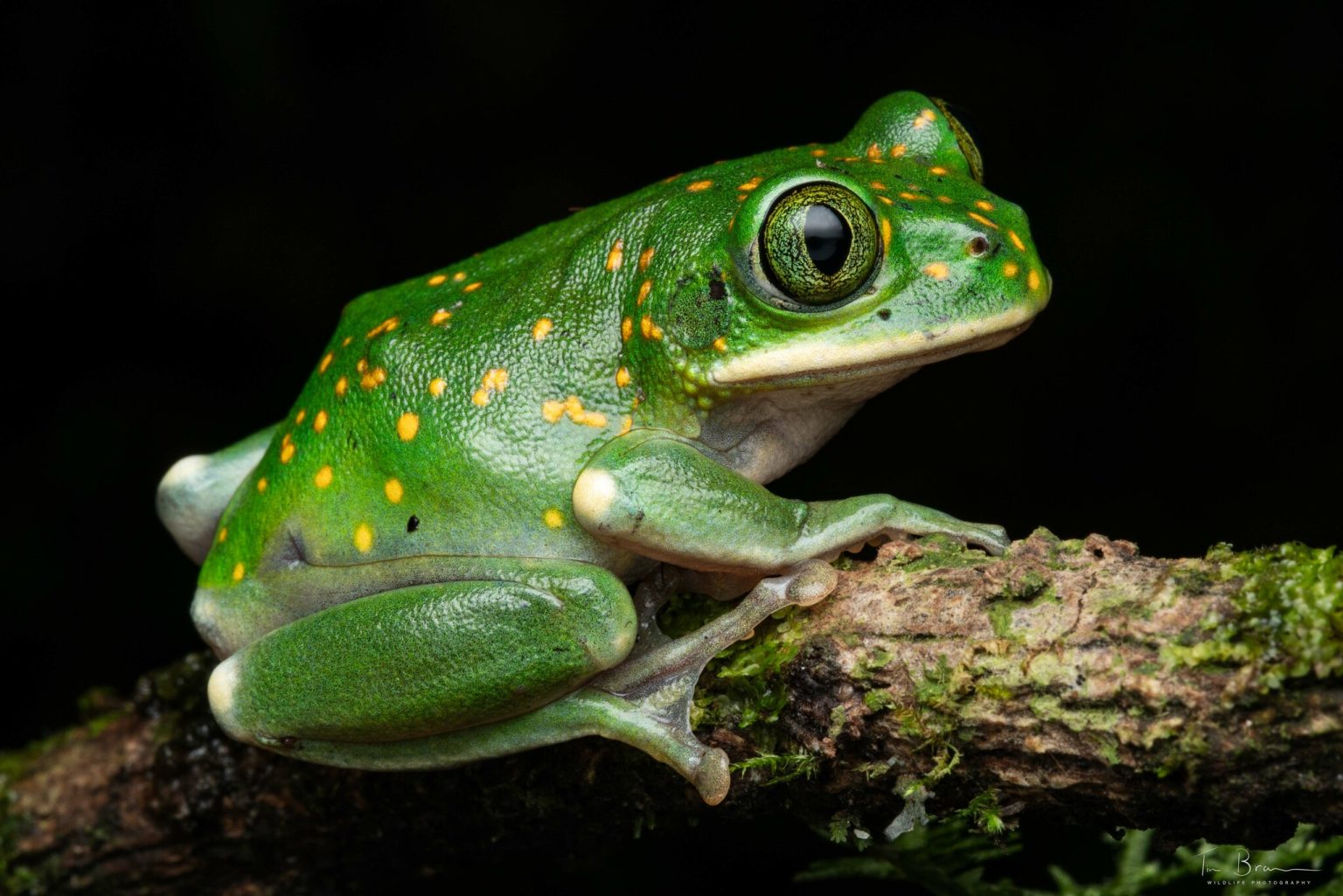
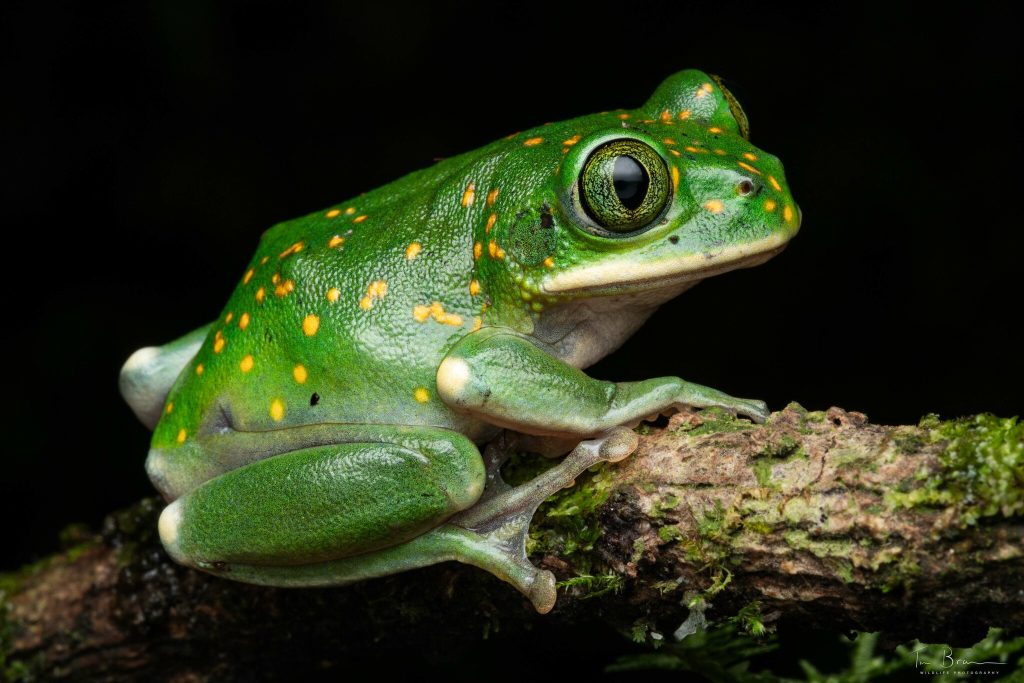
Also referred to in some records as the Large-eyed Forest Tree Frog
📍 Habitat
This frog lives in moist lowland forests, riparian (river-edge) zones, and swampy understorey habitats across the Tano River Basin, particularly in the Boin Tano Forest Reserve and the Tanoé-Ehy wetlands. It is most often found clinging to shrubs and low trees near forest streams.
It depends on undisturbed, humid environments with dense vegetation and access to shallow freshwater pools for breeding.
⚠️ Conservation Status
- IUCN Red List: Vulnerable
- Main threats in the region:
- Deforestation (agriculture, logging, mining)
- Water pollution and sedimentation from illegal mining (galamsey)
- Habitat fragmentation and drying of forest pools
- Lack of awareness and protection measures
🧬 Description
- Medium-sized tree frog with large, forward-facing eyes
- Color: mottled green or brown, with darker patches that provide camouflage
- Broad, webbed toes for climbing and jumping
- Emits a distinctive slow pulsing “chuck” call at night
🧠 Behavior
- Nocturnal and arboreal, usually active during and after rainfall
- Males call from leaves or branches near breeding ponds
- Females lay eggs in moist soil or vegetation, and tadpoles are later washed into water
- Diet: primarily insects, spiders, and small invertebrates
🌿 Ecological Role
- Controls populations of mosquitoes and other insects
- Indicator of forest microclimate and water quality
- Plays a role in nutrient cycling in temporary pools
- Prey for snakes, birds, and small mammals
✨ Cultural Relevance
In traditional Akan and Nzema beliefs, frogs are associated with fertility, rain, and spiritual communication. A calling frog after sunset near sacred rivers like the Tano may be seen as a signal from the spirit world, or an omen of seasonal renewal.
Frogs also appear in proverbs as symbols of vigilance and life between two worlds — land and water.
🔥 Conservation Actions Needed
- Protect humid forest patches and seasonal breeding sites
- Ban toxic chemicals near amphibian habitats
- Include amphibians in environmental impact assessments
- Promote community science and youth-led monitoring programs


