



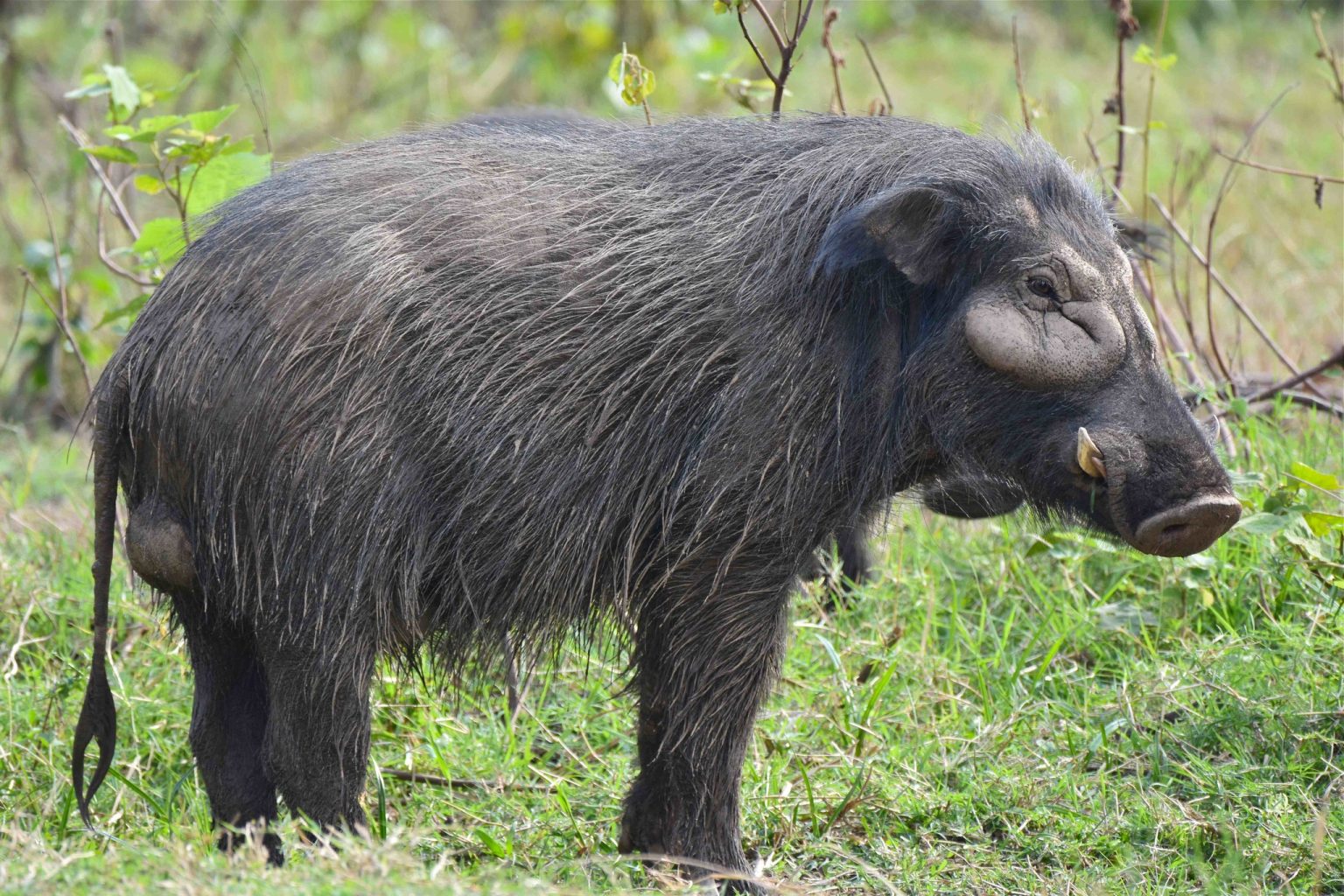
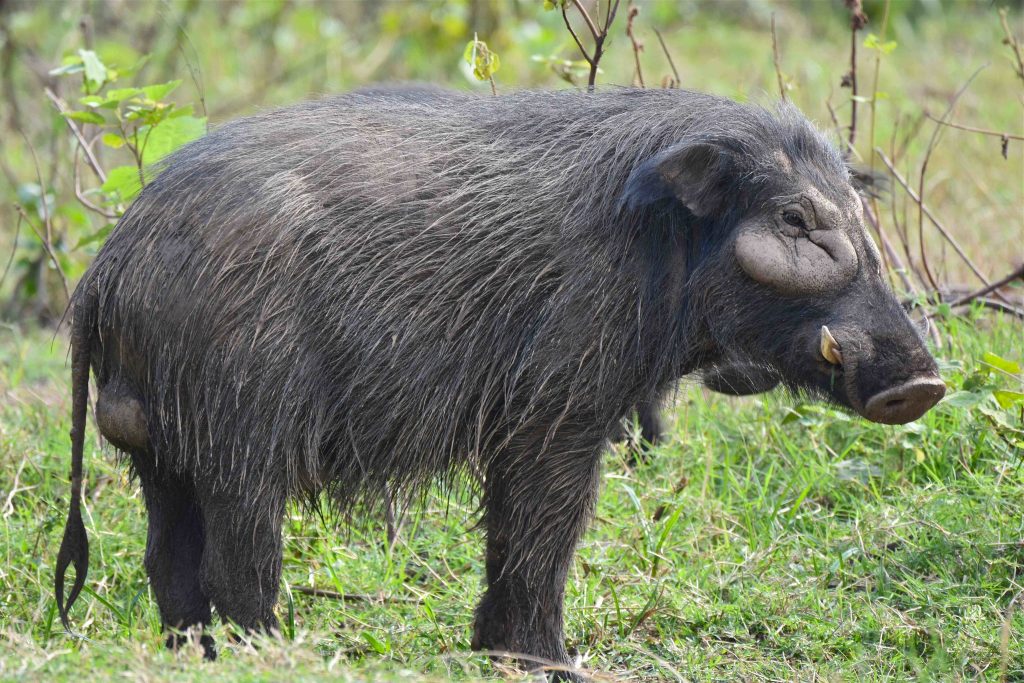
Also known as: African Giant Forest Hog
Contents
📍 Habitat
The forest hog inhabits dense, moist tropical forests in West and Central Africa. In the Tano River Basin, it is believed to roam within protected forest areas such as the Boin Tano Forest Reserve (Ghana) and the Tanoé-Ehy Forest (Côte d’Ivoire). It prefers shaded, undisturbed areas close to water, with plenty of undergrowth.
⚠️ Conservation Status
- IUCN Red List: Least Concern, but locally threatened
- Main threats include:
- Hunting for bushmeat
- Habitat loss from agriculture and artisanal gold mining (galamsey)
- Forest fragmentation, which isolates small populations
🧬 Description
- The largest wild pig species in Africa
- Weight: between 100 to 275 kg (220–600 lbs)
- Covered in long, dark grey or black coarse hair
- Males have large curved tusks and prominent facial glands
- Broad head, powerful build, and a blunt snout
🧠 Behavior
- Mostly nocturnal or crepuscular (active at dusk and dawn)
- Lives in family groups (called sounders) of up to 20 individuals
- Uses deep grunts and scent-marking to communicate
- Very elusive, despite its large size
🌿 Ecological Role
- A natural tiller of the soil: digs and turns over forest litter
- Feeds on roots, tubers, fallen fruits, fungi, and invertebrates
- Helps aerate the soil, promotes seed dispersal, and contributes to forest regeneration
✨ Cultural Significance
In parts of Akan and Nzema culture, forest hogs are considered spirits of strength, mystery, and resilience. Rare sightings are sometimes interpreted as signs from the forest ancestors, especially if the animal appears near sacred groves or untouched forest paths.
🔥 Conservation Actions Needed
- Protect intact forest corridors near the Tano River
- Raise local awareness of the hog’s ecological value
- Support community-led forest protection that includes sacred beliefs
- Monitor populations through camera traps and forest surveys


