



📍 Habitat
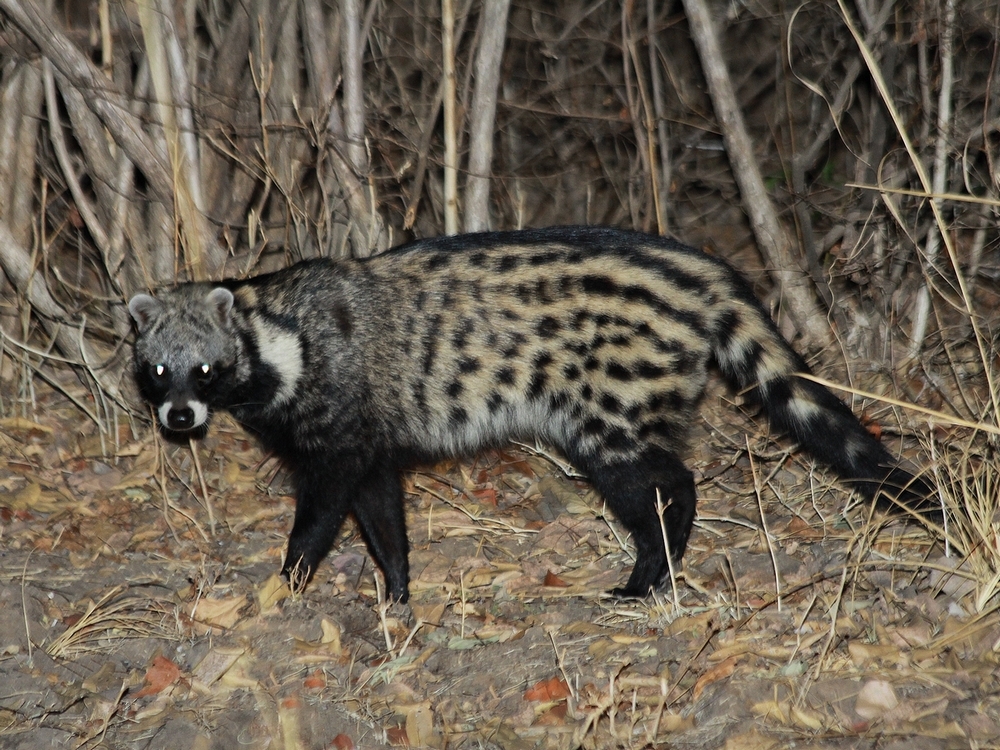
The African civet is found in a variety of forest and savanna habitats, including the dense undergrowth, forest edges, and wetlands near the Tano River and in reserves like Boin Tano and Tanoé-Ehy. It prefers areas with thick vegetation, access to water, and ample cover.
Contents
⚠️ Conservation Status
- IUCN Red List: Least Concern
- Main Threats (Tano region):
- Deforestation for farming and mining
- Road kills and poaching for bushmeat
- Disturbance of nocturnal habitats by human activity
🧬 Description
- Medium-sized mammal with coarse greyish fur, covered in black blotches and stripes
- Has a distinctive black facial mask and a large perineal gland, which secretes a strong musky scent (used historically in perfume: civet)
- Long body, short legs, and a ringed tail
- Weight: 7–20 kg, depending on sex and region
🧠 Behavior
- Nocturnal and solitary, active mostly just after dusk
- Omnivorous: feeds on insects, small mammals, fruits, eggs, and carrion
- Marks territory with scent and feces
- Makes grunts, coughs, and other vocalizations when threatened
🌱 Ecological Role
- Scavenger and predator: helps clean the forest by feeding on decaying matter
- Spreads seeds through its droppings (important for forest regeneration)
- Controls rodent and insect populations
🧘♂️ Cultural Significance
In some African cultures, the civet is seen as a symbol of mystery and hidden knowledge, due to its secretive nature. In traditional Akan belief systems, animals that emerge only at night are sometimes linked to ancestral spirits or omens.
The musky scent was once harvested for spiritual rituals and perfumes, but this practice has mostly disappeared.
🔥 Conservation Priorities
- Protect nocturnal corridors (dense forest belts and understory)
- Educate local communities on the civet’s non-aggressive nature and ecological value
- Prevent illegal hunting and trade
- Promote biodiversity-friendly farming and forestry near river zones


