



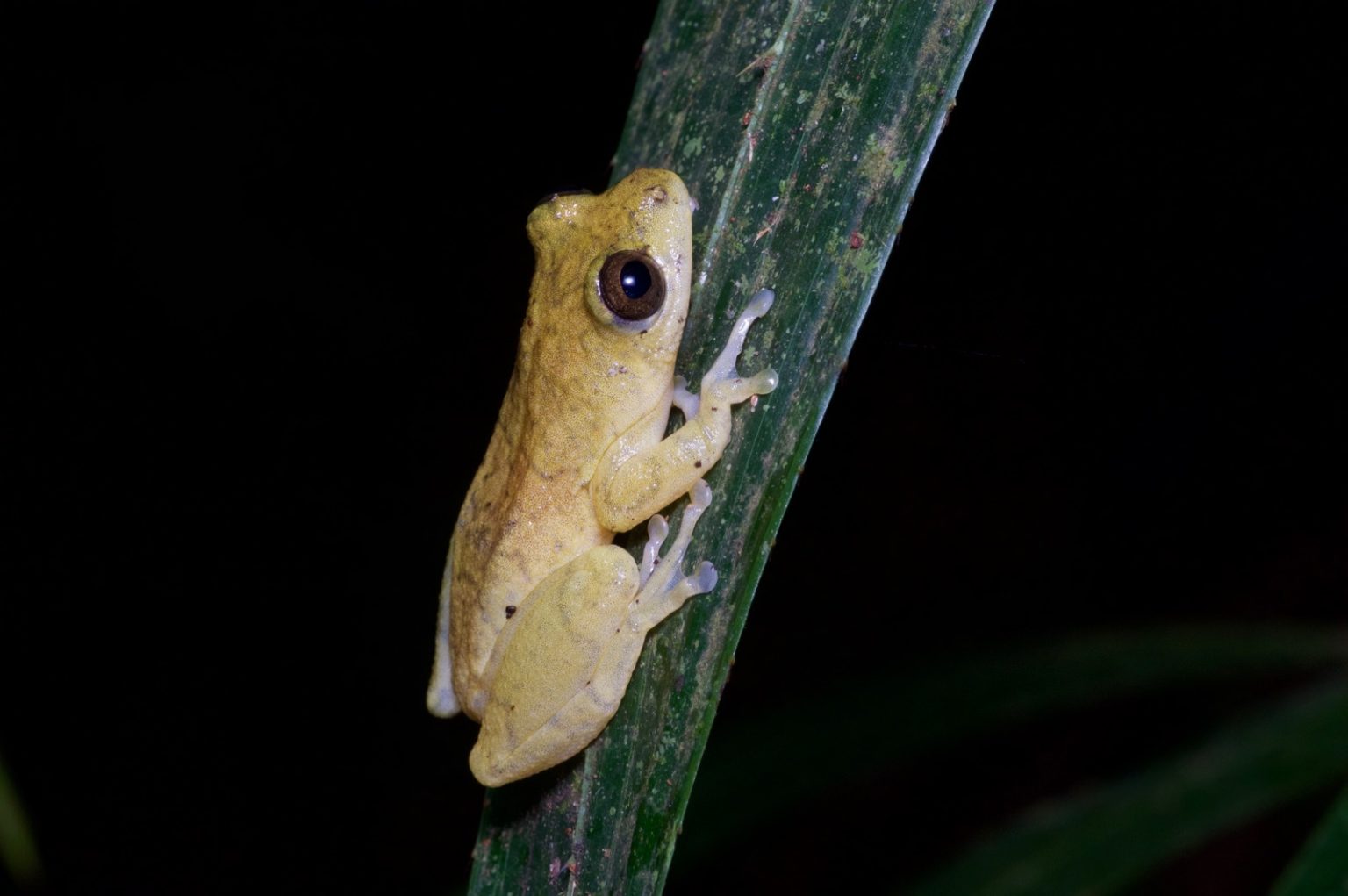
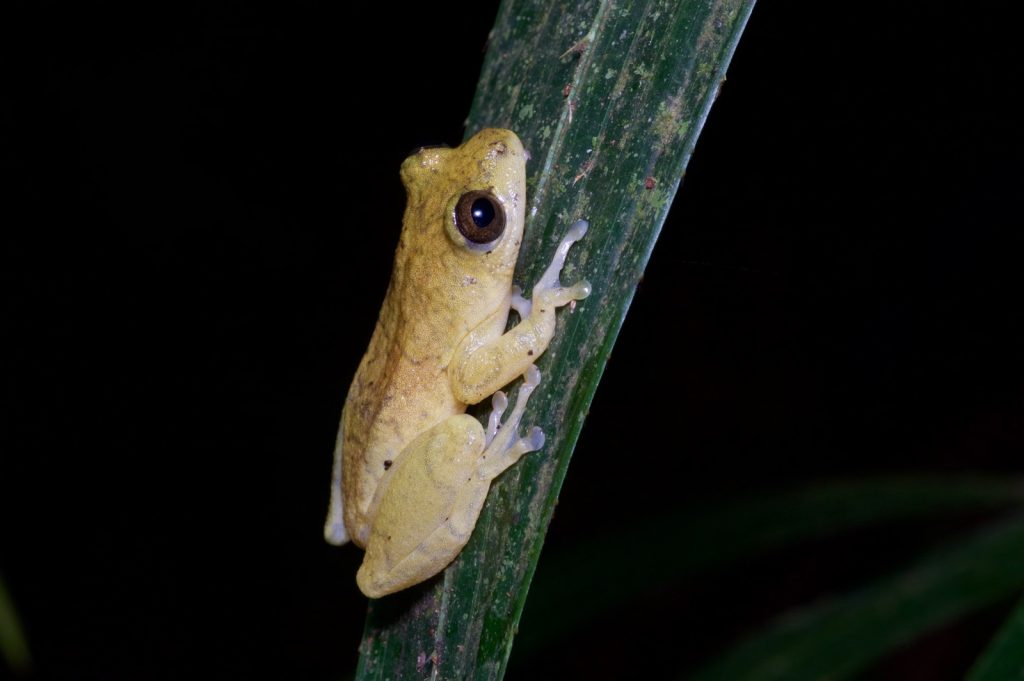
📍 Habitat
This delicate and rare frog is endemic to southern Ghana, including the forested zones near the Tano River and the Boin Tano Forest Reserve. It thrives in lowland moist forests, particularly in vegetated wetlands, temporary ponds, and slow-flowing streams under canopy cover.
Contents
⚠️ Conservation Status
- IUCN Red List: Endangered
- Main Threats:
- Loss of wetland breeding sites due to deforestation
- Gold mining pollution (galamsey)
- Agricultural encroachment and logging
- Climate-related water table decline
🧬 Description
- Small, slender-bodied frog
- Bright green to light brown body with translucent skin in some phases
- Characteristic dark lateral stripe and pale underbelly
- Males are known for their high-pitched, cricket-like calling at dusk
🧠 Behavior
- Breeds in temporary forest pools and shallow wetlands
- Lays eggs on vegetation overhanging water
- Nocturnal and elusive — often heard but rarely seen
- Relies on pristine, shaded environments with constant humidity
🌱 Ecological Importance
As with all amphibians, the Bobiri reed frog is a key bioindicator species — its decline reflects deeper environmental problems such as pollution, deforestation, and water imbalance.
It also helps control insect populations, including mosquitos and crop pests.
🧘♂️ Cultural Role
Though small and silent, frogs are often seen in traditional Akan beliefs as symbols of rain, fertility, and life. Their calls signal the health of the forest — and their absence, its distress.
🔥 Conservation Needs
- Protection of remaining forest wetland habitats
- Enforcement against mining in protected areas
- Creation of community awareness programs
- Scientific surveys to better understand its population


