



📍 Habitat
The Diana Monkey is found in the tropical rainforests surrounding the Tano River, particularly within protected areas like the Boin Tano Forest Reserve, which straddles the Ghana-Ivory Coast border. These monkeys thrive in dense canopy forests, where they spend most of their time in the treetops.
⚠️ Conservation Status
- IUCN Red List: Vulnerable
- Main Threats:
- Habitat destruction due to illegal logging and gold mining (galamsey)
- Agricultural expansion
- Hunting for bushmeat
🌿 Ecological Role
As a frugivorous primate, the Diana Monkey plays an important role in seed dispersal, helping maintain the health and diversity of forest ecosystems. Their presence is a strong indicator of forest integrity.
🧠 Behavior & Characteristics
- Diurnal and arboreal (active by day, lives in trees)
- Highly social: they live in female-led groups of 10–30 individuals
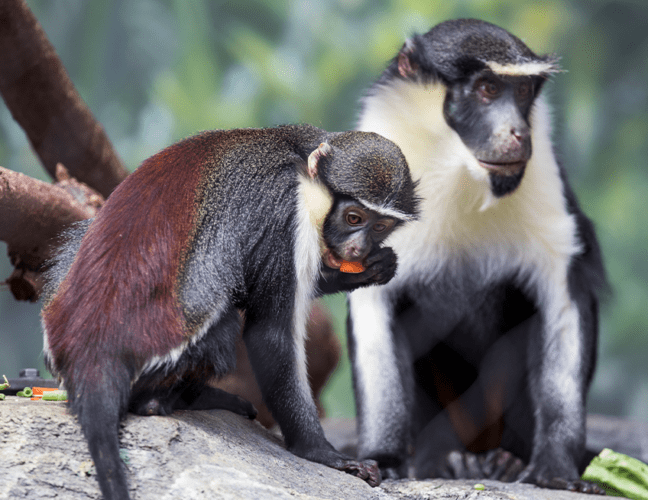
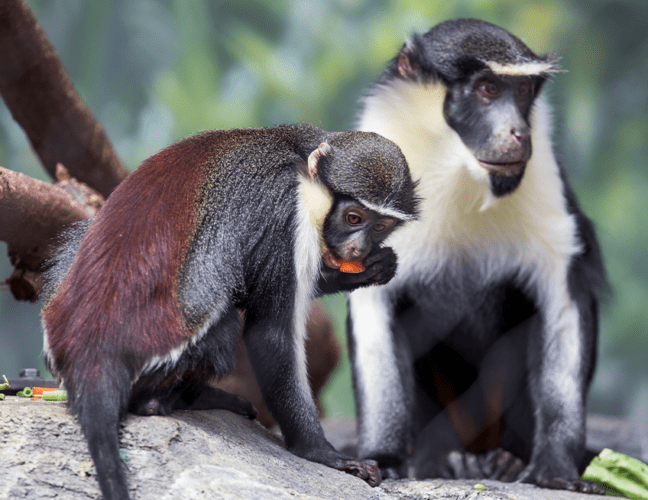
- Known for their distinctive white throat and chest, with a black body and red backside
- Communicates with complex vocalizations — they can even distinguish between calls warning of leopards, eagles, or humans
📖 Cultural Importance
While not widely known in mythology, the Diana Monkey is often associated with the spirit of the forest in local traditions. In some communities, it is respected as a sacred animal whose presence symbolizes a healthy environment.
🔥 Conservation Note
The illegal gold mining operations near the Tano River pose an increasingly dangerous threat to the monkey’s habitat. Forest corridors are being fragmented, reducing their range and exposing them to human conflict and poaching.
Supporting local forest protection and raising awareness of endangered primates like the Diana Monkey is crucial to their survival.
📸 Image
Diana Monkeys in forest canopy


