



I. Executive Summary
The Tanoboase Sacred Grove and Shrine, nestled in Ghana’s Bono East region, represents a profound convergence of natural heritage and cultural identity. This report explores its intrinsic connection to the Tano River, a relationship that has shaped its historical significance as a strategic refuge during periods of conflict, including the Ashanti Wars and the slave trade. The site continues to serve as a vibrant center for indigenous religious practices, upholding ancient traditions that intrinsically link human well-being with environmental stewardship. While recognized for its ecotourism potential, the Grove faces contemporary challenges, particularly regarding the erosion of traditional beliefs and the complexities of ensuring equitable community benefits from tourism development. The recent intervention by the Ghana Tourism Authority signals a renewed focus on revitalization, yet the long-term sustainability hinges on a delicate balance between modernization and genuine, culturally sensitive community empowerment.
II. Introduction: A Nexus of Nature and Culture
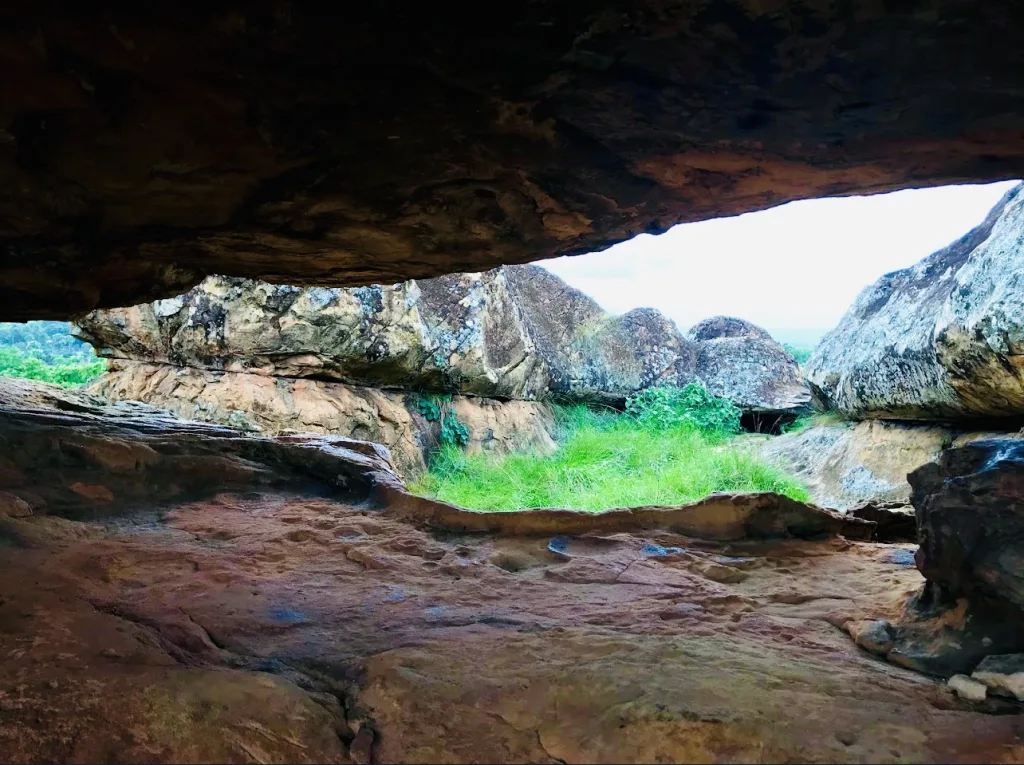
The Tanoboase Sacred Grove and Shrine stands as a remarkable testament to the deep-rooted relationship between the natural world and human culture in West Africa. Situated near the village of Tanoboase in the Techiman, Bono East region of Ghana, this site is not merely a geographical location but a revered ancestral domain. It is widely recognized as the traditional home and “cradle” of the Bono people, a prominent sub-group of the Akan ethnic family. The landscape itself contributes to its mystique, characterized by a semi-deciduous forest interspersed with striking sandstone rock formations and a complex network of caves. This natural topography has played a pivotal role in the site’s historical and spiritual narrative.
Central to the profound significance of Tanoboase is its intrinsic connection to the Tano River. The very word “Tano” is derived from this river, and it is the namesake for numerous deities within the Akan spiritual pantheon. The entire Tanoboase Sacred Grove and Shrine is officially recognized as a crucial component of Ghana’s material cultural heritage, underscoring its national importance. This report aims to comprehensively explore the multifaceted relationship between the Tanoboase Sacred Grove and the Tano River, delving into its historical importance as a sanctuary during periods of conflict, its enduring role as a spiritual heartland, and its contemporary development as an ecotourism destination.
III. The Intertwined Sacredness: Connection Between the Grove and the Tano River
The spiritual and ecological fabric of Tanoboase is inextricably woven with the presence and essence of the Tano River. This connection transcends mere proximity, embodying a profound cultural and religious symbiosis that has shaped the Bono people’s worldview and their relationship with their environment.
The Tano River as a Deity
The Tano River is not simply a waterway; it is personified and revered as a powerful water spirit within the spiritual and cultural practices of the Akan and Ashanti peoples. This deity, known as Tano, embodies the vital connection between humanity and the natural world, particularly the life-giving force of water. The river’s deep, clear waters are often symbolized by the color blue in ceremonies, representing purity and life, a direct reflection of Tano’s essence.
Tano is deeply embedded in the Akan people’s understanding of nature and spirituality, playing a central role in their daily lives. The deity is closely linked to agriculture, fertility, and the sustenance of life, with communities frequently seeking Tano’s blessings for prosperity and bountiful harvests. The influence of Tano is evident in various rituals, stories, and cultural traditions, making the deity a vital presence in the spiritual life of the Akan. Tano is also associated with aquatic life, such as fish and water lilies, which further emphasizes the deity’s dominion over the river and its intricate ecosystem.
The nature of Tano is complex, encompassing both nurturing and potentially destructive aspects. Local folklore recounts stories of the deity’s wrath, warning that neglect or disrespect toward the river can result in natural disasters or poor harvests. This duality underscores the critical importance of maintaining a respectful and balanced relationship between humans and nature, as the community’s well-being is perceived to be directly contingent upon their adherence to sacred protocols. In the broader Akan cosmology, Tano is considered a son of Nyame, the supreme creator god, and a brother to other water and ancestral spirits, forming a spiritual network that reflects the deep interconnectedness of all divine forces and natural elements.
Taakora and the Grove’s Origin
The origins of the Tanoboase Sacred Grove are intrinsically linked to the deity Taakora, believed to be the highest of the Akan gods on earth. Oral tradition recounts that Taakora manifested to Afya Ankomah, providing specific instructions that enabled the Bono people to live in the rock caves within the grove, establishing it as their traditional home. This foundational narrative solidifies the grove’s spiritual significance.
Crucially, Taakora is believed to dwell at the very source of the Tano River within the grove, establishing the site as a place of profound sanctity and continuous worship. Shrines dedicated to Taakora are present at Tanoboase, including the prominent Tano Rock shrine. To reinforce the enduring spiritual connection between the community, the grove, and the river, the Tano Shrine, though typically kept in Tanoboase town, is annually carried to the grove by a fetish priest. This yearly procession is a tangible expression of the spiritual bond and a reaffirmation of the sacred landscape.
Ecological Interdependence
The intrinsic sacredness attributed to the grove and the river has historically functioned as a powerful, culturally embedded conservation practice for the Bono people. The initial instructions from Taakora to the Bono people included strict prohibitions against hunting or farming within the sacred grove, viewing animals as “friends” and plants as sources of medicine. These traditional rules, enforced through religious belief, have effectively preserved the forest’s integrity over centuries.
The grove serves as an “oasis that maintains biodiversity” within a knowledge system deeply rooted in culture and religion. Globally, sacred groves are recognized for their critical role in protecting water sources and biodiversity, acting as important refuges for rare and useful local flora and fauna. Within the Tanoboase Sacred Grove, visitors can observe a variety of plant, tree, bird, and butterfly species. Specific animal species noted include antelope, baboons, and monkeys, which are part of the grove’s diverse faunal community. The Tano River itself is home to various fish species, particularly catfish. The broader Tano Basin, encompassing the river and its surrounding areas, is recognized for its diverse terrestrial and aquatic ecosystems, which provide vital services such as clean water to the communities that depend on them.
The personification of the Tano River as a powerful deity and the manifestation of Taakora in the Grove directly led to the establishment of taboos, such as the prohibition of hunting or farming. This is not merely about abstract reverence; it represents a practical, culturally enforced system for ecological preservation. This system highlights the deep integration of spirituality and environmental stewardship in Bono culture. The profound religious beliefs held by the Bono people are not simply abstract spiritual concepts; they directly translate into concrete, actionable rules governing human interaction with the natural environment. These rules, born from deep spiritual reverence and communicated through the deity, serve as a powerful, traditional, and community-enforced conservation mechanism that has effectively preserved the grove’s ecosystem and its biodiversity for generations. This demonstrates a sophisticated indigenous knowledge system where spiritual values inherently drive sustainable resource management, offering a compelling model for modern conservation efforts that integrate and respect local cultural and spiritual contexts.
Furthermore, the Tano deity is characterized by a dual nature, being both nurturing (associated with agriculture, fertility, and healing) and destructive (capable of wrath, leading to natural disasters or poor harvests if disrespected). This inherent duality within the deity’s persona mirrors and reinforces the concept that human actions—whether respectful or disrespectful—have direct, tangible consequences on the natural environment. This creates a feedback loop where the health and prosperity of the ecosystem are intrinsically tied to the community’s spiritual adherence and ethical conduct. The perceived behavior of the deity directly reflects the perceived health and productivity of the natural environment. This establishes a profound reciprocal relationship: the deity’s benevolence, and thus the environment’s bounty, is contingent upon the community’s adherence to sacred rules and respectful practices. Disregard for these rules is believed to invite divine punishment, manifested as environmental hardship. This belief system fosters a deep, intrinsic sense of responsibility and stewardship among the Bono people. Their well-being and prosperity are perceived as directly dependent on maintaining a harmonious and respectful relationship with the sacred natural world, providing a powerful, self-regulating incentive for environmental protection that goes beyond external regulations.
IV. A Sanctuary Through Time: Historical Significance as a Hideout
The Tanoboase Sacred Grove’s historical significance extends far beyond its spiritual role, serving as a critical sanctuary and strategic stronghold for the Bono people throughout centuries of conflict.
Cradle of the Bono People
The Tanoboase Sacred Grove is deeply ingrained in the historical identity of the Bono people, revered as their “cradle” and traditional home. Oral traditions recount the Bono people’s emergence from a sacred cave known as “Amowi” hundreds of years ago, with early leaders like Takyi Fri guiding them to this new environment. This narrative of origin from a rock-shelter near Amowi is a foundational aspect of Bono identity, emphasizing their deep connection to the land. The Bono state, with its capital Bono Manso, was one of the earliest centralized Akan states, and the region around Tanoboase was a significant trading hub, highlighting the area’s historical importance in the broader West African context.
Strategic Refuge in Conflict
The unique geological features of the Tanoboase Sacred Grove, particularly its intricate network of caves and striking rock formations, provided crucial shelter and security for the Bono people during periods of intense conflict. Historically, the site served as a vital hideout during the Ashanti Wars, various inter-tribal conflicts, and the tumultuous era of the slave trade.
The rock shrine within the sacred grove is not merely a natural wonder but a strategically designed complex, containing five distinct compartments: a main entrance, a durbar ground, a dedicated “hideout” area, a watch tower, and stairs. The “hideout” compartment was specifically utilized to protect kings during wartime, underscoring its critical strategic importance in preserving leadership and continuity. The elevated cliffs within the grove functioned as natural watchtowers, allowing ancient warriors to gain an aerial view of their enemies from afar, enabling them to re-strategize their defenses and attacks effectively. A panoramic overlook, accessible via an easy climb up sandstone rocks, was actively used during the Ashanti-Bono wars for this very purpose, demonstrating the practical application of the terrain for military advantage.
Folklore also speaks of the “Tortoise Rock” within the grove, a symmetrical formation believed to compel warring tribes, including the Ashanti-Bono, to cease hostilities upon its sight. This narrative highlights the grove’s symbolic power for peace, suggesting that its sacredness could transcend conflict and enforce reconciliation.
The detailed description of the Grove’s internal compartments—specifically the “main entrance, durbar ground, hideout, watch tower and stairs”—reveals that the natural rock formations were not merely passive shelters. Instead, they were actively engineered and adapted by the Bono people for sophisticated strategic defense and community organization during periods of intense conflict. The presence of specific, named compartments like “hideout” and “watch tower,” along with the mention of “durbar ground” (a place for assembly and discussion), indicates deliberate modification and strategic utilization of the natural rock formations. This goes beyond simply “hiding in a cave,” implying a sophisticated understanding of defensive architecture and community logistics, where natural features were integrated into a planned and organized system for survival and governance during times of crisis. The “durbar ground” suggests that even in refuge, social and political structures were maintained. This highlights the remarkable ingenuity and resilience of the Bono people. Their ability to adapt and utilize their natural environment for both practical defense and the preservation of their social and political structures underscores the deep, multi-layered value of the sacred landscape—not just spiritually, but also as a critical element of their historical survival and cultural continuity.
Oral Traditions and Narratives
The historical significance of the grove as a refuge is preserved through rich oral traditions passed down from generation to generation. These narratives recount how villagers sought refuge in the caves during tribal wars and slave raids, emphasizing the grove’s role as a haven. While multiple sources broadly state that the Tanoboase Sacred Grove served as a “hideout during the slave trade” , a specific review of the provided articles notes that they do not offer detailed narratives or specific examples of its use in relation to the slave trade, beyond its general function for security. This suggests a crucial nuance in the documented historical accounts. The reference to “slave trade” likely contextualizes the period of intense conflict during which the Bono people sought refuge
from enslavement, rather than implying the grove was a site for the holding or processing of enslaved individuals, as was common in coastal slave castles which have explicit dungeon narratives. This distinction is important for understanding the specific nature of the grove as a sanctuary for the Bono people themselves. This points to a significant nuance in the documented historical accounts, suggesting a distinction from the explicit, well-documented dungeons and “Doors of No Return” found in coastal slave castles. There is a gap between the general historical claim and the availability of granular, anecdotal evidence within the provided research material. This highlights the importance of critical analysis of historical claims, distinguishing between broad historical context and specific local narratives. It also suggests a significant area for future ethnographic and oral history research to uncover the specific experiences of the Bono people in relation to the slave trade and how the sacred grove served as a sanctuary for them during this brutal period.
Table 1: Key Historical Events and Strategic Uses of Tanoboase Sacred Grove
| Historical Period/Event | Strategic Use/Function | Specific Features Utilized |
| Early Bono Settlement | Cradle of Bono People, Shelter | Amowi Cave, Rock Caves |
| Ashanti Wars | Hideout for kings, Watchtower | “Hideout” compartment, Cliffs/Panoramic Overlook |
| Inter-tribal Wars | Hideout, Watchtower | Caves, “Hideout” compartment, Cliffs/Panoramic Overlook |
| Slave Trade Era | Hideout for refuge | Caves, “Hideout” compartment |
| Periods of Conflict | Peace-making site | Tortoise Rock (symbolic power) |
V. Living Traditions: Religious Practices and Cultural Continuity
The Tanoboase Sacred Grove remains a vital spiritual center, where ancient religious practices of the Bono people continue to shape their cultural identity and their relationship with the natural world.
Abode of Deities and Ancestral Spirits
At its core, the Tanoboase Sacred Grove is revered by the Bono people as the dwelling place of local gods, most notably Taakora, and ancestral spirits. It is also believed to be the home of supernatural beings. Taakora is considered the “father of all Akan-spoken gods,” signifying its paramount spiritual authority within the broader Akan cosmology. Beyond Tanoboase, sacred groves in Ghana are broadly understood as dwelling places for gods and often serve as burial grounds for royalty, further cementing their profound spiritual significance and connection to lineage.
Rituals and Ceremonies
The grove is a vibrant center for religious activities, embodying traditional conservation practices deeply embedded in indigenous religion. A key annual event is the Apoo festival, a time of spiritual cleansing, typically held in April or May. During this festival, the Tano Shrine is carried from Tanoboase town to the grove by a fetish priest, reinforcing the spiritual connection between the community, the grove, and the river. This festival serves to renew the people’s allegiance and resolve to maintain the sanctity of the site and adhere to Taakora’s rules, underscoring its role in cultural and environmental governance.
Ceremonies at the Tano River itself are central to Akan spiritual life, involving offerings, libations, sacrifices, and prayers to invoke Tano’s favor for prosperity and fertility. Traditional festivals dedicated to Tano celebrate the river’s vital role in agriculture and community well-being, strengthening community ties and cultural heritage. A unique ritual is the “bailing ceremony” involving fish from the Tano River, where priests expose live fish for worship, taking extreme care never to let the fish touch the ground to avoid offending Taakora. This ritual highlights the active, reciprocal relationship between the community and the sacred aquatic life, emphasizing the delicate balance required for divine favor. Custodians of sacred groves also regularly hold ceremonies and rituals of ancestral worship within the forests, further solidifying the spiritual connection to the land and ancestors.
Beyond their explicit spiritual purpose, rituals such as the annual Apoo festival and the Tano River bailing ceremony serve as dynamic, recurring mechanisms for community cohesion, the reaffirmation of collective identity, and the implicit reinforcement of environmental stewardship. The “bailing ceremony,” in particular, involves a tangible interaction with the river’s aquatic life, where priests expose live fish for worship while carefully preventing them from touching the ground. This actively reinforces the sacredness of the river and the community’s dependence on its vitality. These are not just one-off events or passive beliefs; they are periodic, active engagements that require participation and adherence to specific protocols. These rituals function as vital cultural institutions that periodically re-engage the community with their sacred obligations to the land and water, reinforce social bonds through shared practice, and re-instill a collective respect for the natural environment and its resources. The direct interaction with the river’s life during the bailing ceremony makes the abstract concept of “Tano’s wrath” or “blessings” more tangible. This suggests that supporting and promoting these traditional ceremonies and their underlying belief systems can be a highly effective and culturally appropriate strategy for both community development and ecological conservation, intrinsically linking the well-being of the human community with the health of the natural world, fostering a holistic approach to sustainability.
Taboos and Sacred Rules
The sanctity of the grove is maintained through strict traditional taboos and rules, primarily stemming from Taakora’s instructions. These include prohibitions against hunting or farming within the 150-hectare forest reserve. Animals are to be considered friends, and plants used for medicinal purposes, reflecting a holistic view of nature. Strict observance of taboos extends to all forms of anthropogenic activities like crop farming, pastoral farming, hunting, or fishing at the site. Entry into the sacred site is strictly controlled, only warranted after permission from the traditional council and the performance of special entry rituals to seek permission from residing spirits. These taboos are crucial for protecting water sources, streams, and rare or endangered species, demonstrating their direct conservation impact. Specific taboos related to the Tano deity include restrictions on women during menstruation (not allowed near Tano’s shrine) and prohibitions against eating, killing, or harming animals associated with Taakora, such as baboons, crocodiles, mudfish, and antelopes, as they are considered Taakora’s guards or messengers. Wednesdays and Thursdays are also designated as taboo days for Taakora, with the temple closed, further regulating access and activity.
Challenges to Traditional Practices
Despite their deep roots and historical effectiveness, the maintenance and adherence to these traditional rituals and taboos face significant challenges in contemporary Ghana. Modernization, external influences, and changing societal values are impacting the continuity of these practices. There is a recognized decline in the “place and voice of culture and traditions that drive interest in visitations to these sites,” which negatively affects their ecotourism potential and overall cultural vitality.
The “erosion of traditional beliefs” is identified as the greatest threat to conservation through sacred groves. These beliefs are increasingly viewed as mere superstitions by some, and knowledge of specific rituals is becoming confined to the older generation, risking their eventual loss. The growing influence of foreign religions and increased dependence on Western technology are also cited as factors weakening traditional belief systems. This cultural shift can lead to the neglect and abandonment of sacred sites due to “religious fanaticism,” as some new belief systems may not recognize the sanctity of these indigenous practices.
The decline in adherence to traditional taboos and the waning influence of indigenous religious beliefs, driven by modernization, the rise of foreign religions, and increased dependence on Western technology, directly correlate with increased unsustainable human activities like hunting, wood gathering, and farming within sacred groves. The erosion of traditional beliefs is identified as the most significant threat to conservation in sacred groves, leading to formerly taboo activities like hunting and farming. When cultural traditions are not properly considered, ecotourism interest also declines, affecting income. This highlights a critical vulnerability in traditional conservation models: when the cultural and spiritual foundations weaken, the practical, community-enforced mechanisms for ecological preservation also erode, leading to environmental degradation. This emphasizes that for sites like Tanoboase, conservation efforts cannot be solely focused on ecological or economic aspects. They must deeply engage with and actively reinforce the indigenous cultural and spiritual systems that have historically served as the primary protectors of these environments. Without a revitalization of cultural adherence, any physical protection measures will face significant, ongoing challenges.
VI. Ecotourism and Conservation: Current Role and Future Potential
The Tanoboase Sacred Grove, with its unique blend of natural beauty and profound cultural heritage, holds significant potential as an ecotourism destination. However, realizing this potential requires navigating complex challenges related to conservation and community engagement.
Development as an Ecotourism Site
Recognizing its unique blend of natural beauty and cultural heritage, the Tanoboase Sacred Grove was designated a Community-Based Ecotourism Project (CBEP) in 1996. This designation aimed to integrate local communities into the management and benefits of tourism. Further solidifying its tourism potential, it was selected as an eco-tourism site in 2001 with the support of the Ghana Association for the Conservation of Nature (GACON), an organization focused on protecting traditional bio-resource conservation areas.
In a significant recent development, the Ghana Tourism Authority (GTA) announced its “takeover” for the redevelopment of the Tanoboase Sacred Grove in August 2023. This initiative marks a pivotal moment, aiming to “boost tourism development” in the area, attract increased visitor interest, and enhance the site’s appeal and accessibility for both domestic and international visitors. The GTA’s involvement signals a national commitment to revitalizing the site and integrating it more fully into Ghana’s tourism landscape.
Attractions and Visitor Experience
The grove offers a captivating experience for visitors, characterized by lush landscapes, towering trees forming a natural canopy, verdant paths, and a serene atmosphere conducive to exploration and reflection. Key natural attractions include the striking sandstone rock formations and ancient caves that provided historical refuge. Visitors can hike along nature trails, observing a variety of plant, tree, bird, and butterfly species, which contribute to the grove’s rich biodiversity. A panoramic overlook, historically used during the Ashanti-Bono wars, provides stunning views of the surrounding landscape.
Cultural immersion is a central component of the visitor experience, facilitated by guided tours that offer insights into the grove’s history, local rituals, and the traditions of the Akan people. Opportunities exist to interact with the local community, visit farms, homes, and schools, and observe traditional food preparation and village industries, fostering a deeper understanding of Bono culture. Visitors can also hear traditional songs and stories, enriching their experience and connection to the site’s living heritage.
The site is open daily from 8 AM to 5 PM, allowing ample time for exploration. While specific facilities like restrooms or dedicated visitor centers within the grove are not explicitly detailed in all snippets, reasonably priced hotel and guesthouse accommodations are available in nearby Techiman, and snack food and drinks can be found in Tanoboase village. There is a small entrance fee, typically around 5 GHS, making it an accessible destination.
Conservation Initiatives
The Tanoboase Sacred Grove serves as a vital “oasis that maintains biodiversity” within its cultural and religious framework. Sacred groves across Ghana are recognized for preserving virgin forests, acting as refuges for rare and useful biodiversity, and serving as sources of medicinal herbs. Ghana is estimated to have between 2,000 and 3,200 sacred groves, with about 80% located in the southern half of the country, highlighting their collective ecological importance. Sacred groves are also important carbon sinks, contributing to climate change mitigation.
Conservation efforts have historically involved organizations like GACON, which assisted communities (e.g., Buoyem, a similar sacred grove) with fire prevention, promoting alternative incomes, increasing public awareness, and reducing fuelwood collection, demonstrating a community-based approach to environmental protection. Traditional systems, particularly the adherence to taboos, have been instrumental in protecting these groves, often with minimal external support. There is a growing recognition among NGOs and scholars of the importance of traditional religious beliefs and culture-based knowledge systems in addressing environmental and development challenges, moving away from purely “top-down” forms of development. The recent GTA takeover for redevelopment explicitly highlights the importance of “preserving cultural heritage sites… while embracing modernization and sustainable tourism practices,” suggesting a commitment to integrating conservation within tourism development.
Challenges in Ecotourism and Conservation
Despite its rich cultural heritage and abundant biological diversity, the Tanoboase Sacred Natural Site has experienced “low patronage in terms of visitations”. This low interest is directly linked to insufficient consideration of local culture and traditions, and inadequate active involvement of local people in ecotourism planning and development. A lack of a fixed charge for touring has also been noted as an issue, potentially leading to inconsistencies in visitor experience and revenue generation. Furthermore, the closure of the Sunyani airport since 2015 has negatively impacted tourist visits to the region, including Tanoboase, highlighting the impact of broader infrastructure issues on local tourism.
The “erosion of traditional beliefs” remains the most significant threat to conservation, as it undermines the customary laws and taboos that have historically protected the groves. This erosion leads to increased human activities like unsustainable hunting, wood gathering, and farming, which directly affect the grove’s ecology. Rapid population growth, urbanization, migration, and resettlement also contribute to the degradation of sacred groves due to increased demand for land and resources. The unsustainable collection of medicinal plants by inexperienced gatherers, driven by rising healthcare costs, further threatens biodiversity within these protected areas. The absence of modern legislation to reinforce traditional rules and the economic and social challenges, including poverty, faced by local communities, limit their capacity for sustainable resource management and can lead to illegal exploitation. The “earlier patronization” of the Tanoboase Sacred Grove as an ecotourism destination, which initially boosted employment and generated revenue for community projects, has “ceased completely” , indicating a significant setback in its economic viability and the sustainability of benefits for the local community.
The observed low patronage and waning ecotourism interest at Tanoboase are directly and causally linked to the insufficient consideration of local culture and traditions, as well as the inadequate active involvement of local people in the ecotourism planning and development. This indicates that a “top-down” or paternalistic approach to ecotourism development is inherently ineffective and unsustainable, as previously noted by scholars. Genuine, culturally sensitive community participation is not merely a desirable outcome but a fundamental prerequisite for the success and longevity of ecotourism initiatives at sacred sites. The low patronage is attributed to low involvement of the rural people in the management of the site and less emphasis placed on the ‘marketing’ of the cultural heritage. Research findings consistently show that when the culture and traditions of rural people are not properly considered and local people are not actively involved, ecotourism interest wanes, affecting income. The lack of genuine community participation and cultural integration directly leads to reduced tourist engagement and the failure to realize ecotourism potential, establishing a clear cause-and-effect relationship where community ownership and cultural authenticity are critical drivers of success. This understanding is crucial for future development strategies, underscoring that for ecotourism at sacred sites like Tanoboase to be truly sustainable and economically viable, it must be intrinsically community-driven and culturally sensitive. It is not enough to simply attract visitors; the experience must be authentic, respectful, and genuinely benefit the local custodians, who are the primary guardians of the site’s cultural and ecological integrity.
The Ghana Tourism Authority’s (GTA) recent “takeover” for the redevelopment of the Tanoboase Sacred Grove represents a significant modern institutional intervention. While the GTA articulates laudable goals—to “boost tourism development,” “create economic opportunities for local communities,” and “preserve cultural heritage” while embracing “sustainable tourism practices” —this initiative carries a dual potential. It can be a catalyst for revitalization through increased investment and accessibility, but it also risks inadvertently repeating past failures of “top-down” development or further eroding traditional belief systems and local ownership if not executed with profound cultural sensitivity and genuine community empowerment. The observed trajectory of Tanoboase Sacred Grove’s ecotourism development reveals a significant trend: an initial phase as a Community-Based Ecotourism Project (CBEP) that initially boosted local employment and revenue , followed by a period where this patronage “ceased completely” due to underlying issues like inadequate local involvement and benefit sharing. This has now culminated in the GTA’s “takeover” for redevelopment. This sequence suggests a shift from a community-led model (which faced challenges) to a more centralized, government-led approach. While the GTA articulates positive intentions for community benefits, the historical context indicates that a lack of genuine local involvement and equitable benefit-sharing has been a persistent barrier to sustainability. The “takeover” model, if not carefully managed, risks perpetuating a sense of “lack of ownership to tourism resources” among the local community, potentially undermining the cultural foundations that protect the grove and leading to disinterest or even conflict. The long-term success and sustainability of Tanoboase as both a sacred site and an ecotourism destination will depend critically on the GTA’s ability to navigate this delicate balance. It must transition from a “takeover” to a true partnership, ensuring that modernization efforts genuinely empower the local community and reinforce, rather than undermine, the traditional systems of conservation and cultural stewardship. This case serves as a microcosm of a broader national and global challenge in heritage tourism development: how to modernize and commercialize cultural sites without commodifying or destroying their intrinsic spiritual and community value.
Table 2: Eco-tourism Attractions and Visitor Information
| Category | Specific Attraction/Activity | Visitor Information | Facilities | Entry Fee |
| Natural Attractions | Sandstone Rock Formations, Caves, Hiking Trails, Flora & Fauna Observation (plants, trees, birds, butterflies, antelope, baboons, monkeys, catfish) | Best time: daytime, early morning/late afternoon; Accessible paths | N/A (natural features) | Approx. 5 GHS |
| Cultural Experiences | Guided Cultural Tours, Apoo Festival (annual, April/May), Local Community Visits (farms, homes, schools), Traditional Food Preparation, Village Industries, Traditional Songs & Stories | Hire local guide recommended; Respect customs, minimize noise | Tour guides available | N/A (included in experience) |
| Visitor Logistics | Panoramic Overlook (historical watchtower) | Operating Hours: 8 AM – 5 PM daily | Accommodation in Techiman, Food/Drinks in Tanoboase | N/A |
Table 3: Conservation Efforts and Ecological Importance
| Ecological Importance | Specific Flora/Fauna | Traditional Conservation Methods | Modern Conservation Initiatives |
| Biodiversity Oasis, Refuge for Rare/Useful Biodiversity, Carbon Sequestration/Storage, Protection of Water Sources, Source of Medicinal Herbs | Various Plant/Tree/Bird/Butterfly Species, Antelope, Baboons, Monkeys, Catfish, Fruit Bats (general sacred groves), Indigenous Tree Species (general sacred groves) | Taboos against Hunting/Farming, Entry Restrictions, Ancestral Worship Rituals, Belief in Deities as Protectors, Community Enforcement of Rules | Community-Based Ecotourism Project (CBEP) Designation, GACON Support, Ghana Tourism Authority (GTA) Redevelopment, Public Awareness Programs, Integration into Protected Area Networks (recommendation), Botanical & Faunal Surveys, Fire Prevention/Control Programs |
VII. Community Engagement and Sustainable Development
The long-term viability and authenticity of the Tanoboase Sacred Grove as both a cultural heritage site and an ecotourism destination are fundamentally dependent on the active and equitable involvement of its local communities.
Local Community Involvement
The active involvement of local communities is recognized as an “essential component” for sustainable tourism development in Ghana, crucial for spreading benefits and fostering environmental conservation. The sustainability of ecotourism sites like Tanoboase fundamentally depends on the inclusion of local people and the popularization of their culture and traditions. When local culture and traditions are not properly considered, and local people are not actively involved in planning, ecotourism interest wanes, directly impacting the site’s success.
Local communities possess invaluable traditional knowledge and can provide critical input into decision-making processes for tourism development, as they are the primary custodians of the site’s heritage. Tanoboase was established as a Community-Based Ecotourism Project (CBEP) in recognition of this principle, aiming to empower local stewardship. The Ghana Tourism Authority (GTA)’s recent “takeover” for redevelopment explicitly aims to create economic opportunities for local communities and provide platforms for them to showcase their unique traditions and crafts, acknowledging the importance of local participation in the revitalization efforts.
Economic Opportunities and Benefit Sharing
Ecotourism sites, including sacred groves, have the potential to significantly contribute to Ghana’s annual tourism revenue and boost local economies by creating jobs and improving quality of life. Earlier patronage of the Tanoboase Sacred Grove as an ecotourism destination did indeed boost employment avenues and generate revenue for community developmental projects, demonstrating its potential.
However, this “earlier patronization… has ceased completely,” indicating a significant challenge in sustaining economic benefits for the local community. A key issue identified is the lack of comprehensive accounting of generated revenue and the problem of “an advantaged group keeping the proceeds” rather than depositing them in a communal bank account, which undermines equitable benefit sharing. Broader challenges to community participation in tourism development include a lack of government support, insufficient funds, limited appropriate knowledge in tourism, and a lack of cooperation among some residents. Community leaders have also faced restricted access to financial and other resources, leading to a “lack of ownership to tourism resources,” a critical barrier to sustainable management. Furthermore, much of the policy direction for tourism development remains disconnected from the structural and developmental challenges confronting host communities, leading to initiatives that may not fully address local needs. There is a recognized need for improved customer service within the broader tourism sector, which also impacts visitor experience and revenue. Experts emphasize that tourism must be “ethical, participatory, and responsive to community needs” to truly transform lives, alleviate poverty, and enhance community resilience, moving beyond superficial engagement.
The observed trajectory of Tanoboase Sacred Grove’s ecotourism development reveals a significant pattern: an initial phase as a Community-Based Ecotourism Project (CBEP) that initially boosted local employment and revenue , followed by a period where this patronage “ceased completely” due to underlying issues like inadequate local involvement and benefit sharing. This has now culminated in the Ghana Tourism Authority’s (GTA) “takeover” for redevelopment. This sequence suggests a shift from a community-led model (which faced challenges) to a more centralized, government-led approach. While the GTA articulates positive intentions for community benefits, the historical context indicates that a lack of genuine local involvement and equitable benefit-sharing has been a persistent barrier to sustainability. The “takeover” model, if not carefully managed, risks perpetuating a sense of “lack of ownership to tourism resources” among the local community, potentially undermining the cultural foundations that protect the grove and leading to disinterest or even conflict. This highlights a crucial trend and challenge in managing cultural heritage sites for tourism. The long-term success and sustainability of Tanoboase as both a sacred site and an ecotourism destination will depend on the GTA’s ability to navigate this delicate balance. It must transition from a “takeover” to a true partnership, ensuring that modernization efforts genuinely empower the local community and reinforce, rather than undermine, the traditional systems of conservation and cultural stewardship. This is a critical lesson for national tourism policies seeking to develop cultural heritage sites.
Ghana Tourism Authority’s Redevelopment Plan
The GTA’s decision to take over the redevelopment of the Tanoboase Sacred Grove in August 2023 marks a pivotal moment for the site’s future. The Authority envisions that this project will “breathe new life into the site,” making it more appealing and accessible to a wider audience. The plan aims to stimulate economic growth and provide opportunities for the local community to showcase their unique traditions and crafts, aligning with broader national development goals. The GTA has committed to working closely with relevant stakeholders to ensure the project aligns with its mission of promoting Ghana as a premier travel destination, rich in cultural heritage and natural beauty. This initiative is part of a broader national focus on “Sustainable and Inclusive Tourism Development,” recognizing tourism’s potential to create jobs, promote investment, strengthen cultural identity, and foster mutual understanding among people.
Table 4: Community Involvement and Benefit-Sharing in Ecotourism
| Aspect | Details |
| Importance of Local Involvement | Essential for conservation and benefit spread; Sustainability depends on inclusion of local people and popularization of culture/traditions; Local communities provide critical input to decision-making. |
| Economic Benefits & Opportunities | Potential to boost employment and revenue for community developmental projects; GTA aims to create economic opportunities and showcase traditions. |
| Challenges to Participation | Waning interest due to low involvement; Lack of government support and funds; Limited appropriate knowledge in tourism; Lack of cooperation among some residents; Restricted access to financial resources for community leaders; Lack of ownership to tourism resources; Policy direction disconnected from community needs. |
| Strategies for Improvement | Need for equitable revenue distribution (e.g., communal bank accounts); Promotion of local culture/traditions in marketing; Potential for micro-finance schemes; Training in participatory methods. |
VIII. Conclusion and Recommendations
The Tanoboase Sacred Grove and Shrine, intrinsically linked to the Tano River, stands as a profound testament to the enduring interplay of nature, history, and culture in Ghana. This sacred landscape has historically served as a vital refuge during periods of intense conflict, including the Ashanti Wars and the slave trade, its unique geological features providing strategic hideouts and watchtowers for the Bono people. Concurrently, it remains a vibrant center for indigenous religious practices, where the worship of deities like Taakora and Tano underpins a traditional conservation ethic, intrinsically connecting human well-being with environmental stewardship through taboos and ceremonies.
While the site possesses significant ecotourism potential, past initiatives have faced challenges, particularly a decline in patronage linked to insufficient community involvement and inequitable benefit sharing. The recent intervention by the Ghana Tourism Authority for redevelopment offers a renewed opportunity for revitalization. However, the success of these modern endeavors hinges on a delicate balance: integrating contemporary tourism practices without eroding the traditional beliefs and local ownership that have historically protected the Grove. The enduring value of Tanoboase lies in its unique blend of cultural heritage, spiritual beliefs, and ecological richness, all underpinned by the traditional stewardship of the Bono people.
To ensure the sustainable future of the Tanoboase Sacred Grove and the Tano River, the following recommendations are put forth:
Recommendations
- Strengthening Traditional Conservation Mechanisms: Policies and initiatives should actively support and revitalize indigenous knowledge systems, rituals, and taboos as primary conservation mechanisms. This involves documenting invaluable oral traditions, empowering traditional leaders as custodians, and integrating cultural education into site management and interpretation. Recognizing and reinforcing the spiritual basis of conservation can provide a more resilient and culturally appropriate framework than purely external regulations.
- Empowering Community-Led Ecotourism: Future ecotourism development must prioritize genuine local community participation in all stages of planning, management, and decision-making. This requires moving beyond tokenistic involvement to true co-creation and shared governance models, ensuring that the local community has a significant voice and a sense of ownership over tourism resources and activities.
- Establishing Equitable Benefit-Sharing Mechanisms: Implement transparent and accountable systems for revenue generation and distribution from ecotourism. Tangible economic benefits must directly reach the local communities, providing strong incentives for ongoing stewardship and counteracting past issues of inequitable distribution. This could include establishing community-managed funds for local development projects and exploring micro-finance schemes to support local enterprises.
- Improving Infrastructure and Accessibility with Cultural Sensitivity: Address existing physical barriers to tourism, such as improving road access to Tanoboase. Simultaneously, assess and mitigate the impact of broader regional infrastructure issues, such as airport closures, on visitation numbers. Any development of visitor facilities should be culturally appropriate, environmentally sensitive, and designed in consultation with the local community to avoid commodification or disruption of sacred spaces.
- Developing Culturally Sensitive Marketing and Interpretation: Promote the Tanoboase Sacred Grove and Tano River through narratives that highlight the deep cultural and spiritual significance, moving beyond mere aesthetic appeal. Marketing efforts should emphasize the site’s living traditions, its historical role as a sanctuary, and the unique cultural experiences it offers, ensuring that the site is presented respectfully and authentically to attract responsible visitors.
- Fostering Inter-Agency Collaboration: Establish stronger, formalized collaboration between the Ghana Tourism Authority, local traditional authorities, environmental conservation NGOs (such as GACON), and academic researchers. A holistic and sustainable management framework requires integrated efforts that respect both cultural integrity and ecological preservation, leveraging diverse expertise for comprehensive development.
- Initiating Targeted Research: Conduct targeted ethnographic and oral history studies to document specific historical narratives, particularly regarding the slave trade’s impact on the Bono people and their use of the grove as a refuge. Simultaneously, detailed biodiversity surveys are needed to inform and refine conservation strategies, ensuring that ecological protection is based on comprehensive scientific understanding.


