



1. Executive Summary
The Tano River and Tendo Lagoon constitute a critical transboundary hydrological system in West Africa, shared primarily by Ghana and Côte d’Ivoire. This report details their geographical context, profound historical and cultural significance, the pervasive pollution sources, and the extensive ecological and socio-economic impacts. The system faces severe environmental degradation, predominantly from illegal small-scale mining (galamsey) and agricultural runoff, leading to widespread contamination by heavy metals, pesticides, and nutrients. These pollutants critically impair water quality, devastate aquatic ecosystems, and pose significant health risks and livelihood challenges to dependent communities. The inherent transboundary nature of these water bodies dictates that effective management and pollution control strategies must involve robust bilateral cooperation, highlighting systemic governance complexities that impede sustainable conservation. The report underscores the urgent need for integrated, multi-faceted interventions that address both anthropogenic pressures and underlying socio-economic drivers, leveraging traditional knowledge and strengthening regulatory frameworks to safeguard this vital resource.
2. Introduction: The Tano River and Tendo Lagoon in Context
Geographical and Hydrological Overview
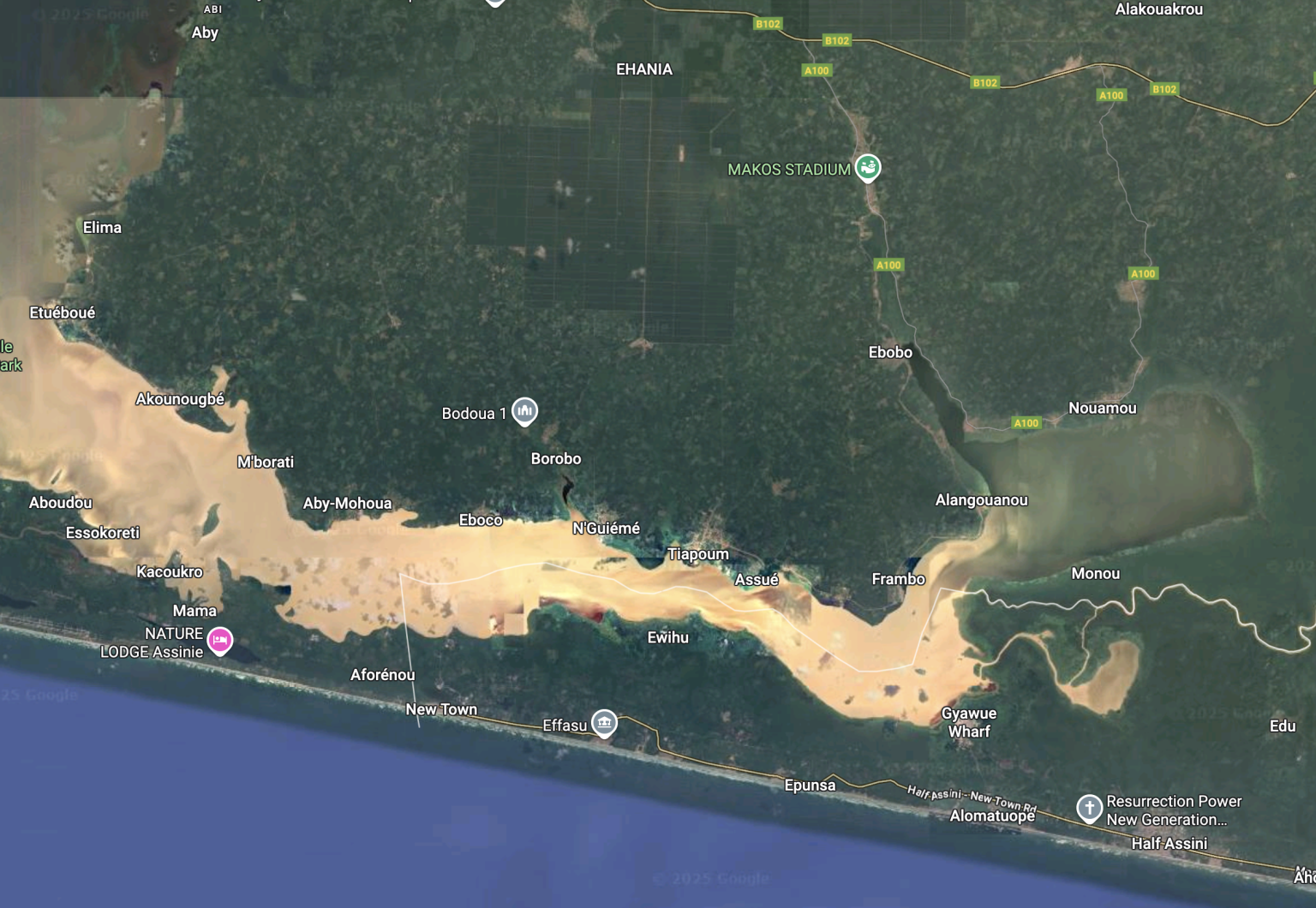
The Tano River, a prominent watercourse in West Africa, originates near Techiman in western Ghana and flows southward for approximately 400 kilometers (250 miles) before ultimately discharging into the Gulf of Guinea (Atlantic Ocean). Its journey culminates in the Aby Lagoon complex in Côte d’Ivoire. The Tano Basin, encompassing the river and its tributaries, spans an approximate area of 16,060 square kilometers, with the vast majority—about 92.6% or 14,875 square kilometers—situated within Ghana, and the remaining 7.4% (1,185 square kilometers) extending into Côte d’Ivoire. The basin’s topography is diverse, ranging from highlands with average elevations around 540 meters above sea level in upstream areas, particularly near the Boyem Mountain Ranges, to much flatter southern sections that lie between 0 and 15 meters above sea level. A well-developed drainage network, comprising the Tano River and nine major tributaries, plays a vital role in supporting local ecosystems, agriculture, and livelihoods throughout the basin area.
The Tendo Lagoon is an integral component of the larger Aby Lagoon complex, which ranks as the second-largest lagoon system in Côte d’Ivoire, covering an area of 424 square kilometers. The Tano River specifically discharges its waters into the Tendo Lagoon from the east, establishing a direct hydrological link. The Tendo Lagoon itself covers 74 square kilometers and is uniquely divided between Côte d’Ivoire in the north and Ghana in the south, emphasizing its shared international status. The climate within the Tano Basin is characterized by wet semi-equatorial and south-western equatorial climatic zones, experiencing double rainfall maxima. Around the Aby Lagoon complex, the annual rainfall averages approximately 2,000 millimeters.
Interconnectivity and Transboundary Nature
The Tano River’s hydrological course directly connects it to the Ehy, Tendo, and Aby Lagoon complex, implying an inextricable link between the health of the river and the ecological status of these lagoons. This intricate geographical arrangement, with the Tano River traversing Ghana and Côte d’Ivoire and the Tendo Lagoon straddling their border, inherently dictates that comprehensive environmental management and pollution control necessitate robust bilateral cooperation. Actions undertaken within the Tano Basin in Ghana directly influence the downstream lagoon complex in Côte d’Ivoire, establishing a complex interdependency that transcends national boundaries and complicates effective governance.
The Tano Basin is a transboundary river basin shared by Ghana and Côte d’Ivoire, with the majority of its drainage area located in Ghana, but its ultimate discharge occurring into the lagoon complex primarily within Côte d’Ivoire. This shared hydrological system means that environmental issues, particularly pollution, are not confined by national borders. The explicit hydrological connectivity between the upstream Tano River and the downstream Tendo/Aby Lagoon complex means that pollution originating in Ghana’s river basin directly impacts the shared lagoon system in both Ghana and Côte d’Ivoire. This creates a clear upstream-downstream dynamic where environmental degradation in one area has cascading effects across national boundaries. Consequently, environmental problems are not isolated but are systemic across the entire basin and lagoon complex, requiring a holistic, transboundary approach to both problem identification and solution implementation.
3. Historical and Cultural Significance
Tano River: Spiritual and Traditional Importance
The Tano River holds profound spiritual and cultural significance for the Akan and Ashanti peoples of Ghana. It is not merely a water body but is personified and worshipped as a powerful water spirit named Tano. This deity is deeply embedded in their mythology, symbolizing the life-giving force of water, fertility, and agriculture. Rituals are frequently dedicated to Tano, aimed at securing blessings for crops and livestock, which are vital for the survival and prosperity of the community.
In Akan mythology, Tano is revered as a river deity, sometimes described as a son of Nyame, the supreme creator god who oversees the universe. Tano is also linked to other water and natural deities, forming a spiritual network that reflects the Akan people’s deep connection to nature. He is known by various epithets that emphasize his roles and characteristics, including “Asuhyia Tano” (The Blessed Waters of Tano), “Nana Ko Nim” (The One Who Wins Wars), and “Obomuhene” (King Within The Rock). Tano is considered the highest and king of all Obosom, or deities, and the Atano (Water/Tano-Abosom) are said to descend from him and the Tano River.
Tano’s nature is complex, embodying both nurturing and destructive aspects. Local folklore recounts stories of his wrath, warning that neglect or disrespect toward the river can result in natural disasters or poor harvests, thereby emphasizing the critical importance of maintaining balance in the relationship between humans and nature. This spiritual importance extends into modern environmental activism, where traditional knowledge is leveraged to emphasize the need to protect natural water sources. The deep cultural and spiritual reverence accorded to the Tano River by the Akan and Ashanti peoples, who perceive it as the powerful deity Tano, presents a unique opportunity for strengthening conservation initiatives. By framing environmental degradation not merely as an economic or public health concern, but also as a desecration with profound spiritual ramifications, it is possible to cultivate a deeper sense of community stewardship and adherence to protective measures. This approach could revitalize traditional governance structures, which historically played a role in maintaining ecological balance and respectful interaction with the environment, thereby fostering more sustainable management practices.
Tendo Lagoon: Historical Uses and Protected Areas
Historically, the Aby Lagoon complex, which includes the Tendo Lagoon, has been a site of significant economic activity, primarily revolving around agriculture and fishing. These activities have long sustained local communities, with fishing, particularly of
Ethmalosa fimbriata, accounting for a substantial portion (60% to 80%) of the fish catch in the lagoon. Major crops cultivated in the surrounding areas include coconut, oil palm, banana, cocoa, and coffee, highlighting the region’s agricultural productivity.
The ecological importance of the Aby Lagoon complex has received international recognition. The Ehotilé Islands, situated within this complex, were designated as Îles Ehotilés National Park in 1974, an initiative spurred by local communities. Furthermore, these islands and surrounding areas form part of the Ramsar site of Iles Ehotilé-Essouman, covering 272.74 square kilometers. This designation signifies international acknowledgment of the area’s ecological importance, particularly as a wetland of international significance. While specific detailed historical events or traditional uses of Tendo Lagoon beyond its general economic importance are not extensively documented in the provided information , the long-standing reliance on fishing and agriculture suggests a rich history of human interaction and resource utilization within the lagoon system. The designation of parts of the Aby Lagoon complex (including areas near Tendo Lagoon) as a Ramsar site and National Park signifies international recognition of its ecological value. This status, however, stands in stark contrast to the severe pollution challenges plaguing the system, highlighting a critical gap between conservation intent and effective on-the-ground protection. This creates a tension between formal conservation status and the reality of environmental degradation, suggesting that existing protective frameworks are insufficient or poorly enforced in the face of powerful destructive forces.
4. Pollution: Sources, Types, and Contaminants
Illegal Mining (Galamsey) and Associated Pollutants
Illegal small-scale mining, locally known as “galamsey,” is identified as the most pervasive and devastating source of pollution impacting the Tano River and its basin, as well as the interconnected Tendo/Aby Lagoon complex. Miners frequently employ rudimentary and unregulated methods, including the widespread use of highly toxic chemicals such as mercury and cyanide, to extract gold.
Mercury (Hg) is a primary pollutant of significant concern. Artisanal and small-scale gold mining (ASGM) activities are estimated to contribute approximately 37% of global atmospheric mercury emissions. Mercury is highly bioaccumulative, meaning it accumulates in living organisms over time. Once elemental mercury is vaporized and released into aquatic ecosystems, it can undergo biomethylation by bacteria, transforming into methylmercury (MeHg), a more toxic and bioavailable form that readily accumulates in fish and macroinvertebrates, leading to increasing concentrations up the food chain. Studies have revealed significant mercury contamination in the sediments of Tendo and Aby lagoons, with mean concentrations of 0.89 ± 0.26 mg·kg and 0.70 ± 0.18 mg·kg, respectively, and up to 78% of the total mercury being of anthropogenic origin.
Beyond mercury, the Tano Basin’s underlying Birimian geology is naturally rich in gold and other minerals, which predisposes the region to extensive mining activities. Consequently, pollution from galamsey also includes other heavy metals such as lead (Pb), cadmium (Cd), arsenic (As), zinc (Zn), copper (Cu), iron (Fe), and manganese (Mn). These metals accumulate in aquatic organisms and sediments, posing significant ecological and human health risks. For instance, arsenic concentrations have been detected in fish, gastropods, and bivalves in Aby and Tendo Lagoons, with fish exhibiting the highest levels. Furthermore, concentrations of cadmium, mercury, and lead have been found to exceed World Health Organization (WHO) and Mexican criteria established for the protection of marine aquatic life in some areas.
In addition to chemical contamination, galamsey operations involve the use of heavy machinery and extensive physical alteration of riverbeds. This leads to significant sedimentation, which clogs rivers, reduces water clarity, disrupts aquatic ecosystems, and destroys natural habitats such as fish spawning grounds. The Tano Basin’s underlying Birimian geology, which is rich in gold, combined with the pervasive and unregulated nature of artisanal and small-scale gold mining (galamsey), has precipitated a profound environmental crisis characterized by severe heavy metal contamination. A critical aspect of this pollution is the behavior of mercury; once released into aquatic ecosystems, it undergoes biomethylation by bacteria, transforming into methylmercury, a form that is both more toxic and readily bioavailable. This transformation facilitates its accumulation and biomagnification through the aquatic food web, posing escalating risks to higher trophic levels. Furthermore, the majority of heavy metal pollutants, exceeding 99%, become sequestered within river and lagoon sediments. This sedimentary trapping implies that the environmental damage is not transient but represents a persistent, long-term legacy of contamination that will continue to present ecological and health hazards even if mining activities were to cease. This creates an entrenched environmental challenge demanding extensive and prolonged remediation efforts.
Agricultural Runoff and Associated Pollutants
Agricultural practices, particularly the overuse and misapplication of agrochemicals such as pesticides and fertilizers, represent another significant source of water pollution in the Tano River basin.
Measurable levels of various pesticide residues have been detected in Tano River samples. These include HCH isomers, aldrin, dieldrin, endrin, chlordane isomers, DDT and its metabolites, and heptachlor isomers. Notably, some of these, such as aldrin, dieldrin, endrin, heptachlor, and cis-heptachlor epoxide, have been found at concentrations exceeding the WHO guideline values for drinking water. Pesticide residues are observed to be significantly higher during the rainy season, indicating that rainfall facilitates the runoff of these chemicals from agricultural lands into the river system. The detection of banned organochlorine pesticides (OCPs), such as lindane isomers, raises concerns about possible illegal use or adulteration of these substances, posing additional environmental and health risks. Moreover, certain persistent pesticides, including permethrin and profenofos, exhibit higher concentrations in sediment samples during the dry season, suggesting their accumulation and long-term presence in the aquatic environment.
Agricultural runoff also carries excess nutrients, primarily nitrogen and phosphorus, into water bodies, leading to a process known as eutrophication. This influx of nutrients promotes the excessive growth of algae and other aquatic plants. As these large algal blooms eventually die off, their decomposition consumes dissolved oxygen in the water, leading to hypoxic or anoxic conditions—often referred to as “dead zones”—where oxygen levels are too low to sustain most aquatic life, resulting in fish kills. Furthermore, harmful algal blooms (HABs) can release toxins that pose severe health risks to both wildlife and humans, rendering the water unsafe for drinking, swimming, or fishing. The seasonal variation in pesticide concentrations (higher in rainy season) combined with the persistence of some pesticides in sediments (higher in dry season) reveals a dynamic and enduring agricultural pollution problem. This suggests that mitigation strategies must consider both immediate runoff control during wet periods and long-term sediment remediation, alongside addressing the underlying issue of illegal pesticide use and weak regulatory enforcement.
Domestic and Industrial Waste Discharge
Inappropriate sanitation practices, including open defecation and poor sewage management, contribute significantly to water pollution, particularly in developing countries. Many communities residing around the lagoons and rivers lack access to effective sanitation infrastructure, exacerbating this problem.
Urban runoff, pollution stemming from petroleum products, and the discharge of industrial waste—often characterized by high concentrations of heavy metals—also negatively impact the water quality of lagoons in urbanized areas. Local communities recognize municipal waste as a contributing factor to river pollution, with approximately 10.7% of surveyed respondents identifying it as a cause. The prevalence of pollution from domestic waste and inadequate sanitation, alongside industrial discharges, indicates a fundamental challenge in urban and rural infrastructure development and waste management. This suggests that even if mining and agricultural pollution are addressed, a significant portion of water quality degradation will persist without substantial investment in sanitation and waste treatment infrastructure, highlighting a broader development deficit.
Observed Water Quality Degradation
The quality of water in the Tano River and its associated water bodies has undergone a visible and severe degradation. Reports indicate that the river has turned “brown and murky,” a clear sign of significant contamination.
Scientific assessments confirm widespread exceedances of international water quality standards. Parameters such as pH, Iron (Fe), and Phosphorus (P) are found above WHO recommended values at over 80% of sampled sites, while Lead (Pb) levels exceed limits at 30% of sites. More critically, concentrations of Copper (Cu), Mercury (Hg), Arsenic (As), and Iron (Fe) are consistently above permissible levels for irrigation, particularly in areas proximate to mining activities. This extensive contamination renders the water largely unusable for many essential purposes, despite its physical availability. Trace metal levels in Tanoe River sediments in the Bono region have also been thoroughly assessed, providing further evidence of widespread contamination. The widespread exceedance of international water quality standards across multiple parameters (pH, heavy metals, nutrients) and the visible degradation (murky water) indicate a systemic and pervasive pollution problem that renders the water bodies largely unusable. This suggests that the current state of pollution has moved beyond localized contamination to a regional environmental crisis impacting fundamental resource utility.
5. Ecological and Socio-Economic Impacts
Impact on Aquatic Ecosystems and Biodiversity
The pervasive pollution has dramatically altered the Tano River and Tendo Lagoon, transforming once-thriving aquatic environments into “toxic, lifeless streams”.
Chemical Poisoning and Food Web Disruption: Pollutants such as mercury, cyanide, and other harmful chemicals directly poison the water and severely disrupt the aquatic food chain. Aquatic organisms, including fish, shellfish, and crustaceans, absorb and accumulate these dangerous substances through a process known as bioaccumulation. As these contaminated organisms are consumed by predators, the concentration of toxins increases at higher trophic levels, a phenomenon called biomagnification, leading to escalating risks for top predators and disrupting the entire ecosystem. For example, studies have shown that arsenic concentrations in fish, gastropods, and bivalves in the Aby and Tendo Lagoons are concerning, with fish exhibiting the highest levels. Mercury, particularly methylmercury, is highly bio-accumulative and bio-magnified, leading to high concentrations in large fish. Cadmium, lead, and arsenic also accumulate in various tissues of aquatic organisms, posing significant health risks. The strong association between metals and seston (particulate matter in water) indicates continued contamination and potential risks, as seston acts as a primary support for the food web, facilitating the incorporation of metals into food chains.
Oxygen Depletion and Habitat Destruction: Sedimentation from mining activities reduces light penetration in the water, which is crucial for photosynthesis by aquatic plants, the primary producers of oxygen. Without sufficient dissolved oxygen, fish and other aerobic organisms face suffocation, leading to widespread fish kills. The physical alteration of riverbeds due to extraction processes destroys natural habitats that many aquatic species depend on. The removal of gravel, sand, and other materials disrupts spawning grounds for fish, eliminates shelters for smaller organisms, and alters the natural flow and temperature of the water—all factors crucial for maintaining ecological balance. This habitat degradation, combined with chemical poisoning, has resulted in rapid declines in fish populations, with some endemic species facing local extinction, leading to an irreplaceable loss of biodiversity and genetic lineages.
Proliferation of Water Weeds: A major challenge identified in the Tano/Aby/Ehy lagoon complex is the proliferation of water weeds, which extends along 25 kilometers of the river from its confluence with the lagoon. While the exact cause is not explicitly detailed in relation to pollution, nutrient loading from agricultural runoff can contribute to excessive aquatic plant growth, further impacting water quality and usability.
Impact on Local Communities, Livelihoods, and Health
The environmental degradation of the Tano River and Tendo Lagoon has profound and far-reaching socio-economic and health consequences for the communities that depend on these water bodies.
Livelihood Disruption: Fishing, a primary economic activity and source of sustenance for many communities around the Tendo and Aby lagoons, has been severely impacted. The loss of fish stocks due to pollution and habitat destruction has led to reduced catches, directly affecting food security and driving up prices of staple fish, making essential nutrients difficult to replace. This economic instability forces some community members to seek alternative livelihoods, sometimes paradoxically leading them to engage in illegal mining, thereby perpetuating a vicious cycle of environmental destruction. Farmers relying on the Tano River for irrigation have reported negative impacts on crop yields due to water pollution. The poor quality of river water renders it unusable for many purposes despite its availability, directly affecting agricultural productivity.
Health Risks: Communities relying on the polluted rivers for drinking water, irrigation, and daily household activities face serious health risks. Exposure to toxic chemicals, particularly mercury and cyanide used in galamsey, increases the risk of various diseases, including mercury poisoning, respiratory problems, and different forms of cancer. Stagnant water in abandoned mining pits also serves as breeding grounds for mosquitoes, increasing the incidence of vector-borne diseases. Studies have detected non-carcinogenic and carcinogenic risks for water consumption by children and adults in areas affected by land use activities, including industrial, agricultural, and commercial operations. The accumulation of heavy metals like arsenic in fish and molluscs, which are food sources for local populations, poses direct risks to human health depending on the species and levels of contamination. The lack of sanitation facilities, leading to open defecation and poor sewage management, further contributes to water pollution and poses a serious risk to human health.
Social and Governance Challenges: The issue of illegal mining is deeply intertwined with social and governance challenges. Artisanal miners are often compelled to operate illegally due to a lack of alternative sustainable employment opportunities. There are allegations of corruption and a lack of enforcement, with claims that powerful individuals, including politicians, own the expensive equipment used in illegal mining, making it difficult to curb these activities even when arrests are made. This breakdown in law enforcement and governance undermines efforts to protect water bodies and exacerbates community resistance to interventions. The perceived institutional and policy failures, coupled with a lack of respect for authority and the weakening of traditional governance systems, are significant barriers to effective management of the Tano River basin.
6. Influence and Broader Implications
Regional Hydrological System and Ecological Services
The Tano River and Tendo Lagoon are integral components of a larger regional hydrological system, providing essential ecological services that extend beyond their immediate geographical boundaries. The Tano Basin’s well-developed drainage network supports diverse socio-economic activities, including agriculture, forestry, tourism, and fisheries, sustaining millions of people. Its rich terrestrial and aquatic ecosystems offer vital services such as water supply, biodiversity, and climate regulation. Forest ecosystems within the basin play a critical role in regulating freshwater supply by supporting natural flow, filtration, and water quality. Several forest reserves, such as Boin Tano, Tano Suraw, Tano Suhien, and Disue Forest Reserves, have been established to protect river headwaters, underscoring their importance for water quality and supply.
The interconnectedness of the Tano River with the Aby-Tendo-Ehy lagoon system means that the ecological health of the entire complex is interdependent. Degradation in one part of the system, such as the upstream Tano River, directly impacts the downstream lagoons, affecting their biological productivity and the services they provide. The cumulative impact of pollution sources, from galamsey to agricultural runoff and domestic waste, threatens the fundamental ecological processes that underpin these services. For example, eutrophication from nutrient pollution depletes oxygen, creating “dead zones” that disrupt the entire aquatic food web and reduce biodiversity. The bioaccumulation and biomagnification of heavy metals through the food chain pose a long-term threat to the health of the ecosystem and the safety of its resources. This highlights that the ecological benefits of hydrological connectivity are being severely undermined by anthropogenic pressures, leading to a decline in ecosystem services crucial for human well-being and sustainable livelihoods.
Transboundary Governance and Management Challenges
The transboundary nature of the Tano River and Tendo Lagoon, shared between Ghana and Côte d’Ivoire, presents significant governance and management challenges. While Ghana holds the majority of the Tano Basin (93% of the drainage area), the river ultimately discharges into the lagoon complex predominantly located in Côte d’Ivoire. This shared jurisdiction means that environmental issues originating in one country, such as illegal mining in Ghana, directly impact the water quality and ecological health of the other, necessitating coordinated policy and enforcement.
The Water Resources Commission (WRC) in Ghana has developed an Integrated Water Resources Management (IWRM) Plan for the Tano Basin, aiming to address challenges such as the proliferation of water weeds and pollution. The plan involves various stakeholders, including district assemblies, environmental protection agencies, and local community representatives. However, the effectiveness of these plans is hampered by several factors. Local communities report institutional and policy failures, a lack of respect for authority, and the weakening of traditional governance systems as key impediments to managing the Tano River basin. Allegations of political interference and corruption, where powerful individuals are perceived to own mining equipment and enable illegal activities, further complicate enforcement efforts and undermine public trust.
Addressing the challenges posed by galamsey requires a multi-faceted approach, including strengthening law enforcement, promoting clean mining technologies, and increasing public awareness. The Ghanaian government has initiated measures such as the “Blue Water Initiative” to clear water bodies from illegal mining and is reviewing the mining sector’s licensing regime. Long-term strategies also include exploring alternative sustainable livelihoods to reduce dependence on illegal mining. Similarly, for agricultural pollution, there is a recognized need for ongoing monitoring of pesticide residues, particularly during rainy seasons, and stricter enforcement of pesticide regulations to prevent illegal usage and adulteration of banned substances.
The Aby Lagoon complex, which includes Tendo Lagoon, has been designated as a Ramsar site, indicating its international ecological importance. However, this protected status contrasts sharply with the ongoing pollution, underscoring a gap between conservation recognition and effective implementation on the ground. The need for comprehensive, transboundary management plans that are effectively enforced and supported by strong political will and community engagement is paramount for the sustainable future of the Tano River and Tendo Lagoon system.
7. Conclusion
The Tano River and Tendo Lagoon represent a vital, yet severely threatened, transboundary hydrological system in West Africa. Their ecological integrity, historical significance, and capacity to support human livelihoods are critically undermined by pervasive pollution. Illegal small-scale gold mining (galamsey) stands out as the most devastating source, introducing highly toxic heavy metals like mercury and cyanide, which bioaccumulate and biomagnify through the food web, creating a persistent and biologically amplified pollution legacy in the sediments. Agricultural runoff, laden with pesticides and excessive nutrients, further exacerbates water quality degradation, leading to eutrophication and oxygen depletion. Inadequate domestic and industrial waste management also contributes significantly to the overall contamination burden.
The observed degradation, including murky water and widespread exceedance of international water quality standards, renders these water bodies largely unusable for human consumption, irrigation, and fishing, directly impacting food security and public health. The complex interplay of environmental degradation, socio-economic pressures, and governance deficits, particularly the alleged political interference in illegal mining, creates a formidable challenge to effective management.
Despite international recognition of the lagoon complex’s ecological value through Ramsar designation and the existence of national management plans, the reality on the ground reflects a critical gap between conservation intent and effective enforcement. The profound cultural and spiritual significance of the Tano River to local communities, if leveraged appropriately, could offer a powerful avenue for fostering greater stewardship and adherence to environmental protection measures. Ultimately, the sustainable future of the Tano River and Tendo Lagoon hinges on the implementation of integrated, transboundary water resource management strategies that are supported by strong political will, robust regulatory enforcement, and genuine community engagement, addressing both the immediate sources of pollution and the underlying socio-economic drivers.


