



Executive Summary
The Tano River Basin, a vital ecological and economic artery in West Africa, sustains millions through its rich water resources, fertile lands, and diverse ecosystems. This report illuminates the profound yet frequently unrecognized contributions of women in managing these critical riverine livelihoods, specifically in water resource management, fishing, and agriculture. Despite their indispensable roles as primary water collectors, post-harvest fisheries processors, and dominant food crop producers, women in the Tano Basin face systemic barriers rooted in deep-seated gender inequalities, limited access to productive resources, and exclusion from formal decision-making processes. These challenges are compounded by severe environmental degradation, such as illegal mining and invasive species, which disproportionately impact women’s health and economic stability.
The analysis reveals a significant disconnect between women’s extensive participation in economic activities and their actual empowerment. While they perform the majority of labor in key sectors, their control over resources, income, and strategic decisions remains constrained by patriarchal norms and institutional shortcomings. This situation not only perpetuates their vulnerability but also undermines the sustainability of the entire basin. However, opportunities exist through targeted interventions, including microfinance, gender-sensitive capacity building, technology adoption, and robust advocacy for inclusive governance and land rights reform. Recognizing and actively elevating these “unsung heroes” is not merely a matter of social justice; it is a pragmatic imperative for fostering resilient communities, ensuring food security, and achieving sustainable development across the Tano River Basin.
1. Introduction: The Tano River Basin and its Human Landscape
1.1 Geographical and Socio-Economic Context of the Tano River Basin
The Tano River, a prominent water body in West Africa, originates near Techiman in western Ghana and flows southward for approximately 400 kilometers (250 miles) before entering the Gulf of Guinea at Aby Lagoon in Côte d’Ivoire. Its lower course delineates a significant portion of the Ghana–Côte d’Ivoire boundary. The river system boasts a total catchment area of about 15,000 square kilometers, with the vast majority, approximately 93%, situated within Ghana. This extensive basin spans three administrative regions in Ghana—Brong Ahafo, Ashanti, and Western Regions—and encompasses 21 administrative districts, signifying its broad geographical and administrative reach.
The Tano River Basin functions as a critical water resource, providing a major source of domestic water supply from both surface and groundwater for millions of inhabitants, including the city of Sunyani and its surrounding communities. The basin’s socio-economic fabric is diverse, with agriculture serving as the primary occupation for over 27% of its population, a figure that rises to 47% in rural areas. Both commercial and subsistence farming are prevalent, with cocoa standing out as the dominant cash crop, contributing 70–100% of income for households engaged in its cultivation. Other significant crops include plantain, oil palm, rubber, coffee, cassava, and coconut, particularly along the coast.
Beyond agriculture, the Tano Basin is endowed with substantial mineral resources, notably gold. This abundance has led to extensive mining activities, including widespread illegal mining, locally known as “galamsey”. Forestry, encompassing logging and timber processing, also contributes significantly to local economies, as do non-timber forest products (NTFPs), which can account for up to 35% of farmers’ annual income. Furthermore, the lower Tano Basin holds potential for oil and gas exploration, with activities commencing in 2012, hinting at future industrial growth opportunities.
A notable aspect of the Tano River Basin is the apparent contradiction between its rich natural resource endowment and the escalating environmental degradation it faces. The basin is described as “ecologically and economically vital” and a “crucial water resource” supporting millions through its diverse livelihoods. Yet, it simultaneously grapples with “increasing environmental concerns because of anthropogenic activities”. These activities include the proliferation of water weeds, particularly water hyacinth, in the Tano/Abby/Ehy lagoon complex , and significant pollution stemming from inadequate sanitation, poor hygiene, and both domestic and industrial discharges. Illegal mining, in particular, is a major culprit, causing extensive destruction to forests and widespread water pollution. This juxtaposition of high resource value and severe environmental decline indicates a fundamental conflict between the current modes of economic exploitation and the imperative of environmental sustainability. This environmental degradation directly impacts the sustainability of riverine livelihoods, especially for those most dependent on healthy ecosystems, such as women farmers and fishers. The decline in water quality and the loss of arable land are not merely ecological problems; they represent a direct threat to human well-being and economic stability, making the contributions of women, who are often at the front lines of resource management and daily survival, even more challenging and vital to acknowledge.
1.2 Defining “Unsung Heroes”: The Rationale for Highlighting Women’s Contributions
In Ghana, women’s pervasive involvement across various economic sectors is undeniable, yet their contributions often remain marginalized or overlooked in formal discourse and policy. Nearly 70% of Ghanaian women actively participate in the economy, a rate that surpasses many developed nations, and their presence is felt across almost every sector. Historically, women have been central to community and family development in African societies, holding significant positions in pre-colonial forest kingdoms and playing a dominant economic role in market activities.
However, traditional practices frequently place women at a disadvantage, impeding their ownership rights over land and restricting their access to crucial resources and decision-making platforms. While policies may contain what are termed “obligatory references to women,” they often fall short of addressing the deep-seated inequalities that persist. This report seeks to illuminate these critical, yet frequently unrecognized, roles within the Tano River Basin, with a specific focus on women’s contributions to water resource management, fishing, and agriculture.
A critical observation is the significant disconnect between women’s high participation in economic activities and their actual empowerment. While women account for a substantial portion of Ghana’s economic activity, including producing an estimated 80% of crops and 70-80% of food consumed in Sub-Saharan Africa , their extensive involvement does not automatically translate into equitable benefits or control. They often face a “low status in rural areas coupled with gendered stereotypes” and experience “limited access to resources, training, and decision-making spaces”. Their contributions are frequently “overlooked or minimized”. This disparity is further underscored by the concept of “time poverty,” where women dedicate so many hours daily to farm work and household chores that they have minimal time for rest or personal advancement. This situation reveals that high participation is not synonymous with genuine empowerment or equitable outcomes. Women are often indispensable labor, yet their control over productive resources, their influence in decision-making processes, and their ability to improve their own lives remain severely constrained. Therefore, recognizing these “unsung heroes” entails not merely acknowledging their labor but actively dismantling the systemic barriers that prevent them from fully benefiting from and leading in these vital sectors.
The following table provides a concise overview of women’s multifaceted contributions across the key livelihood sectors within the Tano River Basin, highlighting the often-overlooked aspects of their work.
Table 1: Overview of Women’s Contributions Across Tano River Livelihoods
| Livelihood Sector | Key Contributions | Quantifiable Impact (where available) | “Unsung” Aspect |
| Water Resource Management | Daily water collection for domestic & agricultural use; Informal stewardship & preservation; Traditional knowledge of local water systems | Primary water collectors for millions | Unpaid labor; Burden of time & physical effort; Exclusion from formal water governance |
| Fishing | Post-harvest processing (smoking, salting, drying); Marketing & distribution of fish; Financial management & credit provision for fishing expeditions; Clamming | 90% in secondary fishing activities (processing, selling) ; Significant proportion of fisheries workforce | Value-adding work often overlooked; Economic vulnerability due to dwindling stocks; Health risks from processing methods; Exclusion from fisheries management decisions |
| Agriculture | Primary production of food & cash crops; Pre- & post-harvest activities; Food processing & preservation; Backyard gardening; Adaptation to new farming techniques | 80% of crops produced in Ghana ; 70-80% of food consumed in Ghana | Limited land ownership & rights; Unequal access to resources (credit, training, technology); Time poverty from dual responsibilities; Underrepresentation in decision-making |
2. Women’s Indispensable Role in Water Resource Management
2.1 Traditional Practices and Daily Water Collection for Domestic and Agricultural Use
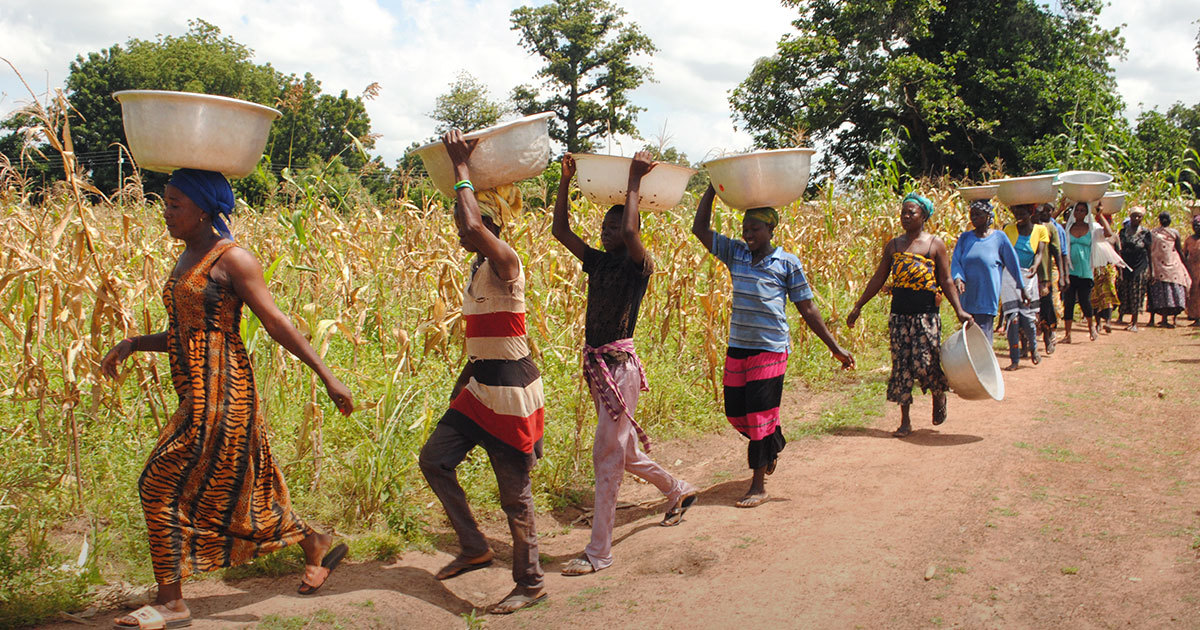
Women are globally acknowledged as fundamental actors in the effective management of water supply. Their traditional roles inherently involve the handling and collection of water for both domestic consumption and agricultural purposes. In Ghana, women and children are intrinsically linked to water sources through their primary role as water collectors. This daily engagement provides them with an unparalleled and invaluable understanding of local water systems. The Tano River, serving as a major source of domestic water for millions of people and numerous communities, underscores the foundational nature of women’s role in its collection and management for household well-being.
This daily, laborious task of water collection is not merely a household chore; it represents a critical, yet largely unpaid and often unacknowledged, contribution to public health and community sustenance. The physical and temporal demands of this responsibility contribute significantly to what is termed “time poverty” among women, where extensive hours spent on essential household and livelihood activities leave minimal time for rest, education, or personal development. When the quality of water deteriorates due to pollution, a prevalent issue in the Tano Basin , the burden on women intensifies. They may be compelled to travel greater distances to find clean sources or dedicate additional time and resources to treat contaminated water, directly impacting their health and overall well-being. The degradation of the Tano River’s environmental health, therefore, disproportionately affects women by increasing the difficulty, time investment, and health risks associated with their primary role as water providers for their families and communities.
2.2 Informal Stewardship and Traditional Knowledge in Water Resource Preservation
African women have historically maintained a profound affiliation with rivers and water bodies. Their intimate connection with water resources positions them as the primary managers of water at the household and community levels. This deep-seated relationship fosters an invaluable repository of local knowledge concerning water systems, including their seasonal variations, quality, and sustainable use.
This traditional ecological knowledge (TEK) is often interwoven with spiritual and cultural beliefs. For instance, the Akan people, who reside within the Tano Basin, make reference to “nsuo abosom,” the idea of river or water deities, signifying a spiritual reverence for these water bodies. The historical figure of Nana Afia Ankoma, recognized as the first priestess to serve the Tano deity Ta Kora in Akan mythology, exemplifies the profound spiritual importance and the historical role of women in maintaining rituals and traditions associated with the river. This spiritual and cultural connection frequently translates into informal, community-led stewardship practices aimed at water resource preservation.
The undervaluation of this nexus of traditional knowledge, spiritual connection, and practical water management represents a significant missed opportunity for effective resource governance. Women possess an invaluable, holistic understanding of local water systems , often rooted in generations of observation and cultural practices. Despite this deep, practical engagement, formal water governance structures frequently exclude women from decision-making processes. This sidelining of women means that modern water management plans often fail to integrate this rich, localized TEK and the pragmatic insights of the primary water users. By overlooking these crucial perspectives, formal governance systems not only miss out on a vital source of sustainable solutions but also inadvertently undermine community-led conservation efforts. The consequence is often less effective, less equitable, and ultimately unsustainable water management outcomes for the entire community and the river basin.
2.3 Barriers to Formal Participation in Water Governance and Decision-Making
Despite international recognition of their pivotal importance in water supply management, women are consistently excluded from formal water management activities. This exclusion has been identified as a frequent cause of water project failures. This marginalization is not incidental; it fundamentally stems from “traditional norms and practices” and the pervasive influence of a “strongly male-dominated society that often prevents women” from participating meaningfully.
At the community level, discussions and problem-framing around river-related issues are often based on predetermined notions traditionally ascribed to men. Women are culturally expected to delegate their opinions to men on decision platforms, making it inherently difficult to achieve gender equality in river basin management. While there are instances of formal inclusion, such as the representation of the Queen Mothers Association on the Tano Basin Board , the broader pattern remains one of marginalization. Women’s voices are often favored less, particularly when it comes to critical river-related issues.
The systemic nature of this exclusion has a direct and detrimental impact on the effectiveness of water governance. Women’s exclusion is a consequence of deeply rooted gender differences and a male-dominated societal structure. This leads to women often delegating their perspectives to men, and being systematically “left out of technical initiatives, community meetings, and management decisions”. The direct consequence of this exclusion is frequently observed in “water project failure” and an “insufficient” government approach to addressing environmental degradation within the basin. This highlights that gender inequality in water governance is not merely an issue of social justice; it is a practical impediment to effective resource management. The absence of women’s perspectives leads to incomplete problem framing, the development of inadequate solutions, and ultimately, unsustainable outcomes for the entire community and the Tano River Basin. Meaningful inclusion of women is therefore not simply desirable but an essential prerequisite for the success and long-term sustainability of water governance initiatives.
3. Women as the Backbone of Fishing Livelihoods
3.1 Dominance in Post-Harvest Activities: Processing, Preservation, and Marketing
In Ghana’s fisheries sector, there is a distinct gender segregation of labor. While men are typically responsible for catching and landing fish, women predominantly take on the crucial roles of processing and marketing the catch. Women constitute a substantial portion of the overall workforce in Ghana’s fisheries. Their contribution is particularly significant as they add immense value to fresh fish through various processing methods, including smoking, salting, and drying. This processing, coupled with their efforts in distribution and preservation, ensures that fish remains available long after the peak season and reaches consumers far from the landing beaches. Data suggests that approximately 90% of individuals engaged in secondary fishing activities, such as salting, processing, and selling, are women.
Historically, figures like the “Konkohemaa,” or queen fishmonger, held considerable power in coastal fishing communities, negotiating with fishermen and even owning boats and financing fishing trips. The profession of fishmongering is often a legacy, passed down through generations from mother to daughter. Beyond the more visible fish processing, women also engage in other lesser-known fishing modalities, such as clamming. This activity tends to be predominantly female, often performed with rudimentary tools and characterized by a low environmental impact.
Despite their critical role, women’s contributions in the fisheries value chain often remain an invisible aspect of the sector, leading to economic vulnerability. While men are the visible actors in fish capture, women dominate the entire “post-harvest” sector. This means they are responsible for transforming raw catches into marketable products, preserving them to extend shelf life, and ensuring their widespread distribution, which is fundamental for food security and the economic viability of the entire industry. Yet, their substantial value-adding work is frequently “overlooked or minimized”. The current crisis in Ghana’s fisheries, marked by dwindling fish stocks, forces women to purchase fish for processing rather than relying on fresh catches, thereby increasing their operational costs and exacerbating their precarious economic situation. The marginalization of women from decision-making processes in fisheries management means that policies often fail to address the specific challenges and needs of this critical female workforce, which in turn hinders the adoption of sustainable practices across the entire value chain.
3.2 Financial Contributions and Entrepreneurial Spirit in the Fisheries Value Chain
Women’s influence in the fisheries sector extends significantly beyond their labor in processing and marketing; they play a dominant role in financing fishing expeditions and managing the post-harvest economy. They often act as crucial creditors, providing financial support for canoes, nets, and even outboard motors. Furthermore, they are responsible for managing the financial proceeds from the catch, strategically allocating funds to ensure the men have sufficient capital for subsequent voyages.
Some women have ascended to powerful economic positions as “fish mammies,” operating as wholesalers, large-scale processors, market traders, and even owners of fishing companies, demonstrating significant entrepreneurial acumen. This entrepreneurial spirit is vividly exemplified by individuals such as Mrs. Mabel Ibidun Quarshie, a former banker who transformed her approach to the industry. She innovated by creating diverse value-added fish products, including fish sausages, jerky, chips, and powdered tilapia spices, and now dedicates her efforts to mentoring other women entrepreneurs.
These women function as hidden financial architects and innovators within the fisheries sector. Beyond their visible labor in processing, they are the crucial financiers and managers who underpin the economic stability and operational continuity of the fishing economy. They provide essential credit, manage the complex finances of fishing expeditions, and increasingly own the means of production. This demonstrates a sophisticated level of financial acumen and an inherent entrepreneurial drive. Often, they operate within informal or traditional systems due to significant difficulties in accessing formal credit from banks, largely because of a lack of collateral. The example of Mrs. Quarshie further illustrates this capacity for innovation and business development, showcasing how women can identify market gaps and create new value streams. Policies and interventions that fail to recognize and actively support this vital financial and entrepreneurial role miss a key lever for sustainable growth and poverty reduction within the sector. Empowering women with greater access to formal finance and tailored business development support could unlock substantial untapped potential, moving communities beyond mere subsistence.
3.3 Challenges in the Fishing Sector: Dwindling Stocks, Poor Conditions, and Exclusion
Ghana’s fisheries are currently facing a severe crisis, with local fishing communities struggling to maintain their livelihoods. This crisis is largely attributed to intense competition from industrial trawlers and widespread illegal fishing activities, which deplete limited fish resources. The consequence of these dwindling fish stocks is that fishmongers are increasingly compelled to purchase fish for processing rather than relying on fresh catches, which significantly increases their operational costs and diminishes their profit margins.
Women fish processors also confront significant health risks directly linked to their work. The high levels of smoke endured when using traditional “chorkor ovens,” which are popular due to their capacity for large quantities but pose considerable health hazards, contribute to respiratory issues and eye irritation. While the “ahotor oven” is a recommended alternative, offering greater energy efficiency and safety by reducing Polycyclic Aromatic Hydrocarbon (PaH) contamination, women require substantial support and subsidies for its construction to make it affordable and widely adopted.
Despite their vital contributions and central role, women are frequently excluded from technical initiatives, community meetings, and crucial fisheries management decision-making processes. They are often among the most marginalized groups within the sector, frequently lacking ownership of fisheries-related inputs like boats or processing equipment, and facing limited access to savings and microcredit.
The challenges in the fisheries sector create compounding vulnerabilities for women, stemming from both environmental degradation and systemic exclusion. Women’s livelihoods are directly threatened by environmental issues such as the depletion of fish stocks due to illegal fishing and the operations of industrial trawlers. This environmental degradation is exacerbated by their systemic exclusion from decision-making platforms , which prevents their voices and practical knowledge from shaping effective solutions to these crises. Furthermore, their reliance on traditional processing methods exposes them to severe health risks, adding a layer of vulnerability directly linked to their livelihood activities. The crisis in the fisheries sector thus disproportionately burdens women, who are already operating from a marginalized position. Addressing these challenges effectively requires a dual approach: tackling the ecological issues, such as illegal fishing, must be integrated with empowering women to participate meaningfully in governance and providing them with access to safer, more efficient technologies. Without addressing both the ecological and the deeply gendered dimensions of these problems, efforts to achieve sustainable fisheries will remain incomplete and inequitable.
4. Women’s Centrality in Agricultural Production
4.1 Primary Producers of Food and Cash Crops: Scope and Scale of Contribution
Women are central figures in West African food systems, playing crucial roles across the entire agricultural value chain, from initial land preparation and planting to harvesting, processing, distribution, and marketing. They constitute nearly half of all smallholder farmers and are estimated to produce approximately 70% of the continent’s food. In Ghana specifically, women are responsible for producing about 80% of crops and account for 70% to 80% of the food consumed nationwide.
Their roles encompass the primary production of basic food staples and the cultivation of a diverse array of food crops, including fruits, vegetables, grains, and tubers. While men often focus on “starch” crops such as rice, women traditionally specialize in “sauce” crops like peanuts. Women also cultivate other essential crops for domestic consumption, including yam, cocoyam, cassava, and plantains.
Women’s extensive involvement positions them as the linchpin of household food security. The consistent data indicating that women produce a vast majority of food crops directly links their agricultural activities to the survival and nutritional well-being of families and communities. Their labor in cultivation, processing, and marketing is not merely an economic activity; it is a fundamental pillar of family and community survival. Consequently, any disruption to their farming capacity—whether due to loss of land, environmental degradation, or lack of access to resources—has direct and severe consequences for food availability and nutrition at the household level. Supporting women farmers is therefore a direct and effective pathway to improving food security for millions in the Tano River Basin and beyond.
4.2 Diverse Farming Practices and Adaptations by Women Farmers
Women farmers in the Tano River Basin engage in a broad spectrum of activities, both on- and off-farm. These include manual cultivation work, pre- and post-harvest activities, food processing, and various household tasks. Their contributions to household food security are particularly evident through practices such as backyard gardening. Increasingly, women are also becoming visible in agricultural tasks traditionally considered male preserves, such as land clearance and the cultivation of cash crops.
Beyond their diverse practices, women farmers demonstrate remarkable adaptability and openness to adopting new techniques in the face of challenges. For example, Nusura Sadiki, a farmer in Tanzania (a context with similar agricultural challenges), significantly transformed her livelihood by learning conservation farming techniques through the Tuungane Project. These techniques emphasized crucial practices like maintaining soil health through organic manure application, timely planting, mulching, crop rotation, proper plant spacing, and using ridges to prevent soil erosion. This adoption led to a dramatic increase in her maize yield, from 8 sacks to over 40 sacks, fundamentally improving her family’s economic situation.
This capacity for resilience and adaptability in the face of numerous constraints is a defining characteristic of women farmers. Despite facing significant limitations such as restricted access to land, inadequate resources, and severe time poverty , women are not passive recipients of aid but active agents. They engage in diverse farming practices, including critical backyard gardening , and are increasingly taking on roles traditionally assigned to men. Their willingness to adopt new, sustainable farming techniques, as demonstrated by the success of conservation agriculture , highlights their inherent innovation and capacity for adaptation. This perspective frames women not merely as vulnerable populations but as potential drivers of sustainable agricultural transformation. Therefore, interventions should leverage this adaptability by providing appropriate training and technologies that reduce their burdens and enhance their productivity, rather than imposing top-down solutions that may not align with their lived realities or traditional knowledge.
4.3 Systemic Barriers: Land Tenure, Access to Resources, and Time Poverty
Despite their central role in agriculture, women in the Tano River Basin, like many across Ghana, face deep-seated gender inequalities and patriarchal norms that severely limit their potential. Their low status in rural areas, coupled with pervasive gendered stereotypes, contributes to a poor perception of the systemic inequalities they endure.
Land Tenure: A primary barrier is the pervasive lack of knowledge and awareness regarding women’s rights to land. Traditional practices frequently prioritize gifting land to males, leaving women with no outright ownership rights, or granting them only precarious use rights through their husbands and sons. While land allocation to women is becoming more common, outright long-term ownership and secure user rights remain highly restricted. Men are generally more likely to own land and possess transfer rights, allowing them to sell, rent, or lend it.
Access to Resources: Women face significant limitations in accessing essential resources. These include inadequate transportation, limited educational opportunities , and restricted access to agricultural assets, services (including extension support), and credit. The lack of collateral and cumbersome bureaucratic procedures often prevent them from accessing formal credit facilities , forcing reliance on informal community networks for finance. Furthermore, women often lack the resources to hire labor, compounding their workload.
Decision-Making: Women exhibit low participation and limited decision-making power within producers’ organizations and at household, community, district, and national governance levels. Patriarchal norms dictate that male landowners are still more likely to participate in decisions concerning production, crop types, and input purchases, and women generally have less say in decisions regarding agricultural income, irrespective of whether they own land. They are often left out of grassroots decision-making processes.
Time Poverty: Women are disproportionately affected by “time poverty,” spending extensive hours on farm work and household chores, which leaves them with minimal time for rest, recreation, or further education. Their heavier share of domestic responsibilities means that even gaining land ownership often does little to alleviate their overall workload.
The challenges women face in agriculture are not isolated but form an interconnected web of disadvantage. Patriarchal norms , limited land ownership and rights , restricted access to credit, training, and technology , and severe time poverty due to dual responsibilities all reinforce each other, creating a self-perpetuating cycle of marginalization. For example, without secure land ownership, women struggle to obtain formal credit, which limits their ability to invest in productivity-enhancing technologies, thereby perpetuating low yields and income. This complex interplay underscores that addressing women’s challenges in agriculture requires a holistic and integrated approach that recognizes these interdependencies. Single interventions, such as merely providing training without simultaneously addressing land rights or alleviating time poverty, are unlikely to achieve sustainable empowerment. Therefore, multi-faceted strategies that tackle the systemic nature of these barriers concurrently are essential.
4.4 Environmental Impacts on Women’s Agricultural Livelihoods (e.g., illegal mining, water hyacinth)
Environmental degradation in the Tano River Basin poses a direct and severe threat to women’s agricultural livelihoods. Illegal mining, or “galamsey,” activities have caused extensive destruction, including widespread deforestation, severe water pollution, and significant soil degradation. This directly impacts agricultural productivity by reducing the output of staple food crops such as cassava, yam, and plantain, leading to increased market prices and reduced food availability for families.
Women are particularly vulnerable to the consequences of mining, with a high percentage (67.8% to 90% of respondents in affected areas) reporting the loss of access to land for farming due to these activities. Furthermore, the pollution of water bodies by mining operations forces communities to purchase water, which they previously obtained freely, thereby increasing household expenses and exacerbating poverty.
Another significant environmental challenge is the proliferation of invasive water weeds, specifically water hyacinth, in the Tano/Abby/Ehy lagoon complex and along sections of the river. This invasive species destroys farm produce, significantly increases the time and effort required to access farms, and directly reduces farmers’ income. During peak invasion periods, movement for essential economic activities like farming and fishing becomes almost impossible, severely disrupting livelihoods.
Environmental degradation in the Tano Basin acts as a gendered economic shock. Since women are the primary food producers and rely heavily on these natural resources for their livelihoods , these environmental crises disproportionately impact their ability to farm and generate income. This leads to reduced food production, increased food prices, and higher household expenses , pushing already vulnerable women deeper into poverty. This highlights that environmental protection and remediation efforts in the Tano Basin are not just ecological imperatives but are crucial for safeguarding women’s livelihoods and ensuring household food security. Moreover, given their direct reliance on and intimate knowledge of these resources, women should be central to the design and implementation of environmental management and remediation strategies.
5. Overarching Challenges and Systemic Disparities
5.1 Deep-Rooted Gender Inequality and Patriarchal Norms
Despite Ghana’s adoption of progressive laws, such as paid maternity leave and equal pay , the nation continues to grapple with deeply entrenched social norms that dictate “acceptable” jobs for women and impose a disproportionately heavier share of domestic responsibilities upon them. These patriarchal ideologies are further reinforced by a notable lack of essential services, such as childcare, particularly in rural areas. This absence solidifies the perception of reproductive activities as solely a woman’s role, contributing to the “girl child complex,” where daughters often inherit the burden of household and care responsibilities from their mothers.
Traditional norms and cultural environments consistently favor men’s voices over women’s, especially in discussions and decision-making processes related to river management, thereby hindering genuine gender equality in resource governance. The pervasive image of men as primary breadwinners continues to dominate societal norms and perceptions regarding household decision-making, further marginalizing women’s influence. This cultural reinforcement of economic disadvantage is a critical barrier. The evidence demonstrates that gender inequality is not merely an issue of economic access but is profoundly embedded in “cultural norms and traditional gender roles” , “gendered stereotypes” , and “patriarchal norms”. These cultural factors dictate women’s roles, limit their decision-making power, and restrict their access to vital resources like land. This cultural framework actively reinforces their economic disadvantage, preventing them from fully benefiting from their labor and perpetuating cycles of poverty. Therefore, achieving sustainable empowerment requires more than just economic interventions; it necessitates a fundamental shift in societal attitudes and power dynamics. Interventions must challenge and transform these deep-seated patriarchal norms, promoting a more equitable distribution of labor, resources, and decision-making power within households and communities.
5.2 Limited Access to Resources, Training, and Decision-Making Power
Women from lower-income households in the Tano River Basin face a complex web of systemic barriers, including inadequate access to housing, finance, and health services. They frequently lack sufficient access to the fundamental resources necessary to expand their economic impact. Access to credit, for instance, presents a significant challenge, often due to a lack of collateral, insufficient personal savings for equity payments, and cumbersome bureaucratic procedures associated with formal financial institutions. This forces many women to rely on informal community networks for their financial needs.
Despite commendable progress in primary education across Ghana, persistent gender gaps remain in technical training and higher education. Furthermore, much of the available on-the-job training is narrowly focused on helping women perform their current roles, rather than equipping them with skills for future career advancement. Consequently, women are often underrepresented in leadership positions and frequently denied the autonomy to make decisions on how to overcome the challenges they face. This exclusion extends to grassroots decision-making processes, where their voices are often marginalized.
The cumulative effect of this resource deprivation is profound. Women face a multi-faceted lack of access to essential resources: limited land ownership and rights , restricted access to credit , inadequate training , and exclusion from decision-making platforms. Individually, each of these limitations hinders their economic potential, but collectively, they create a reinforcing cycle of marginalization and poverty. For example, without secure land, women cannot offer collateral for loans, which in turn limits their ability to invest in improved farming techniques, thereby perpetuating low yields and income. This complex interplay highlights the urgent need for integrated interventions that address multiple resource gaps simultaneously. Piecemeal approaches are likely to be ineffective; instead, comprehensive programs that provide coordinated access to land, finance, education, and decision-making opportunities are crucial for genuine and sustainable empowerment.
5.3 Socio-Economic Vulnerabilities and Health Implications
Women in rural communities within the Tano River Basin disproportionately experience poverty and food insecurity. Many women are concentrated in the informal economy , a sector characterized by precarious employment, low incomes, and a notable absence of legal regulations and social security coverage. This lack of formal protection leaves them highly vulnerable to economic shocks and exploitation.
Furthermore, their livelihood activities directly expose them to significant health risks. Women involved in fish processing, for instance, endure high levels of smoke from traditional ovens, which poses serious respiratory and ocular health hazards. Illegal mining activities, prevalent in the basin, expose workers, including women who often serve as porters, to dangerous substances like mercury, leading to mercury poisoning, various cancers, respiratory conditions, and other diseases. Stagnant water in abandoned mining pits also serves as a breeding ground for mosquitoes, increasing the risk of vector-borne diseases. Communities residing near the Tano River are particularly vulnerable to water, sanitation, and hygiene (WASH)-related diseases such as cholera, typhoid, and dysentery, largely due to inadequate infrastructure, widespread pollution, and recurrent flooding.
The direct link between livelihood challenges and health outcomes is stark in the Tano Basin. The evidence clearly demonstrates a strong correlation between women’s daily economic activities and their heightened health vulnerabilities. Their roles in fish processing expose them to harmful smoke , while environmental degradation stemming from illegal mining and pervasive water pollution directly leads to severe health issues like mercury poisoning, respiratory problems, and waterborne diseases for those communities dependent on the river. The precarious nature of informal work further compounds these health risks by limiting access to social security and adequate healthcare. The health of women in the Tano Basin is thus intrinsically linked to the environmental health of the river and the safety and conditions of their livelihoods. Addressing their “unsung” contributions must therefore encompass recognizing and actively mitigating these severe health risks. This necessitates health-centric interventions alongside economic empowerment initiatives, emphasizing safer working conditions, improved water quality, and enhanced access to healthcare for these vulnerable communities.
The following table summarizes the key challenges and systemic barriers that women in the Tano River Basin face, highlighting their impacts on livelihoods.
Table 2: Key Challenges and Systemic Barriers Affecting Women in Tano River Basin Livelihoods
| Category of Barrier | Specific Challenge | Impact on Livelihoods | Relevant Snippet IDs |
| Gender Inequality/ Patriarchal Norms | Deep-rooted social norms & stereotypes; Unpaid care work burden; Cultural preference for men’s voices; “Girl child complex” | Limits job opportunities; Increases time poverty; Excludes from decision-making; Perpetuates intergenerational disadvantage | |
| Resource Access | Discriminatory land tenure & lack of ownership; Limited access to credit/finance; Inadequate access to education/training; Lack of agricultural inputs/technology | Reduces investment capacity; Hinders business expansion; Limits skill development & advancement; Lowers productivity & income | |
| Decision-Making Exclusion | Underrepresentation in formal governance; Delegation of opinions to men; Lack of voice in household/community decisions | Leads to ineffective policies; Ignores women’s needs/knowledge; Limits ability to shape solutions; Perpetuates marginalization | |
| Environmental Impacts | Illegal mining (galamsey) pollution & land destruction; Water hyacinth invasion; Dwindling fish stocks | Loss of agricultural land; Contaminated water sources; Reduced crop yields & fish catches; Increased costs for water/food; Impeded movement for livelihoods | |
| Socio-Economic Vulnerabilities | Precarious informal employment; Low incomes & lack of social security; Exposure to health hazards from livelihood activities; Food insecurity | Economic instability; Increased health risks (respiratory, poisoning, waterborne diseases); Reduced overall well-being; Cycle of poverty |
6. Pathways to Empowerment: Initiatives and Opportunities
6.1 The Role of Microfinance and Women’s Cooperatives
Microfinance initiatives represent a vital pathway to empowerment, providing women with crucial access to capital that enables them to initiate or expand businesses without the burden of high-interest loans. Programs such as Community Conservation Banks (COCOBAs) in Tanzania, which operate on principles applicable to similar contexts, and local “susu” (daily savings accounts) in Ghana, empower women by offering financial literacy training and accessible savings mechanisms. Organizations like African Women Rising (AWR) effectively utilize the Village Savings and Loan (VSLA) methodology, extending grants to women’s savings collectives. This approach significantly boosts available capital, enabling women to invest in regenerative agricultural practices, thereby increasing crop yields, and fostering the creation of entirely new business ventures.
Women’s cooperatives, exemplified by the Sungbo Women Empowerment Organization (SWEO) in northern Ghana, further illustrate this potential. SWEO empowers women through collective farming and processing of key crops like soybeans, maize, and shea butter, providing access to essential machinery and diversifying income streams for its 1,100 women farmers. These microfinance and cooperative models serve as powerful catalysts for economic agency and resilience. Women often lack access to formal credit due to a lack of collateral , and these initiatives effectively bridge that gap by providing capital, basic business skills, and a supportive community structure. This direct access to finance and targeted training empowers women to invest in their livelihoods, increase their income, and achieve greater financial independence, thereby building substantial resilience against economic shocks. The scaling up of such models, ensuring they are culturally sensitive and tailored to local contexts, is crucial. This approach not only addresses specific barriers women face in accessing and utilizing financial services but also fosters collective action and mutual support, leading to broader community benefits.
6.2 Capacity Building, Technology Adoption, and Skill Development
Investing in capacity building, technology adoption, and skill development is paramount for enhancing women’s productivity and reducing their burdens. Comprehensive training and workshops are essential for improving women’s skills across various domains, including basic business management, financial literacy, and health care. Vocational training in practical skills such as sewing or accessory making can significantly enhance their employability and diversify their income-generating opportunities.
The adoption of appropriate, labor-saving technologies can dramatically reduce women’s workload and simultaneously boost productivity. Examples include the introduction of tarps for drying peanuts, which not only reduces aflatoxin contamination but also lessens the physical labor involved. Similarly, jab planters can streamline the planting process, and improved “ahotor ovens” offer a safer and more efficient alternative for fish smoking, mitigating significant health risks associated with traditional methods. Furthermore, the implementation of conservation farming techniques—such as applying organic manure, timely planting, mulching, crop rotation, and using ridges to prevent soil erosion—has proven highly effective in substantially increasing yields for women farmers, as demonstrated by the success of Nusura Sadiki. Mentorship and incubation programs, like those championed by Mrs. Mabel Ibidun Quarshie, provide invaluable guidance, helping women transform challenges into opportunities and successfully establish and grow their businesses.
Technology and training serve as powerful enablers of both time and economic empowerment. Women’s disproportionate burden of “time poverty” is a significant constraint on their ability to advance. The strategic introduction of simple, appropriate technologies can directly reduce their labor burden and improve efficiency. When coupled with comprehensive training in business skills, financial literacy, and sustainable farming practices , these tools not only lead to increased productivity and income but also crucially free up women’s time. This newfound time can then be allocated to further education, much-needed rest, or the pursuit of additional income-generating activities. Interventions focused on technology and skill development must be gender-sensitive, carefully considering women’s specific roles, their existing time constraints, and their current access to resources. This approach should advocate for targeted programs that not only transfer knowledge and tools but also address the underlying social norms that might hinder women’s adoption and control over these new technologies.
6.3 Advocacy for Inclusive Governance and Land Rights Reform
Empowering women to participate meaningfully in decision-making processes is fundamental for achieving sustainable change across the Tano River Basin. This involves actively promoting women’s leadership positions within community development committees and encouraging their robust participation in all levels of local governance structures. Advocacy efforts, such as those undertaken by the Tano Women Empowerment and Development Association (TWEDA), specifically target the recognition of unpaid care work performed by women and advocate for their proper inclusion in decision-making processes at both the household and community levels.
Addressing land rights is another foundational aspect of empowerment. While advancing women’s land rights is a necessary step towards reducing gender inequalities in agriculture, evidence suggests that this alone may be insufficient due to pervasive patriarchal norms. Therefore, gender-sensitive development strategies must extend beyond or complement efforts solely focused on land rights, addressing the broader cultural and social impediments to women’s control over land. Ensuring that women’s voices are heard and integrated into fisheries management decisions is also essential for fostering truly sustainable fisheries.
The imperative of structural change for sustainable empowerment cannot be overstated. While economic interventions are vital, they operate within a broader context of “deep-rooted gender inequality and patriarchal norms”. Genuine empowerment necessitates challenging and transforming these structural barriers, particularly concerning land tenure and decision-making processes. Without addressing these systemic issues, economic gains may be limited, temporary, or unsustainable. The inclusion of women in governance bodies, such as the representation of the Queen Mothers Association on the Tano Basin Board , is a positive step, but its effectiveness hinges on ensuring genuine influence rather than mere token representation. Advocacy must also address the systemic undervaluation of women’s “unpaid care work” to alleviate their time burden and foster more equitable dynamics within households and communities. This requires a shift towards polycentric governance models that decentralize authority and institutionalize inclusive decision-making frameworks.
The following table outlines current and potential empowerment initiatives, highlighting their specific approaches and expected benefits for women in the Tano River Basin.
Table 3: Current and Potential Empowerment Initiatives for Women in Tano River Basin Livelihoods
| Type of Initiative | Specific Examples/Approaches | Expected Benefits/Outcomes | Relevant Snippet IDs |
| Microfinance & Cooperatives | Village Savings and Loan Associations (VSLAs); “Susu” (daily savings accounts); Community Conservation Banks (COCOBAs); Women’s cooperatives (e.g., SWEO) | Increased access to capital; Financial literacy & management skills; Business expansion & diversification; Enhanced economic independence & resilience | |
| Capacity Building & Technology Adoption | Training in sustainable agriculture (conservation farming); Business management & financial literacy workshops; Promotion of labor-saving technologies (tarps, jab planters); Improved fish smoking ovens (‘ahotor ovens’); Mentorship programs | Improved agricultural yields; Reduced time poverty & workload; Enhanced efficiency & productivity; Mitigated health risks; Skill development & entrepreneurial growth | |
| Advocacy for Inclusive Governance & Land Rights Reform | Promoting women’s leadership in community/local governance; Advocacy for recognition of unpaid care work; Campaigns for secure land ownership & user rights; Ensuring women’s participation in fisheries management | Greater representation & influence in decision-making; Equitable distribution of labor & resources; Enhanced land security for investment; More effective & sustainable resource management | |
| Environmental Remediation & Protection | Enforcement against illegal mining; Remediation of polluted lands/waters; Control of invasive species (water hyacinth) | Restored natural resources; Reduced health risks; Improved agricultural productivity; Enhanced fishing opportunities; Safeguarded livelihoods | |
| Integrated Support Services | Access to housing & health services; Childcare support; Comprehensive development programs addressing multiple barriers | Improved overall well-being; Reduced domestic burden; Holistic empowerment; Sustainable community development |
7. Conclusion: Elevating the Unsung Heroes for Sustainable Development
The analysis unequivocally demonstrates that women in the Tano River Basin are not merely participants but indispensable actors across the critical sectors of water resource management, fishing, and agriculture. Their contributions, though often informal, undervalued, and largely unacknowledged, are foundational to household food security, economic stability, and the overall well-being of their communities. Women serve as the primary collectors and managers of water for domestic and agricultural use, possessing invaluable traditional knowledge of local water systems. In fisheries, they dominate the post-harvest sector, adding crucial value through processing, preservation, and marketing, and often serve as hidden financial architects for fishing expeditions. In agriculture, they are the principal producers of food crops, sustaining families and contributing significantly to national food supply, while also demonstrating remarkable adaptability in farming practices.
The “unsung” status of these women stems from a complex interplay of deeply entrenched gender inequalities, pervasive patriarchal norms, and systemic exclusion from formal decision-making processes. These social and cultural barriers significantly limit their access to essential productive resources such as land, credit, and training. This precarious situation is further exacerbated by severe environmental degradation, including rampant illegal mining and the proliferation of invasive species like water hyacinth. These environmental challenges directly destroy their productive assets, pollute their water sources, and impose additional health risks, disproportionately burdening women and pushing already vulnerable households deeper into poverty. The pervasive time poverty experienced by women, due to their dual responsibilities in both productive labor and extensive unpaid care work, further constrains their capacity for advancement and participation in broader community development.
Recognizing and actively elevating these women is therefore not simply a matter of social justice or equity; it is a pragmatic necessity for achieving sustainable development goals in the Tano River Basin and beyond. Their resilience, profound traditional knowledge, and inherent entrepreneurial spirit represent an immense, largely untapped potential. By acknowledging their existing contributions and addressing the systemic barriers that impede their full empowerment, stakeholders can unlock transformative benefits for environmental health, economic growth, and community well-being. Empowering these “unsung heroes” is the pathway to fostering more resilient, equitable, and sustainable riverine livelihoods.
8. Recommendations for Policy and Practice
Based on the comprehensive analysis of women’s roles, challenges, and opportunities in the Tano River Basin, the following recommendations are proposed for various stakeholders, including government agencies, non-governmental organizations, development partners, and local communities:
8.1 Enhance Women’s Access to and Control Over Productive Resources
- Implement and enforce policies that secure women’s land ownership and user rights, actively working to overcome customary limitations. Current land tenure systems disproportionately disadvantage women, limiting their ability to invest in and benefit from agricultural production, thereby perpetuating cycles of poverty. Legal frameworks must be strengthened and enforced to ensure women’s equitable access to and control over land.
- Expand access to affordable microfinance, credit, and savings schemes specifically tailored to women’s needs, thereby reducing their reliance on informal, often less secure, networks. The lack of formal credit is a major barrier to women’s business expansion and investment in improved practices across both agriculture and fisheries. Programs should consider flexible collateral requirements and culturally appropriate delivery mechanisms.
8.2 Invest in Gender-Sensitive Capacity Building and Technology Transfer
- Provide targeted training programs in sustainable agricultural practices, such as conservation farming, as well as essential business management and financial literacy, ensuring these programs are accessible and convenient for rural women. Such training empowers women to improve crop yields, manage their income effectively, and diversify their livelihoods, directly contributing to household food security and economic stability.
- Promote and subsidize the adoption of appropriate, labor-saving technologies in both agriculture and fisheries. This includes technologies like tarps for drying peanuts, jab planters for efficient cultivation, and improved ‘ahotor ovens’ for safer and more efficient fish smoking. These technologies are crucial for reducing women’s time poverty, improving their efficiency, and mitigating significant health risks associated with traditional practices.
8.3 Promote Women’s Meaningful Participation in Governance and Decision-Making
- Implement quotas and develop robust support mechanisms to ensure women’s equitable representation and active participation in water resource management bodies, fisheries management committees, and local governance structures. The historical and ongoing exclusion of women from decision-making leads to ineffective policies and project failures, as their unique perspectives and knowledge are overlooked.
- Establish and foster platforms for women to share their traditional knowledge and practical insights in environmental management and resource allocation. Women possess invaluable local knowledge about water systems and ecosystems, which is crucial for developing effective and sustainable solutions that are contextually relevant.
8.4 Address Environmental Degradation and its Gendered Impacts
- Strengthen enforcement mechanisms against illegal mining (“galamsey”) and implement comprehensive remediation efforts for polluted lands and water bodies within the Tano Basin. Illegal mining directly destroys women’s agricultural land and pollutes vital water sources, severely impacting their livelihoods, health, and food security.
- Develop and implement effective strategies to control invasive species, particularly water hyacinth, ensuring women’s active involvement in the planning and execution stages. The proliferation of water hyacinth directly impacts farming and fishing activities, reducing income and impeding access to resources.
8.5 Recognize and Value Women’s Unpaid Care Work
- Initiate advocacy campaigns and policy discussions aimed at formally recognizing the economic and social value of women’s unpaid care work and domestic responsibilities. The significant burden of unpaid care work contributes substantially to women’s time poverty, limiting their ability to engage in other economic and personal development opportunities.
- Invest in public services and infrastructure, such as accessible childcare facilities and improved, closer water points, to reduce the physical and temporal burden of unpaid care work on women. Alleviating this burden is critical for freeing up women’s time, enabling them to participate more fully in economic activities, education, and community leadership.


