



Executive Summary
Illegal small-scale gold mining, locally known as Galamsey, poses a severe and escalating threat to Ghana’s Tano River basin, fundamentally impacting its ecological integrity, public health, and socio-economic stability. This report details the pervasive environmental degradation, including extreme water pollution and widespread land destruction, alongside the profound health risks and livelihood disruptions faced by local communities. The crisis is exacerbated by complex governance challenges, marked by weak regulatory enforcement, political interference, and corruption. While some interventions have shown promise, the long-term outlook for ecosystem recovery remains grim, with soil restoration potentially taking centuries. Addressing this multifaceted challenge necessitates a paradigm shift towards a comprehensive, multi-stakeholder approach that combines robust governance reforms, sustainable alternative livelihoods, and extensive environmental and social rehabilitation efforts. The future viability of the Tano River and the well-being of its dependent communities hinge on immediate, coordinated, and sustained action.
1. Introduction: Galamsey in Ghana’s Tano River Basin
1.1. Defining Galamsey: Context, Evolution, and Types of Operations
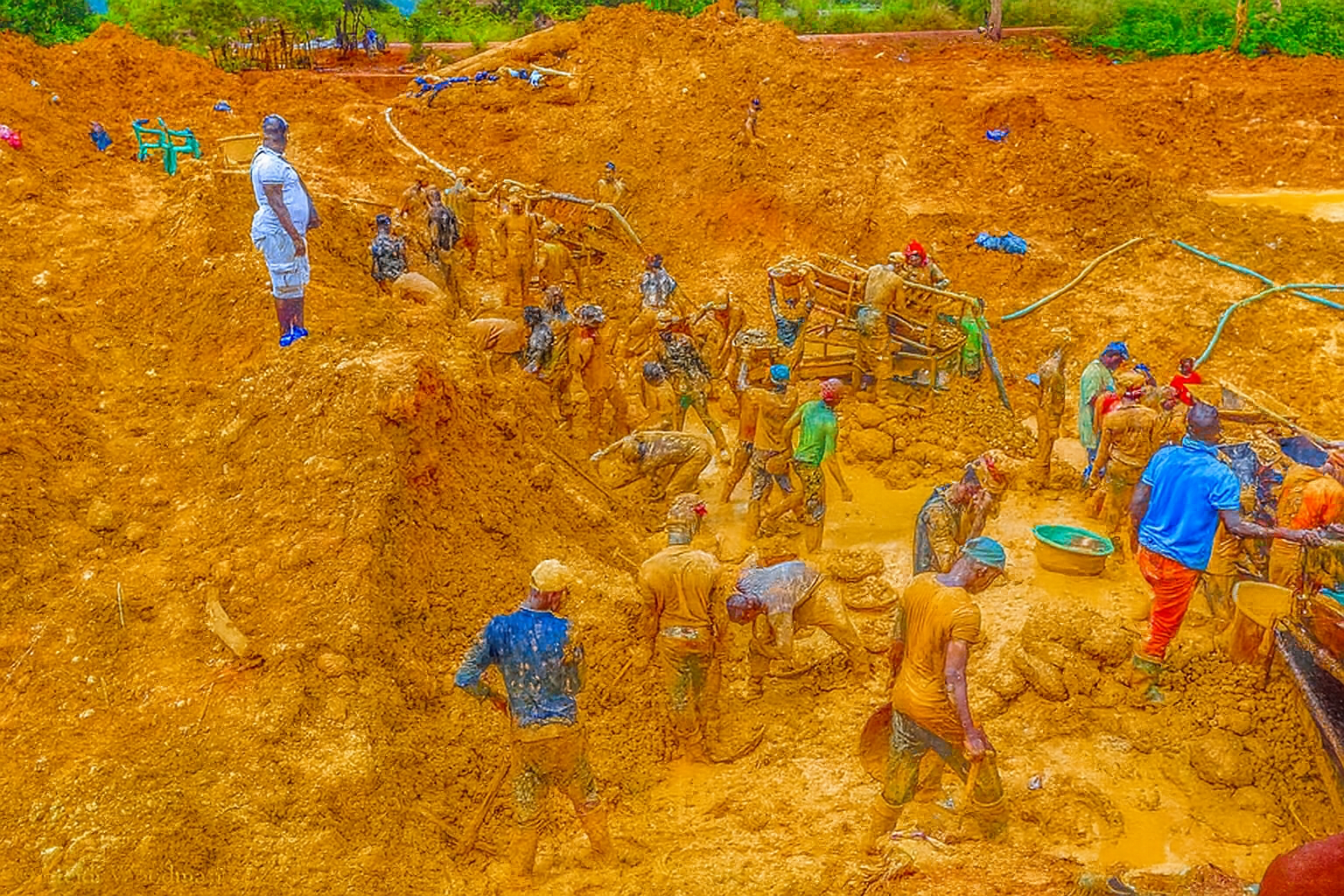
Galamsey refers to illegal small-scale gold mining in Ghana, a term derived from the English phrase “gather them and sell”. Historically, this term described traditional small-scale mining practices where local communities manually gathered gold in rivers and streams. Over time, however, the scope of Galamsey has broadened significantly, now encompassing both legal and artisanal small-scale mining (ASM) operations, many of which operate outside established regulations.
The individuals involved in these activities are known as galamseyers, estimated to number between 20,000 and 50,000 across Ghana, including thousands of foreign nationals, notably from China. While traditional galamseyers used rudimentary tools like pans, shovels, and pickaxes, the practice has evolved dramatically. Modern Galamsey operations increasingly employ heavy machinery such as excavators, suction dredges, and washing plants, alongside highly toxic chemicals like mercury and cyanide for gold extraction. Operational methods now include washing plants, washing boards, pit dredging, stream/river dredging, and dig-and-wash techniques. This shift towards mechanized and chemical-intensive methods signifies a profound commercialization and industrialization of what was once a subsistence activity. The substantial contribution of this unregulated industry to Ghana’s overall gold output further underscores its transformation into a large-scale, informal, and often illicit sector driven by global gold prices. This evolution intensifies environmental damage far beyond what traditional methods could cause and complicates enforcement efforts, as it involves greater capital investment, more organized networks, and potentially higher levels of corruption. The economic benefits, though unregulated, become a powerful incentive that makes eradication challenging.
1.2. The Tano River: Its Significance and the Onset of Galamsey Impacts
The Tano River, a vital waterway in West Africa, has historically served as a critical lifeline for both wildlife and human populations for centuries. Communities along its banks have relied on its waters for drinking, domestic use, fishing, and agricultural irrigation. A significant portion of the Tano River basin lies within Ghana, where it drains into regions characterized by intensive gold mining activities.
In recent years, the Tano River’s once clear waters have undergone a drastic transformation, turning a murky brown with visible signs of ecological distress. This severe pollution is primarily a direct consequence of irresponsible mining practices. The degradation of the Tano River exemplifies the broader environmental crisis unfolding across Ghana due to Galamsey.
It is important to clarify that the term “Thenoma,” as included in the user query, does not appear in the provided research material in any context related to Galamsey or Ghana’s mining sector. References to “noma” in the available information pertain to a neglected tropical disease or academic journal titles, which are entirely unrelated to illegal mining activities. Therefore, this report focuses exclusively on the phenomenon of “Galamsey” and its documented impacts on the Tano River.
2. Environmental Degradation: The Tano River’s Ecological Crisis
2.1. Water Quality Deterioration: Turbidity and Chemical Contamination
The Tano River’s water quality has suffered severe deterioration, rendering it largely unsuitable for its traditional uses. Samples collected in Elubo, a town along the river, revealed turbidity levels exceeding 100 times the accepted standard for drinking water. Across Galamsey-affected rivers in Ghana, turbidity can range from 5,000 to 12,000 Nephelometric Turbidity Units (NTU), vastly surpassing the EPA-Ghana recommended limit of 5 NTU and the 2,000 NTU required for adequate water treatment.
The primary culprits behind this contamination are the toxic chemicals extensively used in gold extraction processes. These include mercury, cyanide, arsenic, and cadmium. These pollutants are highly resistant to natural breakdown in water and readily disperse throughout aquatic environments, posing a significant threat to both aquatic life and human health. The unrestricted discharge of these substances directly poisons river systems. Furthermore, polluted water bodies in these areas exhibit low levels of Dissolved Oxygen (DO), a critical indicator of aquatic ecosystem health. As of September 2024, approximately 60% of Ghana’s water bodies, including the Tano River, have been polluted due to Galamsey activities.
The contamination of the Tano River and other major water bodies by heavy metals and high turbidity directly impacts drinking water supplies for numerous communities. This widespread pollution has led to the shutdown of water treatment plants in various regions, including Tarkwa-Nsuaem, due to severe contamination, and significantly increases the cost and inefficiency of water treatment processes. The alarming projection that Ghana could face water importation by 2030 underscores a looming national water scarcity crisis. This situation is particularly dire given that 70% of households in artisanal and small-scale mining (ASGM) communities rely on surface water for their daily needs. This environmental degradation of water bodies thus translates directly into a severe public health crisis and a fundamental threat to national water security. It creates a feedback loop where environmental damage leads to health issues, which in turn strains public services and undermines human development, potentially leading to widespread social instability and increased national expenditure on water importation.
Table 1: Key Environmental Impacts of Galamsey on the Tano River and Ghana’s Water Bodies
| Parameter/Impact | Observed Condition (Tano River/Galamsey-Affected) | Standard/Threshold | Implications | Supporting Snippets |
| Water Turbidity | >100x accepted drinking water standard (Elubo) ; 5,000-12,000 NTU | EPA-Ghana: 5 NTU; Treatment requires <2,000 NTU | Water undrinkable, treatment plant shutdowns, increased treatment costs | |
| Chemical Contamination | Elevated levels of Mercury, Cyanide, Arsenic, Cadmium, Lead, Hydrocarbons | WHO tolerable level for Mercury: 0.001 mg/L (often exceeded tenfold) | Poisoning of aquatic life, human health risks (drinking, cooking, bathing) | |
| Dissolved Oxygen (DO) | Low levels (e.g., 1.43-2.40 mg/L) | Essential for aquatic life | Harmful to aquatic life, unbalancing food web | |
| National Water Pollution | 60% of Ghana’s water bodies polluted by Galamsey (as of Sept 2024) | N/A | Risk of national water scarcity; Ghana could be importing water by 2030 |
2.2. Land Degradation, Deforestation, and Soil Fertility Loss
Galamsey activities are a primary driver of widespread land degradation across Ghana, including the Tano River basin. These operations lead to extensive clearing of forests and fertile agricultural lands, resulting in significant deforestation, habitat destruction, and severe soil degradation. Productive farmlands are effectively erased, replaced by barren, chemically scarred landscapes riddled with open pits and tailing dumps. These abandoned pits, often flooded, pose direct dangers to local residents, particularly children, and to livestock.
The long-term consequences for land productivity are dire. The Council for Scientific and Industrial Research (CSIR) estimates that restoring the quality of soil damaged by illegal mining could take an astonishing 300 years, even with advanced phytoremediation techniques that use plants to extract harmful substances. This 300-year estimate for soil restoration represents an immense environmental debt passed down through generations. The destruction of farmlands and the corresponding reduction in crop production directly threaten food security, especially for subsistence farming communities. Ghana’s Cocoa Board, for instance, reported losing 2% of its total cocoa cultivation area to mining activities. This environmental devastation forces many farmers into the hazardous work of artisanal small-scale mining, creating a vicious cycle of environmental destruction and livelihood precarity. The long-term nature of land degradation means that future generations will inherit a severely compromised natural resource base, impacting agricultural potential and overall ecological resilience for centuries. This perpetuates poverty and dependency on unsustainable practices, undermining efforts towards sustainable development.
2.3. Impact on Biodiversity and Aquatic Ecosystems
The release of toxic substances into the Tano River and other Ghanaian water bodies has devastating effects on biodiversity. These pollutants, particularly heavy metals, poison fish and other aquatic wildlife. Once introduced, heavy metals become permanently integrated into the aquatic food web, affecting fish, amphibians, and subsequently posing risks to humans and land animals that consume them.
Beyond direct toxicity, the ecological balance of these river systems is severely disrupted. Macroinvertebrates, which are crucial indicators of river health and foundational components of the food web, are disappearing from many river reaches. This loss of key species unbalances the entire aquatic ecosystem. Furthermore, the extensive deforestation and habitat destruction caused by mining activities lead to a broader loss of biodiversity, negatively impacting Ghana’s natural resources. This includes threats to endemic species and the potential for significant losses in ecotourism revenue. Compounding these issues, the spread of invasive alien species, such as water hyacinth, has been observed in the Tano River, further threatening its ecological balance and native species. This indicates that the pollution from Galamsey triggers a cascading effect throughout the ecosystem, extending beyond direct toxicity to a complete alteration of the river’s biological structure and function. The loss of biodiversity and ecosystem services, such as natural water purification and fisheries, reduces the resilience of the Tano River basin to other environmental stressors, making recovery more difficult and potentially leading to irreversible ecological damage. This also directly impacts human livelihoods that depend on healthy ecosystems.
3. Socio-Economic and Health Impacts on Local Communities
3.1. Public Health Hazards: Disease Burden and Reproductive Health Risks
Communities residing near Galamsey sites, especially those dependent on contaminated surface water for their daily needs, face severe and pervasive health risks. Exposure to the toxic chemicals used in gold extraction, including mercury, cyanide, arsenic, lead, and hydrocarbons, leads to a wide array of chronic health conditions. Mercury poisoning is a particularly significant concern due to its widespread and unregulated use in gold processing.
Miners themselves, and often community members, suffer from various respiratory conditions such as silica-induced pneumoconiosis, asthma, pneumonia, bronchitis, and emphysema, primarily due to dust and chemical inhalation. Organ damage, including kidney problems, neurological disorders, and cardiovascular issues, are directly linked to heavy metal exposure. Furthermore, exposure to these poisonous chemicals has been associated with an increased risk of various cancers. Gastrointestinal and skin issues have also been reported in affected towns, attributed to the consumption and contact with contaminated water.
An emerging and critical concern is the profound impact on reproductive health. Studies indicate a clear association between the use of metals in Galamsey and reduced fertility in both males and females. This includes decreased sperm count, motility, and morphology in males, as well as hormonal imbalances and an increased likelihood of miscarriage, stillbirth, and birth defects among pregnant women. Children born in these affected areas may exhibit various forms of developmental defects and malformations. The documented health impacts are not just immediate ailments; the rising rates of infertility, miscarriages, stillbirths, and birth defects signify a profound, intergenerational health crisis. This suggests that the damage extends beyond current populations to compromise the health and viability of future generations, creating a long-term public health burden. The scarcity of reliable medical infrastructure in affected rural regions further exacerbates this crisis. This highlights a critical need for long-term epidemiological studies, specialized healthcare interventions, and public health campaigns focused on reproductive health in Galamsey-affected areas. The economic cost of treating these chronic and congenital conditions will place an immense strain on Ghana’s healthcare system for decades.
Beyond chemical exposure, miners frequently experience accidents, physical strain, and mental stress due to the harsh working conditions and job uncertainty inherent in Galamsey operations. Additionally, stagnant water in abandoned mining pits creates ideal breeding grounds for mosquitoes, increasing the risk of vector-borne diseases.
Table 2: Socio-Economic and Health Impacts on Galamsey-Affected Communities
| Category | Specific Impact | Description/Evidence | Supporting Snippets |
| Health Hazards | Mercury Poisoning | Widespread use of mercury contaminates water and soil, leading to poisoning | |
| Respiratory Conditions | Silica-induced pneumoconiosis, asthma, pneumonia, bronchitis, emphysema common among miners | ||
| Organ Damage & Cancers | Kidney problems, neurological disorders, cardiovascular issues, and various cancers linked to heavy metal exposure | ||
| Reproductive Health Issues | Reduced fertility (male/female), decreased sperm count, hormonal imbalance, increased miscarriage/stillbirth, birth defects | ||
| Accidents & Mental Strain | High rates of accidents, physical strain, and mental strain due to harsh working conditions | ||
| Livelihood Disruption | Decline in Fish Catch | Pollution of rivers like Tano leads to significant decline in fish populations, affecting fishermen’s income | |
| Loss of Farmlands & Productivity | Productive farmlands converted to mining pits or rendered infertile by contamination; 2% cocoa area lost | ||
| Impoverishment & Displacement | Leads to economic destitution, outmigration, and forces farmers into hazardous ASM | ||
| Social Challenges | Social Ills | Increased drug abuse, prostitution, gambling, alcohol abuse, and general degradation of moral standards | |
| Violence & Crime | Mining sites associated with high levels of violence and crime | ||
| Child Vulnerability & Illiteracy | Children lured by quick money, leading to increased school dropout rates and rising illiteracy | ||
| Lack of Basic Needs | Communities face high costs of living and lack of basic necessities, including portable water |
3.2. Disruption of Livelihoods and Food Security
While Galamsey operations are often initially driven by high youth unemployment and a lack of job security, sometimes offering a “straightforward way to make life bearable” for some individuals and providing income for education and healthcare , the overall impact on community livelihoods is profoundly disruptive.
For communities along the Tano River and other water bodies, pollution leads to a significant decline in fish catch, directly impacting the income and sustenance of fishermen. Agricultural productivity is severely ravaged as once-productive farmlands are either converted into mining pits or rendered infertile due to chemical contamination and extensive soil degradation. Ghana’s Cocoa Board, a major agricultural sector, reported a loss of 2% of its total cocoa cultivation area to mining activities. This creates a “poverty trap” where communities are forced to engage in destructive activities for immediate survival, which then destroys their long-term economic base. The “relative economic prosperity” initially experienced is often followed by “resource depletion, outmigration and economic destitution”.
This widespread destruction of traditional livelihoods leads to impoverishment, reverse dependency ratios, and the loss of established rural economic activities. Consequently, many farmers, particularly women, are compelled to enter the hazardous artisanal small-scale mining sector as the only perceived viable option for economic survival. This highlights that economic incentives are powerful drivers, and providing viable, legal alternatives can significantly reduce participation in illegal mining. Investment in diverse, sustainable economic opportunities in affected regions is paramount. These programs must be adequately funded, scalable, and tailored to local contexts, ensuring they provide genuine, long-term economic stability that outweighs the perceived short-term gains of Galamsey.
3.3. Social Challenges and Community Well-being
Beyond the environmental and economic devastation, Galamsey operations actively erode the social fabric of affected communities. Galamsey settlements are frequently characterized by poverty and chaotic social environments, often poorer than neighboring agricultural villages.
Common social consequences include widespread drug abuse, prostitution, gambling, and alcohol abuse, leading to a general degradation of moral standards. Mining sites are also associated with elevated levels of violence and crime. Children are particularly vulnerable in these environments, often lured by the promise of quick money, which contributes to increased school dropout rates and rising illiteracy levels. This perpetuates cycles of poverty and illiteracy for future generations, representing a significant loss of human capital. Communities in Galamsey-affected areas also face a high cost of living and a severe lack of basic necessities, including access to potable water. There are also reports of intimidation tactics employed by Galamsey operators against local farmers, further destabilizing community life. Addressing Galamsey requires not only environmental and economic interventions but also targeted social programs aimed at community rehabilitation, youth education, and addressing underlying social vulnerabilities. This includes mental health support for miners and affected communities, given the documented physical and mental strain.
4. Governance and Enforcement Challenges
4.1. Weak Regulatory Frameworks and Bureaucratic Hurdles
The pervasive nature of illegal mining is significantly attributed to systemic weaknesses within Ghana’s regulatory and administrative systems. These include overly bureaucratic licensing regimes, weak legal frameworks, and inadequate enforcement of existing environmental regulations. Local miners frequently face substantial obstacles in obtaining legitimate mining licenses, citing limited knowledge of procedures, complex bureaucracy, prohibitively high fees, and significant delays in the application process. These hurdles effectively push otherwise legitimate small-scale miners into illegality, inadvertently expanding the Galamsey problem rather than formalizing the sector.
Ghana has a reputation for developing robust policies; however, the practical implementation of these policies often encounters significant roadblocks. These impediments primarily stem from a perceived lack of political will to consistently follow through on policy commitments and inadequate coordination among various government ministries, departments, and agencies (MDAs) responsible for the mining sector. This indicates a significant gap between policy formulation and practical enforcement, suggesting that the issue is not a lack of well-intentioned policy but rather a systemic failure in governance capacity and political commitment to enforce existing laws. Effective solutions, therefore, require not just new policies but a fundamental reform of institutional capacity, a simplification of licensing procedures, and a strong political commitment to enforce regulations without compromise.
4.2. Political Interference, Corruption, and Stakeholder Disconnect
Corruption among officials and pervasive political interference are major factors compounding the issue of illegal mining. Reports indicate that officials are allegedly complicit in facilitating Galamsey activities. This suggests that Galamsey is not merely an environmental or economic problem, but a deeply entrenched issue of governance and criminality. The failure of military operations, partly due to “excessive use of force and corruption,” further underscores that the very mechanisms designed to combat it are compromised.
The relationship between state institutions and local actors, including chiefs, landlords, and miners, is often disjointed. Decisions regarding mineral resources are frequently made without adequate consultation with local authorities, leading to feelings of exclusion and a lack of local buy-in. Furthermore, instances of collaboration and collusion between illegal miners and local stakeholders are reported. Chiefs and landlords, who traditionally control access to mineralized lands, sometimes illegally grant mining permits despite mineral rights being state-owned, exploiting the regulatory vacuum and contributing to the problem. This indicates a breakdown of trust and a localized power vacuum that illegal operations exploit. Combating Galamsey thus requires a robust anti-corruption drive, judicial reforms, and a fundamental shift towards inclusive governance that empowers local communities and integrates traditional authorities into formal regulatory frameworks. Without addressing these systemic issues, any intervention will likely be undermined.
4.3. Limitations of Enforcement Operations
Despite numerous efforts by the Ghanaian government to combat Galamsey, including large-scale military interventions such as “Operation Vanguard” (launched in 2017) and “Operation Halt” (initiated in 2019), illegal mining remains a significant and escalating challenge. These operations have largely failed to curb the situation effectively, partly due to issues such as excessive use of force and entrenched corruption within the enforcement mechanisms themselves.
A critical challenge is the increasing sophistication and armament of illegal miners. These groups are often heavily armed with sophisticated weapons, making it extremely difficult for forest guards and rapid response teams, who lack comparable firepower, to control them. This has led to alarming situations where over 9 out of Ghana’s 44 forest reserves have reportedly been completely taken over by illegal mining groups, effectively denying access to the Forestry Commission. This escalation from simple illegal activity to an organized, militarized criminal enterprise transforms the fight against Galamsey into a complex security challenge that traditional environmental enforcement agencies are ill-equipped to handle.
Furthermore, there is a significant lack of adequate knowledge and reliable mapping data concerning the types, precise locations, abundance, and spatial extent of Galamsey operations. This intelligence gap severely hinders the development of effective policy responses and targeted monitoring efforts, preventing authorities from deploying resources strategically. A successful strategy must therefore involve a coordinated security response that matches the sophistication of the illegal operations, coupled with intelligence gathering and mapping technologies to identify and target hotspots effectively. This also necessitates addressing the supply chain of illegal mining equipment.
5. Strategies, Initiatives, and Pathways to Mitigation
5.1. Government and Multi-Stakeholder Interventions
Ghanaian governments have historically employed a range of strategies to formalize and combat Galamsey. These interventions have included policy reforms, outright bans on illegal mining activities, the deployment of military forces, national dialogues, the introduction of alternative livelihood programs, and the establishment of community mining schemes.
More recent efforts demonstrate an evolving understanding of the complexity of the issue. For instance, the University of Ghana has launched an “Anti-Galamsey Project” that adopts a holistic approach, combining academic research, public advocacy, and the application of linguistic and cultural strategies to influence public attitudes and promote sustainable alternatives. This shift from primarily “brute force” military operations to a more comprehensive approach signifies a crucial learning curve in Ghana’s fight against Galamsey. The recognition that a “war discourse” can alienate communities and create unnecessary enmity indicates a move towards more nuanced, bottom-up strategies that acknowledge the complex socio-economic drivers of Galamsey. Effective solutions are increasingly recognized as requiring multi-stakeholder action, involving close collaboration among policymakers, traditional authorities, Civil Society Organizations (CSOs), and local community groups. Future interventions must prioritize integrated, multi-sectoral approaches that combine enforcement with social, economic, and educational components, fostering collaboration rather than confrontation. This requires sustained funding and political will for long-term implementation, not just short-term campaigns.
5.2. Alternative Livelihood Programs and Community Engagement
A cornerstone of any sustainable solution to Galamsey involves providing viable and sustainable alternative income-generating activities to reduce communities’ economic dependence on illegal mining. These initiatives include vocational training, support for agriculture, eco-friendly farming practices, and aquaculture.
Evidence suggests these government-led alternative livelihood programs can be highly effective. Studies have indicated that participants in such initiatives reported increased income (70%), improved livelihoods (60%), and a significant reduction in their involvement in Galamsey (50%). These success rates directly address the primary motive for Galamsey: youth unemployment and lack of job security. This demonstrates that economic incentives are powerful drivers, and providing viable, legal alternatives can significantly reduce participation in illegal mining.
Crucially, fostering genuine community engagement and adopting a bottom-up approach are paramount. This involves actively including communities in decision-making processes, educating them about the severe risks and consequences of Galamsey, and empowering them to take ownership of solutions. The establishment of community mining committees in some areas has reportedly led to reductions in Galamsey activities. The emphasis on community engagement acknowledges that local buy-in and participation are essential for the long-term success of any intervention, moving beyond punitive measures to empower communities. Investment in diverse, sustainable economic opportunities in affected regions is paramount. These programs must be adequately funded, scalable, and tailored to local contexts, ensuring they provide genuine, long-term economic stability that outweighs the perceived short-term gains of Galamsey.
5.3. Technological Solutions and Research-Driven Approaches
Leveraging modern technology and supporting robust research are critical for effective Galamsey mitigation. Implementing remote sensing and geospatial technologies can significantly enhance the ability to monitor and map Galamsey operations, providing a comprehensive understanding of their spatial distribution and temporal impacts. This data-driven approach allows for more targeted and efficient interventions, addressing the previous lack of reliable mapping data.
Beyond monitoring, promoting clean mining technologies and integrating principles of environmental conservation, occupational safety, and public health awareness are key technical and innovative measures for mitigating the adverse effects of mining. This suggests a move towards formalizing artisanal and small-scale mining in an environmentally responsible manner, acknowledging its economic contribution while mitigating its harm.
Academic research and advocacy play a vital role in this multi-pronged approach. Universities and research institutions contribute by raising awareness, disseminating research findings, and providing evidence-based insights that inform policy development and training initiatives. Investment in scientific research, technological infrastructure, and capacity building for environmental monitoring and cleaner mining practices is crucial. This also implies a need for policy frameworks that incentivize and support the adoption of these technologies within the formal small-scale mining sector.
6. Long-Term Outlook and Recommendations for Sustainable Management
6.1. Ecosystem Recovery Projections and Persistent Threats
The long-term outlook for the Tano River ecosystem, and indeed many of Ghana’s natural resources affected by Galamsey, presents a formidable challenge. While some environmental experts suggest that water bodies might recover within 10 to 15 years with prompt and sustained intervention, the persistence of certain pollutants, particularly mercury, is a far greater concern, as mercury can remain in water for up to 1,000 years. The ecological recovery of rivers and streams is inherently complex and will necessitate sustained monitoring and intensive remediation efforts over extended periods.
The prognosis for land recovery is even more daunting. The Council for Scientific and Industrial Research estimates that restoring the quality of soil damaged by illegal mining could take an astonishing 300 years, even with the application of phytoremediation techniques. This underscores that the environmental damage from Galamsey is not a temporary setback but a profound, multi-generational catastrophe. This means that even if Galamsey activities were to cease immediately, the Tano River and its basin would remain environmentally compromised for centuries, directly impacting the health, livelihoods, and access to vital resources for future generations.
The continued prevalence of Galamsey activities poses an existential threat to Ghana’s natural resources. The severe pollution of water bodies has led to warnings that Ghana could face the necessity of importing water by 2030. Furthermore, the health challenges stemming from heavy metal exposure, including alarming rates of neonatal defects, are expected to persist, creating a long-term public health burden. The warning about Ghana importing water by 2030 highlights the potential for a national crisis of water insecurity, transforming an environmental problem into a fundamental threat to national development and public well-being. Long-term strategies must move beyond mere cessation of Galamsey to encompass massive, sustained environmental rehabilitation programs, including phytoremediation and advanced water treatment technologies. This also necessitates planning for adaptation to a future with potentially scarce and contaminated water resources, and robust public health surveillance for long-term health impacts.
6.2. Comprehensive Recommendations for Policy and Action
Addressing the multifaceted crisis of Galamsey in the Tano River basin and across Ghana requires a comprehensive, integrated, and adaptive governance framework. The following recommendations outline a pathway towards sustainable management:
- Strengthen Governance and Enforcement:
- Implement robust anti-corruption measures across all levels of government and enforcement agencies, ensuring strict accountability for any officials found complicit in illegal mining activities.
- Streamline and decentralize the small-scale mining licensing regime. This process must be made accessible, affordable, and transparent for local miners to reduce the incentives for engaging in illegal operations.
- Significantly enhance the institutional capacity and provide adequate resources to key state institutions such as the Minerals Commission, Environmental Protection Agency (EPA), Water Resources Commission, and Forestry Commission, enabling them to conduct effective monitoring, enforcement, and regulatory oversight.
- Develop and enforce stringent regulations to control foreign involvement in the mining sector and prevent the smuggling of heavy mining equipment into Ghana, which fuels large-scale illegal operations.
- Establish a coordinated security response capable of effectively countering heavily armed illegal miners and reclaiming control of encroached forest reserves and prohibited mining areas.
- Promote Sustainable Livelihoods and Community Empowerment:
- Scale up and diversify alternative livelihood programs in Galamsey-prone areas, offering sustainable income-generating opportunities such as advanced agriculture, aquaculture, and vocational training in various trades. These programs must receive sustained funding and comprehensive support to ensure long-term viability.
- Foster genuine community engagement and implement a bottom-up approach to decision-making regarding natural resource management. This ensures that local voices are heard, communities take ownership of solutions, and resistance to interventions is minimized.
- Conduct extensive public education campaigns to raise widespread awareness about the severe dangers of Galamsey, particularly concerning toxic chemical exposure and its long-term health and environmental consequences.
- Invest in Environmental Rehabilitation and Health Systems:
- Initiate large-scale, long-term environmental restoration projects for degraded lands and polluted water bodies. This includes employing advanced technologies like phytoremediation for soil decontamination and implementing comprehensive water treatment solutions for rivers like the Tano.
- Develop and implement robust public health programs in affected communities. These programs should focus on systematic monitoring for heavy metal poisoning, respiratory diseases, and reproductive health issues, while simultaneously improving access to reliable medical infrastructure and specialized care.
- Promote and incentivize the adoption of clean mining technologies and practices within any formalized small-scale mining sector to minimize future environmental impact.
- Leverage Research and Technology:
- Invest significantly in remote sensing and geospatial technologies to enable accurate mapping and real-time monitoring of Galamsey hotspots, environmental degradation, and the effectiveness of rehabilitation efforts.
- Provide sustained support for academic research to generate actionable insights and evidence-based strategies for combating Galamsey and mitigating its multifaceted impacts, ensuring that policy decisions are informed by scientific understanding.
The multifaceted nature of Galamsey necessitates a truly integrated and adaptive governance framework. These recommendations move beyond isolated interventions to a synergistic approach where policy, enforcement, community development, and technological solutions reinforce each other. The emphasis on long-term rehabilitation and health monitoring acknowledges the enduring legacy of the crisis, requiring sustained commitment beyond immediate cessation. Success will depend on the political will to implement these complex, long-term strategies, overcome entrenched corruption, and foster genuine collaboration across all levels of government and society.
Conclusion
The Galamsey crisis in Ghana’s Tano River basin represents an existential threat that extends far beyond localized environmental damage. It encompasses a profound degradation of vital water resources, widespread destruction of arable land, severe public health hazards, and significant socio-economic disruption for affected communities. The transformation of Galamsey from rudimentary artisanal mining to a commercialized, mechanized, and often militarized illicit industry, fueled by global gold prices and exacerbated by weak governance, political interference, and corruption, has created a complex and deeply entrenched challenge.
The long-term environmental recovery, particularly for soil and persistent pollutants like mercury, is projected to take centuries, imposing an immense intergenerational environmental debt. The immediate consequences are already manifest in contaminated drinking water, diminished agricultural productivity, and a rising burden of chronic and reproductive health issues.
Addressing this crisis demands a fundamental paradigm shift from reactive, punitive measures to a comprehensive, multi-stakeholder approach. This requires strengthening governance through robust anti-corruption efforts and streamlined licensing, fostering genuine community empowerment through sustainable alternative livelihoods, investing heavily in long-term environmental rehabilitation, and leveraging advanced technology and research for informed decision-making. The future viability of the Tano River, the health and prosperity of its communities, and indeed Ghana’s national development and water security, hinge on decisive, coordinated, and sustained action that tackles the root causes of Galamsey and builds a resilient, sustainable future.


