



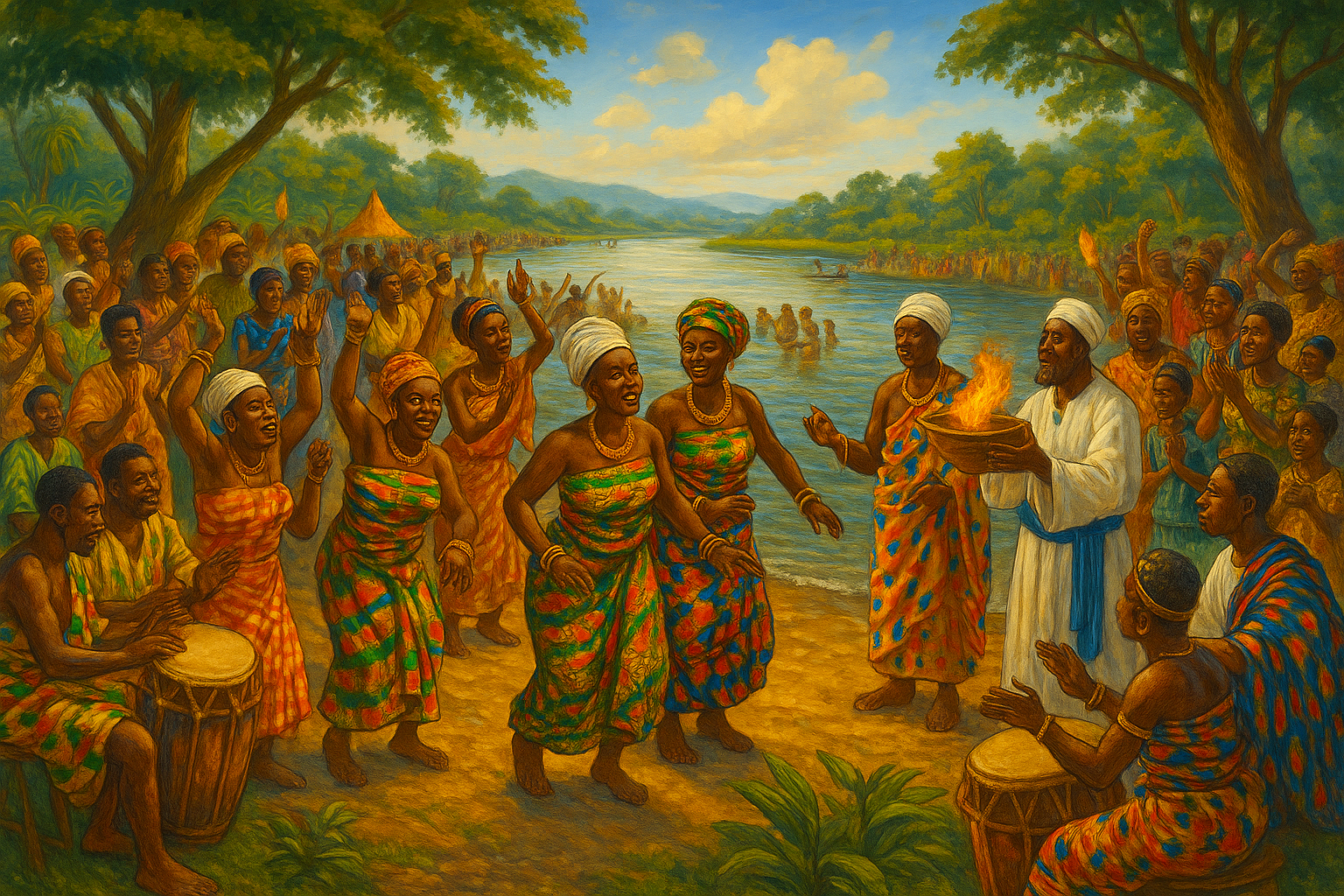
The Tano River is not only a source of water, food, and fertility—it is also a sacred space of celebration and spiritual connection. Throughout the year, communities along the river in both Ghana and Côte d’Ivoire observe a variety of festivals and ritual ceremonies in honor of the river and its divine spirit, known to many as Taakora or Tano.
These events reflect the deep bond between people and the river, blending ancestral memory, seasonal rhythms, and spiritual devotion.
🕊️ 1. Libation and Ancestral Offerings
Almost all major festivals in Akan and riverine communities begin with a libation ritual to the Tano River:
- Performed by priests, elders, or family heads
- Offerings of schnapps, palm wine, eggs, and fowl
- Invocation of Taakora, ancestors, and nature spirits for:
- Blessings
- Forgiveness
- Protection of the community
This practice reaffirms the river’s role as ancestral witness and spiritual judge.
🥁 2. River Ceremonies During Akwasidae (Ghana)
In Akan communities, particularly among the Bono and Asante, the Akwasidae festival (celebrated every 6 weeks on the Akan calendar) includes:
- Visits to river shrines
- Renewal of oaths and allegiances
- Ritual baths for chiefs, warriors, or the spiritually afflicted
- Symbolic washing of sacred stools near riverbanks
During this time, the Tano River becomes a site of spiritual renewal and ancestral communion.
🎭 3. Tano Deity Festival (Bono/Ahafo regions, Ghana)
Some towns, especially near Tanoso and Techiman, organize festivals specifically in honor of the Tano River deity:
- Known locally as “Afi Tano” or “Taakora Day”
- Celebrated annually with:
- Processions to the river
- Purification of children and women
- Traditional dances, drumming, and storytelling
- Some rituals are restricted to initiates and priests, reinforcing the sacredness of the event
This festival highlights the river’s role in fertility, justice, and destiny.
🐊 4. Ceremonial Fishing (Nzema and Ehotilé, Côte d’Ivoire)
In some communities near the Tanoé-Ehy wetlands, fishing is temporarily forbidden in certain parts of the river until a ritual opening is performed:
- Elders declare the river “open” after offerings to the spirits
- Special ceremonial fishing days are held where:
- Villagers fish together
- The first catch is given to the river shrine
- Only specific gear is allowed, in line with ancestral tradition
This practice helps preserve fish stocks while honoring spiritual ecology.
🧒🏾 5. Naming and Initiation Ceremonies by the River
- Some communities perform naming ceremonies for newborns beside the river, using its water for blessings and identity.
- Young initiates—especially girls entering womanhood—are bathed in the river during rites of passage, symbolizing purity, maturity, and readiness.
- The river is seen as a womb and threshold, marking transitions in life.
🕯️ 6. River Vigil and Night Rituals
On certain spirit nights, families or clans gather in silence near the riverbank:
- Candles or calabashes with floating lamps are set adrift on the water
- The names of ancestors are called
- Dreams and visions received at the river are shared the next morning
These vigils are often held before planting season, marriage negotiations, or chieftaincy decisions.
🌍 A Living Tradition
These river ceremonies are more than rituals—they are a living dialogue with nature, ancestors, and the divine. Through them, the people of the Tano River basin express gratitude, seek guidance, and maintain a sacred covenant with the land and its waters.


