



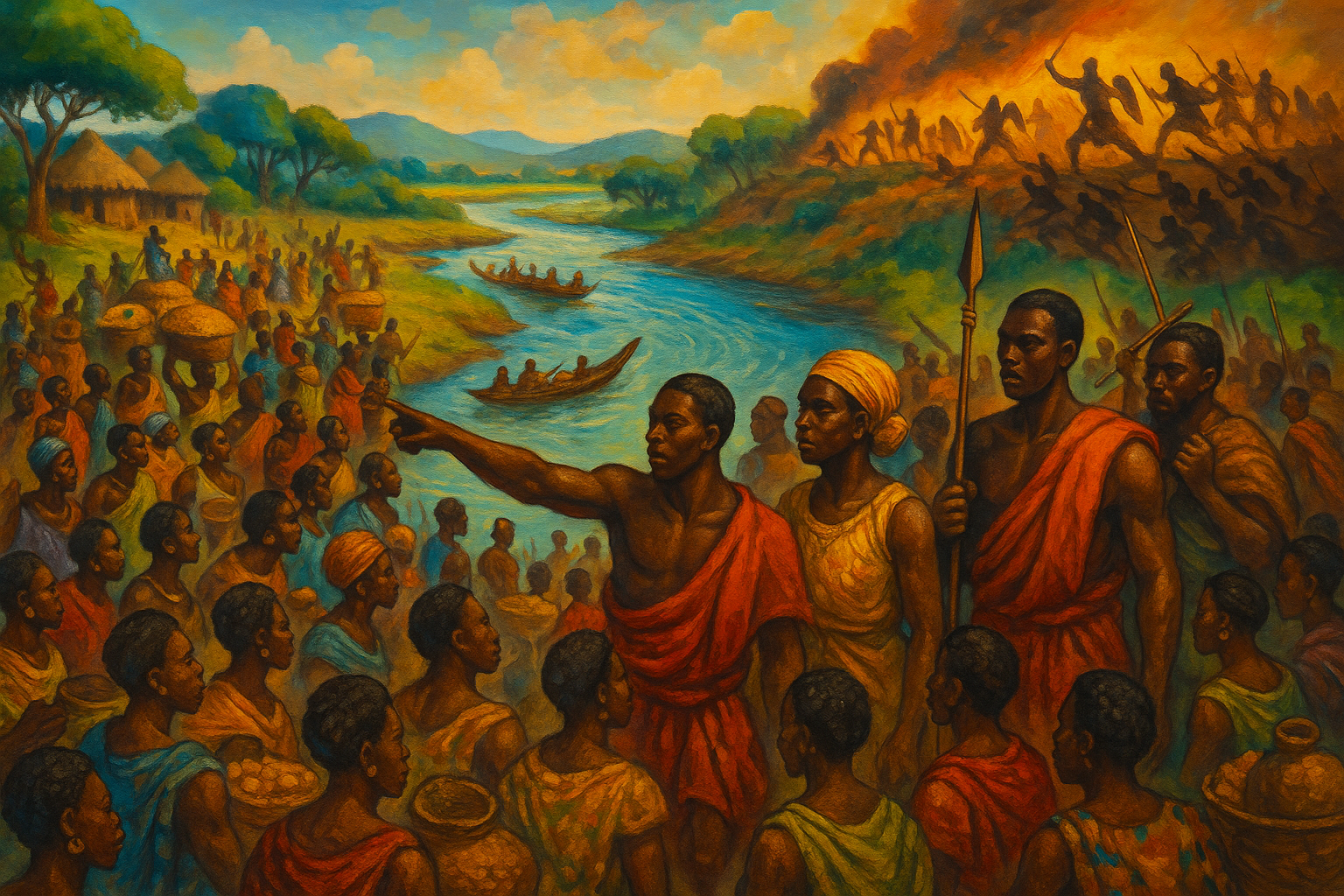
The Tano River, flowing from the highlands of Ghana to the lagoons of Côte d’Ivoire, has long served as a corridor of commerce, power, and occasional conflict. Its strategic position connecting the forest belt to the Atlantic coast made it a valuable route for early trade networks and a contested space between competing clans, kingdoms, and later colonial powers.
🛍️ Trade Networks and River Economies
Long before colonial contact, the Tano River linked various Akan and Kwa-speaking communities, forming part of a vast inland–coastal trade system across West Africa.
- Goods traded along the Tano River included:
- Salt from the coastal lagoons
- Gold dust and nuggets from the Ahafo and Western regions
- Ivory, kola nuts, yams, and palm oil
- Cloth (kente, raffia), pottery, and iron tools
- Trading centers emerged at river junctions and crossing points. Places like Tanoso and Elubo acted as market hubs, where forest traders met coastal merchants.
- The river itself provided canoe-based transport, allowing goods to move quietly through dense forested areas, bypassing overland dangers.
- Trade was not only material—stories, religious knowledge, and alliances also flowed along the water.
🛡️ Conflicts Between Early States and Clans
As trade and population increased along the river, so did tensions:
- Akan clans, such as the Bono, Ahafo, Nzema, and Appoloniens, often clashed over control of trade routes and sacred river segments.
- Some stretches of the river were regarded as the spiritual property of certain clans, leading to inter-group conflicts over access, fishing rights, or ritual usage.
- Warriors swore oaths by the Tano River before battle, and defeat was sometimes blamed on spiritual offenses related to the river.
A common oral tale in the Nzema area speaks of a long-standing feud between two riverine towns, one of which diverted part of the river for irrigation, angering the other, which depended on the sacred flow for ritual purposes. This led to raids and reprisals lasting several seasons.
🔁 Tano River as a Diplomatic Space
Despite conflict, the river also served as a place of negotiation and alliance:
- Inter-marriages between riverine clans were used to seal trade pacts.
- Neutral zones were created along disputed stretches of the river where rituals, festivals, and inter-group ceremonies could take place.
- Elders from different communities would gather near sacred groves on the riverbanks to arbitrate disputes, under the spiritual eye of the river god Taakora.
The river thus functioned as both a frontier and a bridge—a place where peace and war were negotiated side by side.
⚱️ Spiritual Conflicts and Taboos
Not all conflicts were political. The spiritual nature of the Tano River also gave rise to:
- Disputes over access to sacred pools or groves—especially during annual purification rituals.
- Accusations of spiritual theft, where one community was believed to have “stolen the power” of a shrine through magic.
- Retaliatory actions, such as spiritually “blinding” the fish of another community’s river stretch or blocking flow with taboo plants.
These “spiritual wars” are part of the oral heritage of the riverine peoples and still shape local taboos today.
🧭 Strategic Role in Larger Regional Conflicts
- During the rise of the Ashanti Empire, the Tano River region served as both a southern frontier and a buffer zone against rival polities.
- Control of river routes was vital for moving gold, military supplies, and envoys.
- Some clans resisted Ashanti dominance by leveraging their knowledge of river terrain, using it for ambushes and retreats.
In this way, the Tano River played an indirect but crucial role in the political history of Akan state formation and regional warfare.
🛶 Legacy Today
Though modern roads have replaced river routes, the legacy of these ancient trade and conflict networks remains:
- In place names (e.g. Tanoso, Tanoé)
- In clan histories and totems
- In annual festivals and rituals reenacting peace pacts or honoring ancestral warriors
- In the continued respect for river taboos, born from generations of struggle and negotiation
The Tano River is thus remembered not only as a source of water, but as a shaper of history.


