




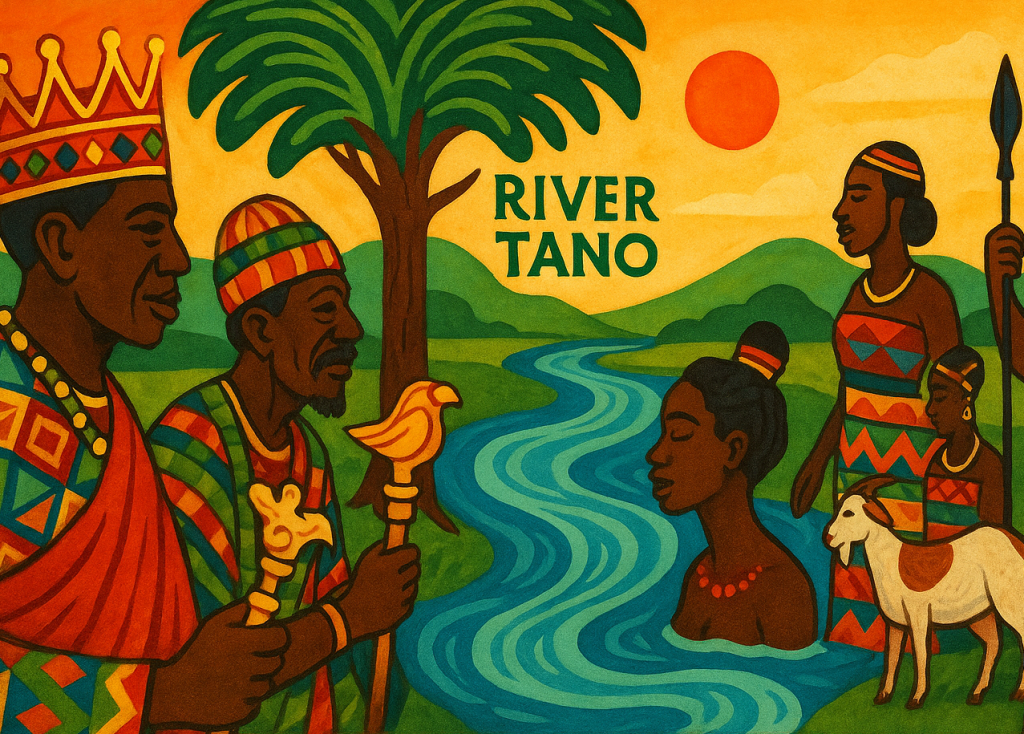
The Tano River is not merely a geographic feature. For the people who live along its banks—from the highlands of Ghana to the coastal plains of Côte d’Ivoire—it is a sacred entity, a source of life, and a central figure in oral tradition, belief systems, and identity. It shapes their rituals, customs, history, and worldview.
🧬 A River of Spiritual Power
Among the Akan peoples of Ghana—especially the Bono, Ahafo, and Ashanti—the Tano River is personified as Taakora (or Tano), one of the most powerful river gods (abosom) in Akan cosmology.
- Taakora is believed to be a divine protector, judge, and giver of blessings.
- He is considered the elder brother of other river gods such as Bosomtwe and Offin.
- Shrines are built in his honor near the river’s source, where priests (akomfo) perform libations, sacrifices, and oracles.
- In traditional justice systems, people sometimes swear oaths by the Tano River, believing that breaking them would invoke the wrath of the deity.
This belief in river spirits extends into Côte d’Ivoire, where the Tanoé is also treated with reverence among the Akan-descended communities such as the Nzema, Ehotilé, and Appoloniens.
🌊 Myths and Legends
Local legends surrounding the river abound. Some say that:
- Taakora appeared in human form to protect warriors during tribal wars.
- The river was born from a sacred pot that spilled water, a gift from the sky god Nyame.
- Certain fish or crocodiles in the river are messengers of the spirit, and harming them is taboo.
Such stories serve as moral lessons, teaching respect for nature, elders, and truthfulness.
🧎🏾♂️ Rituals and Festivals
Throughout the year, communities perform:
- Purification rites to cleanse villages and ensure prosperity.
- Annual river festivals, during which drums, songs, and dances celebrate the river god’s blessings.
- Naming ceremonies and initiations near the riverbanks, symbolizing rebirth and ancestral connection.
For example:
- In Ghana, the Tano deity is invoked during the Akwasidae celebrations and in personal spiritual quests.
- In parts of Côte d’Ivoire, riverside villages organize water-based processions and offerings, especially during agricultural planting seasons.
👣 Lineage and Identity
Many families carry names linked to the river, such as:
- Tano, Taakora, Atano, or Tanoe, either as first or middle names.
- These names signal a spiritual lineage or clan origin connected to the river.
For your family, for example, “Tano” as a middle name signifies a deep ancestral bond—a naming tradition still respected across generations.
⛩️ Sacred Spaces Along the River
The Tano River has several sacred sites, including:
- The Tano Sacred Grove near Techiman, which is one of the few remaining community-protected forest shrines in Ghana.
- Hidden pools and caves said to be spiritual gateways, only accessed by priests or diviners.
These areas are often considered taboo zones where certain behaviors (hunting, bathing, loud noises) are forbidden.
⚖️ River as Moral Arbiter
In traditional Akan society:
- The Tano River is believed to judge disputes. Those accused of serious crimes may be asked to swear before the river.
- If a person lies under oath, it is said that the river spirit will bring misfortune—through illness, madness, or mysterious events.
- This belief acts as a social contract, reinforcing truth-telling, justice, and fear of divine retribution.
🌐 Shared Cultural Symbol Between Nations
Despite being a border river, the Tano unites rather than divides:
- Akan communities on both sides of the Ghana–Côte d’Ivoire border share language, myths, customs, and ancestral beliefs about the river.
- The river becomes a symbol of transnational cultural unity among West African peoples.


