



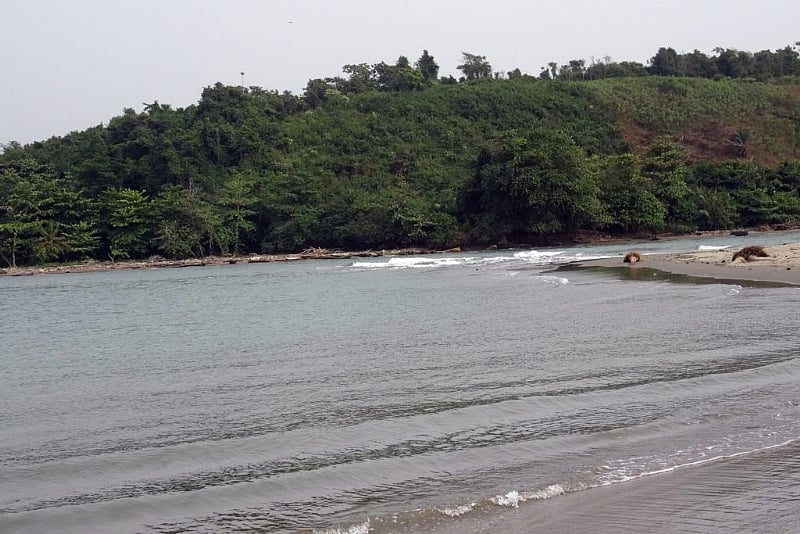

The Tano River—known in Côte d’Ivoire as the Tanoé—is one of the most significant transboundary rivers in West Africa, flowing through both Ghana and Côte d’Ivoire. More than just a body of water, the Tano is deeply intertwined with the environment, history, spiritual beliefs, and cultural identity of the peoples along its banks. Its journey from its sacred source to the Atlantic Ocean traces a path through myth, biodiversity, and geopolitical importance.
🌱 Origin: Sacred Source in the Ghanaian Highlands
The Tano River originates in the Traa Mountains near the town of Techiman, in the Bono East Region of central Ghana. This mountainous and forested region, part of the Guinean forest-savanna mosaic, is known for its rich ecological diversity and fertile land. The source of the river lies close to the Tano Sacred Grove, which is revered by the Akan people, particularly the Bono and Ahafo, as the spiritual dwelling of the river god Taakora (Tano).
Taakora is one of the most important deities in the Akan pantheon—a divine force believed to dwell within the waters of the Tano and who protects, punishes, and blesses. The source is not just geographical but sacred, often visited for traditional rituals, libations, and prayers for fertility, rain, and justice.
🌀 Course: A Lifeline Through Forests, Farms, and Communities
After emerging from the Traa Mountains, the Tano flows in a generally southwestern direction, traversing a total length of approximately 400 kilometers (250 miles). It cuts across Ghana’s Bono, Ahafo, and Western North Regions, before forming part of the international boundary between Ghana and Côte d’Ivoire.
Along its course, the river:
- Nourishes farming communities that rely on its waters for growing cocoa, plantains, cassava, and vegetables.
- Supports a vibrant fishing economy, especially in the lower reaches where artisanal fishing remains a traditional occupation.
- Passes through or near major towns and districts such as Tanoso, Dadieso, and Elubo.
- Crosses through biologically rich ecosystems, including sections of semi-deciduous forest, lowland swamp forest, and mangrove wetlands.
The river is vital to local transportation in some areas and is embedded in the oral traditions and folktales of the Akan-speaking populations.
🐾 The Tanoé-Ehy Swamp Forest: An Ecological Treasure
At the lower end of its course, near the Ghana–Côte d’Ivoire border, the Tano River enters one of the most important ecological zones in West Africa: the Tanoé-Ehy Swamp Forest. Located in southeastern Côte d’Ivoire near the towns of Ehy, Nouamou, and Tanoé, this wetland forest is a hotspot of endemic species and rare biodiversity.
Key features include:
- Home to critically endangered primates, such as the Roloway monkey (Cercopithecus roloway) and the White-naped mangabey.
- Rich birdlife and reptile species, including crocodiles and monitor lizards.
- Dense mangroves and swamp forests that serve as natural carbon sinks and protect coastal communities from erosion.
This area is under threat from illegal logging, gold mining, and agricultural expansion, prompting local and international conservation efforts.
🌊 Mouth: Into the Atlantic via Aby Lagoon
The Tano River finally empties into the Atlantic Ocean through the Aby Lagoon complex in the Sud-Comoé Region of Côte d’Ivoire. This area is part of a larger estuarine ecosystem that includes the Ehy Lagoon and the Tanoé Lagoon, all of which open into the Atlantic near the town of Assinie and Aboisso.
The estuary is characterized by:
- Brackish waters that support fishing and aquaculture.
- A unique mix of freshwater and saltwater biodiversity.
- Coastal villages that rely heavily on the river for livelihoods, transportation, and spiritual rituals.
🧭 Geopolitical and Cultural Significance
Because the Tano River crosses national boundaries, it plays a geopolitical role:
- It defines a section of the international border between Ghana and Côte d’Ivoire.
- Disputes have occasionally arisen over natural resource exploitation, especially gold and oil.
- The river is increasingly viewed as a shared ecological responsibility, requiring cooperative management between the two nations.
🇬🇭🇨🇮 Countries and Regions Crossed
| Country | Regions/Areas Traversed |
|---|---|
| Ghana | Bono East, Ahafo, Western North, Western Region |
| Côte d’Ivoire | Sud-Comoé, Ehy, Tanoé, Aboisso, Aby Lagoon area |


