Xerus erythropus – L’écureuil terrestre rayé d’Afrique
Cet article n’est pas encore disponible en français : vous lisez la version originale en anglais. Voir la page anglaise

A lively forager of open woodlands and riverbanks, dashing between sun and shadow with signature stripes
Quick Facts
- Common Name: African Striped Ground Squirrel
- Scientific Name: Xerus erythropus
- Family: Sciuridae (Squirrels)
- IUCN Status: Least Concern
- Body Length: ~17–25 cm; tail adds another 15–20 cm
- Weight: ~300–600 grams
- Activity: Diurnal
- Habitat: Savanna, woodland, dry forest edges, and agricultural fields
Distribution and Habitat
The African Striped Ground Squirrel is widely distributed across sub-Saharan Africa, including:
- Côte d’Ivoire, Ghana, Togo, Nigeria, and Senegal
In theTano River Basin, it can be found:
- Along sunlit forest edges, near open savanna patches
- In riverine grasslands, farmland margins, and even near human settlements
- Often seen basking or digging near the base of trees or in open fields
It prefers areas with some tree cover but plenty of open ground to forage.
Appearance
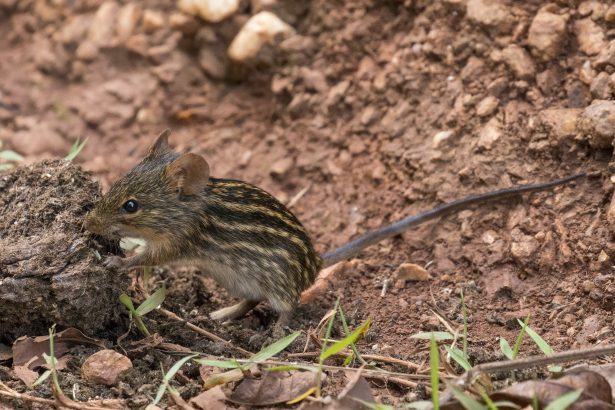
- Color: Grayish to light brown fur with a pale stripe running along each side from shoulder to hip
- Tail: Bushy and often used like a sunshade when resting
- Build: Sturdy with short limbs, adapted for digging and running
- Face: Prominent dark eyes and small rounded ears
Its side stripes and ground-hugging behavior help distinguish it from tree squirrels.
Behavior and Diet
- Diurnal, active mostly during cooler morning and late afternoon hours
- Diet:
- Seeds, nuts, fruit, roots, insects, and sometimes small vertebrates
- Digs burrows with multiple entrances for shelter and storage
- Frequently stands on hind legs to survey for predators
Their alert postures and sharp alarm calls help them avoid snakes, raptors, and carnivores.
Reproduction
- Breeding occurs throughout the year in warmer climates
- Litter size: 2–6 young
- Nesting chambers are made in underground burrow systems
- Juveniles emerge after 4–6 weeks, initially staying close to the den
Family groups may share territories but are generally solitary or loosely social.
Ecological Importance
The African Striped Ground Squirrel plays important roles by:
- Dispersing seeds through caching and movement
- Turning and aerating soil while digging burrows
- Providing prey for hawks, eagles, snakes, and small carnivores
Their presence enhances the biodiversity of grassland and forest edge zones.
Conservation Concerns
Although considered Least Concern, local threats include:
- 🚜 Habitat loss from agricultural expansion and fire
- 🧱 Conflict with farmers when they raid crops
- 🧪 Pesticide use, reducing food sources and direct poisoning
- 🏞 Habitat fragmentation, reducing roaming areas
Conservation of mixed-use landscapes and open woodland buffers supports their populations.
Why It Matters for the Tano River
The African Striped Ground Squirrel is:
- A familiar and adaptable species, bridging forest and savanna life
- An emblem of resilience in disturbed and changing environments
- A reminder that not all vital species live in the trees or water
By protecting the mosaic of habitats around the Tano, we ensure these squirrels keep scampering through the grasses for generations.
🔗 Have you seen squirrels dashing across a path or standing tall in the field? Submit your sightings at [TanoRiver.com/submit]