Lemniscomys striatus – La souris rayée typique des herbes
Cet article n’est pas encore disponible en français : vous lisez la version originale en anglais. Voir la page anglaise
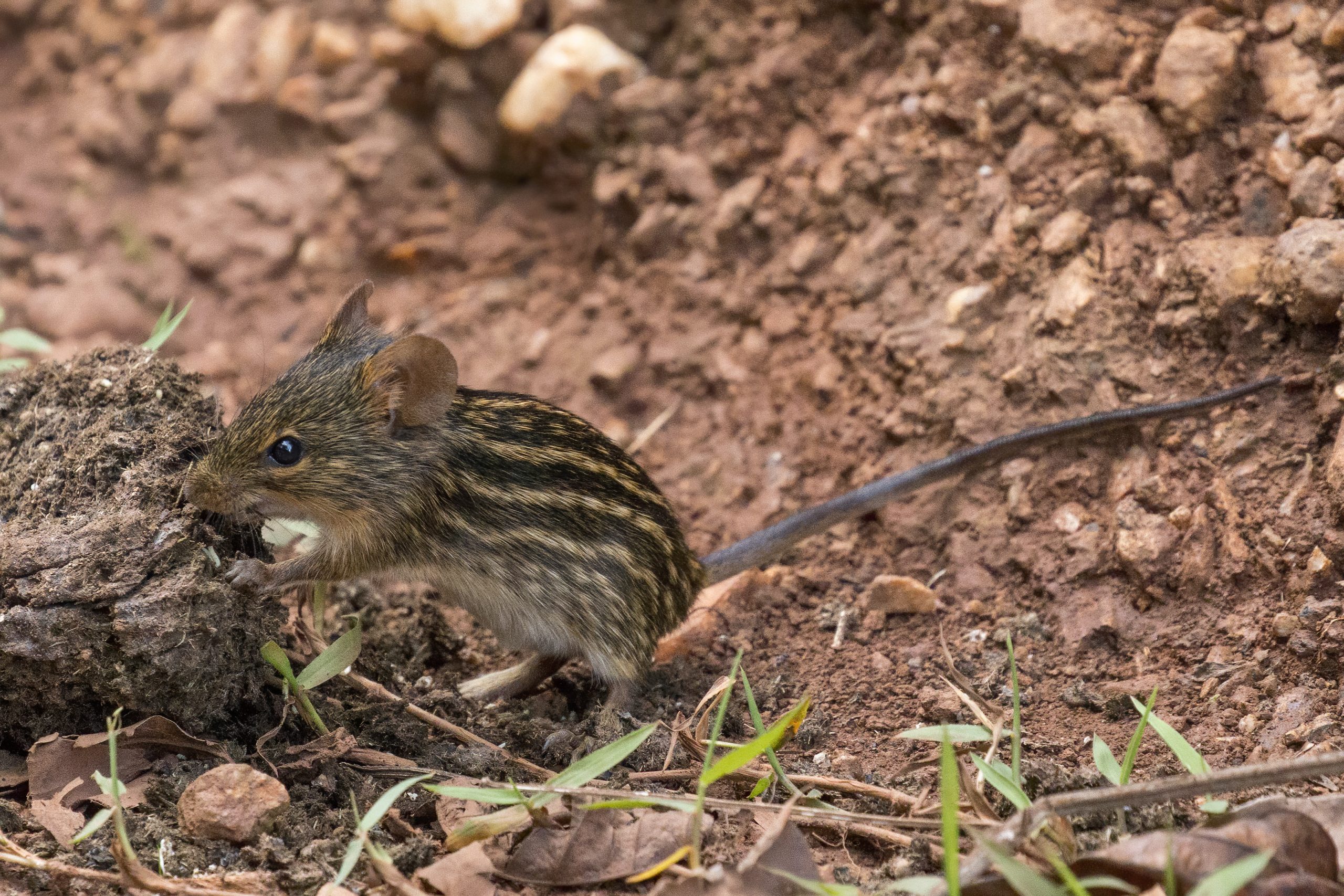
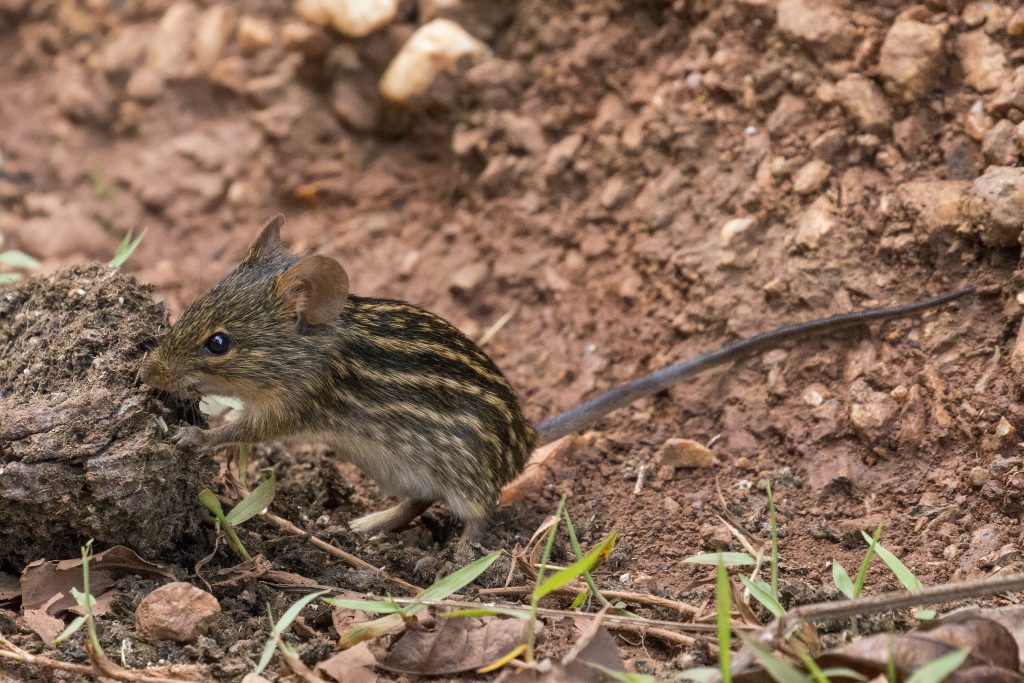
A fast-footed, stripe-coated mouse thriving along the grassy fringes of the Tano River ecosystem
Quick Facts
- Common Name: Typical Striped Grass Mouse
- Scientific Name: Lemniscomys striatus
- Family: Muridae (True mice and rats)
- IUCN Status: Least Concern
- Size: Body ~9–15 cm; tail ~12–17 cm
- Weight: ~30–80 grams
- Activity: Diurnal (unusual for rodents)
- Habitat: Grasslands, forest edges, farmlands, and moist savannas
Distribution and Habitat
This species is widespread across sub-Saharan Africa, and is known to occur in:
- Côte d’Ivoire, Ghana, Nigeria, Cameroon, and many other countries
In theTano River Basin, it is likely found:
- Along riverbank grasses and forest edges
- In open fields, cleared paths, and farm peripheries
- Near moist areas with dense grass cover and access to seeds or roots
Its habitat preferences make it one of the most frequently encountered rodents in open lowland areas.
Appearance
- Fur: Light brown or reddish upper parts with 7–11 dark stripes running from head to tail
- Underparts: Pale cream or grayish-white
- Tail: Long, slim, and lightly furred
- Eyes: Large and alert, suited for daytime foraging
Its striking dorsal stripes are its most recognizable feature, earning it the name “striped grass mouse.”
Behavior and Diet
- Diurnal, active during the day — rare among small rodents
- Diet:
- Seeds, grasses, green shoots, roots
- Occasionally small insects
- Builds burrows or grass nests in hidden areas
- Extremely agile and alert, often seen darting through grass
Its presence often indicates a healthy mix of grasses and open woodland.
Reproduction
- Breeds year-round, especially during the rainy season
- Gestation: ~21–24 days
- Litter size: 4–9 pups
- Matures quickly — may reproduce as early as 6 weeks of age
Its high reproductive rate helps it bounce back quickly after disturbance.
Ecological Importance
The Typical Striped Grass Mouse plays a key role in:
- Seed dispersal and vegetation dynamics
- Supporting predators such as snakes, owls, mongooses, and jackals
- Serving as a prey base for multiple trophic levels
- Helping aerate soil through burrowing activity
It contributes to the stability of savanna and river-edge food webs.
Conservation Concerns
Though abundant, localized risks include:
- 🚜 Land conversion for agriculture
- 🔥 Frequent grass fires, reducing food and shelter
- 🧪 Pesticide exposure in farming zones
- 🧱 Habitat fragmentation, limiting dispersal
Its ability to adapt to human-altered landscapes has helped maintain strong populations, but habitat diversity is key.
Why It Matters for the Tano River
The Typical Striped Grass Mouse is:
- A resilient and visible species, active during the day in grassy river corridors
- A sign of biodiversity in transitional habitats (between forest and savanna)
- An essential prey item in the ecological tapestry of the Tano basin
Protecting its habitat means preserving open grassy zones that benefit many species — including farmers, pollinators, and predators.
🔗 Have you seen striped mice running along footpaths or through riverside grasses? Share your sightings at [TanoRiver.com/submit]