Anomalurus derbianus – L’écureuil volant à queue écailleuse de Lord Derby
Cet article n’est pas encore disponible en français : vous lisez la version originale en anglais. Voir la page anglaise
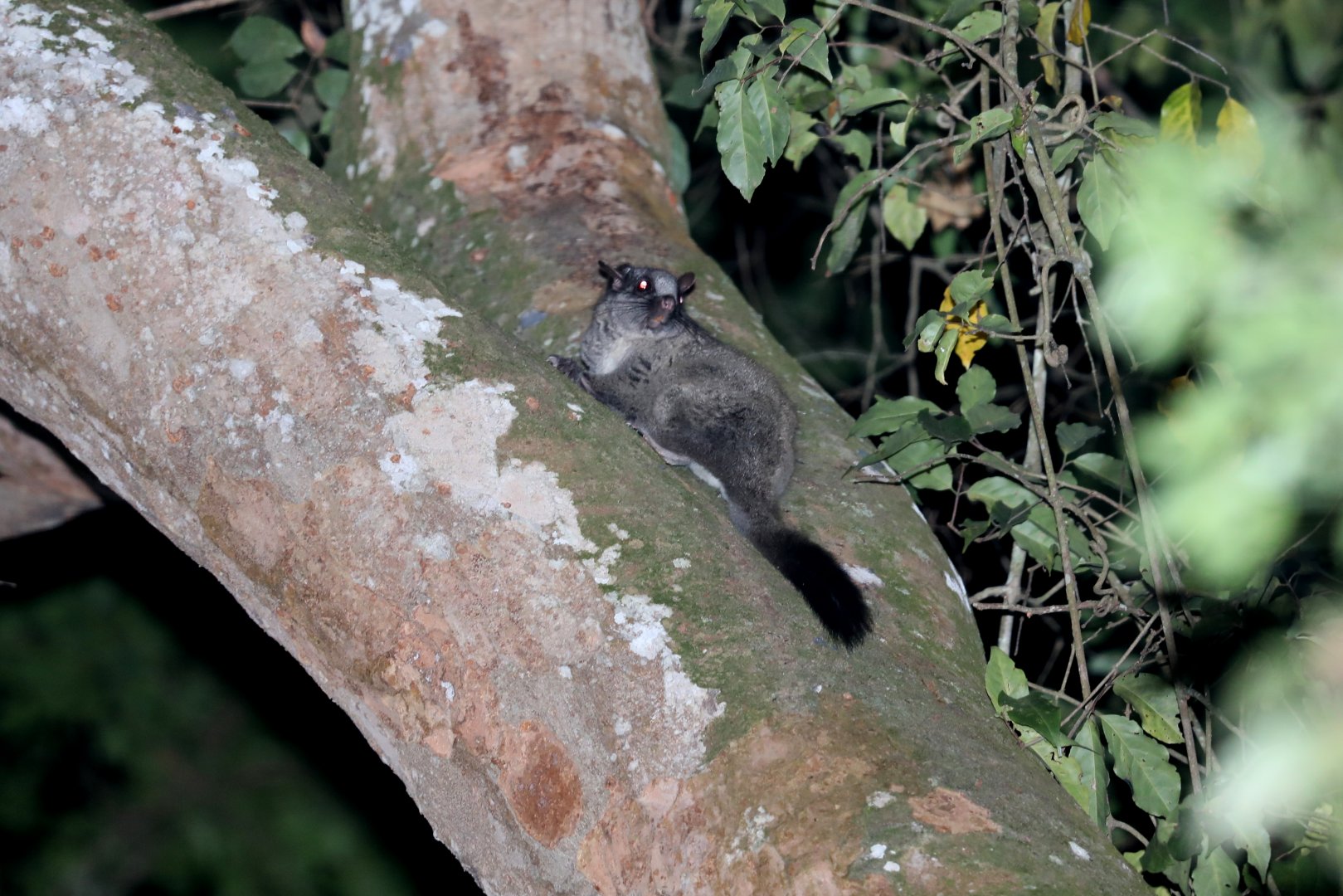
A silent glider of the Tano rainforest, soaring through moonlit branches
Quick Facts
- Common Name: Lord Derby’s Scaly-tailed Squirrel
- Scientific Name: Anomalurus derbianus
- Family: Anomaluridae (Scaly-tailed flying squirrels)
- IUCN Status: Least Concern, but locally rare
- Size: 35–45 cm (body), tail ~25–35 cm
- Activity: Nocturnal and arboreal
- Habitat: Tropical lowland and swamp forests
Distribution and Habitat
This unique mammal is found in the tropical forests of West and Central Africa, including:
- Ghana, Côte d’Ivoire, Liberia, Nigeria, and Cameroon
In theTano River basin, it may inhabit:
- High-canopy forests such as the Tanoé-Ehy Swamp Forest Reserve
- Old-growth trees along river corridors
- Undisturbed patches of dense forest far from human settlements
Its nocturnal lifestyle and silent gliding make it extremely difficult to detect.
Appearance and Adaptations
- Fur: Soft, dark brown or greyish, sometimes with lighter underparts
- Tail: Long and bushy with a double row of overlapping scales at the base—used for grip
- Patagium: A gliding membrane stretches from limbs to tail, enabling flight-like leaps between trees
- Eyes: Large and reflective, adapted for night vision
Its scaly tail and gliding skin folds make it distinct among African rodents.
Behavior and Ecology
- Nocturnal and arboreal
- Glides up to 30 meters between trees to forage or escape predators
- Diet:
- Eats bark, leaves, fruit, seeds, and occasionally insects
- Known to gnaw on twigs and vines, possibly for minerals
Rests in tree cavities during the day, emerging quietly at dusk.
Reproduction
- Nesting in tree holes, lined with leaves and fibers
- Little is known, but likely produces 1–2 young per litter
- Young cling to the mother or nest cavity for protection
Ecological Role
- Aids in seed dispersal and forest regeneration
- Contributes to nutrient cycling by breaking down bark and plant matter
- Prey for large owls, eagles, and forest cats
As a canopy species, it reflects the health of mature forest systems.
Conservation Concerns
Although Anomalurus derbianus is listed as Least Concern, it is vulnerable in places like the Tano region due to:
- 🌳 Logging of large trees, reducing nesting and gliding sites
- 🚜 Agricultural clearing and mining, breaking forest connectivity
- 🪤 Trapping or hunting, though rare, can occur
- 🔇 Lack of data, as its secretive habits make it understudied
Why It Matters for the Tano River
Lord Derby’s Scaly-tailed Squirrel is:
- A guardian of the canopy, gliding where no monkey or bird dares at night
- A symbol of forest depth and vertical diversity
- A reminder that preserving the upper layers of the forest is just as vital as protecting the ground
In the silence above the Tano, it floats like a leaf, unseen but not unfelt.
🔗 Have elders or hunters spoken of “flying rats” or night gliders in the forest? Do you know of trees where these squirrels might nest? Share at [TanoRiver.com/submit]