Tragelaphus scriptus – Le guib harnaché
Cet article n’est pas encore disponible en français : vous lisez la version originale en anglais. Voir la page anglaise
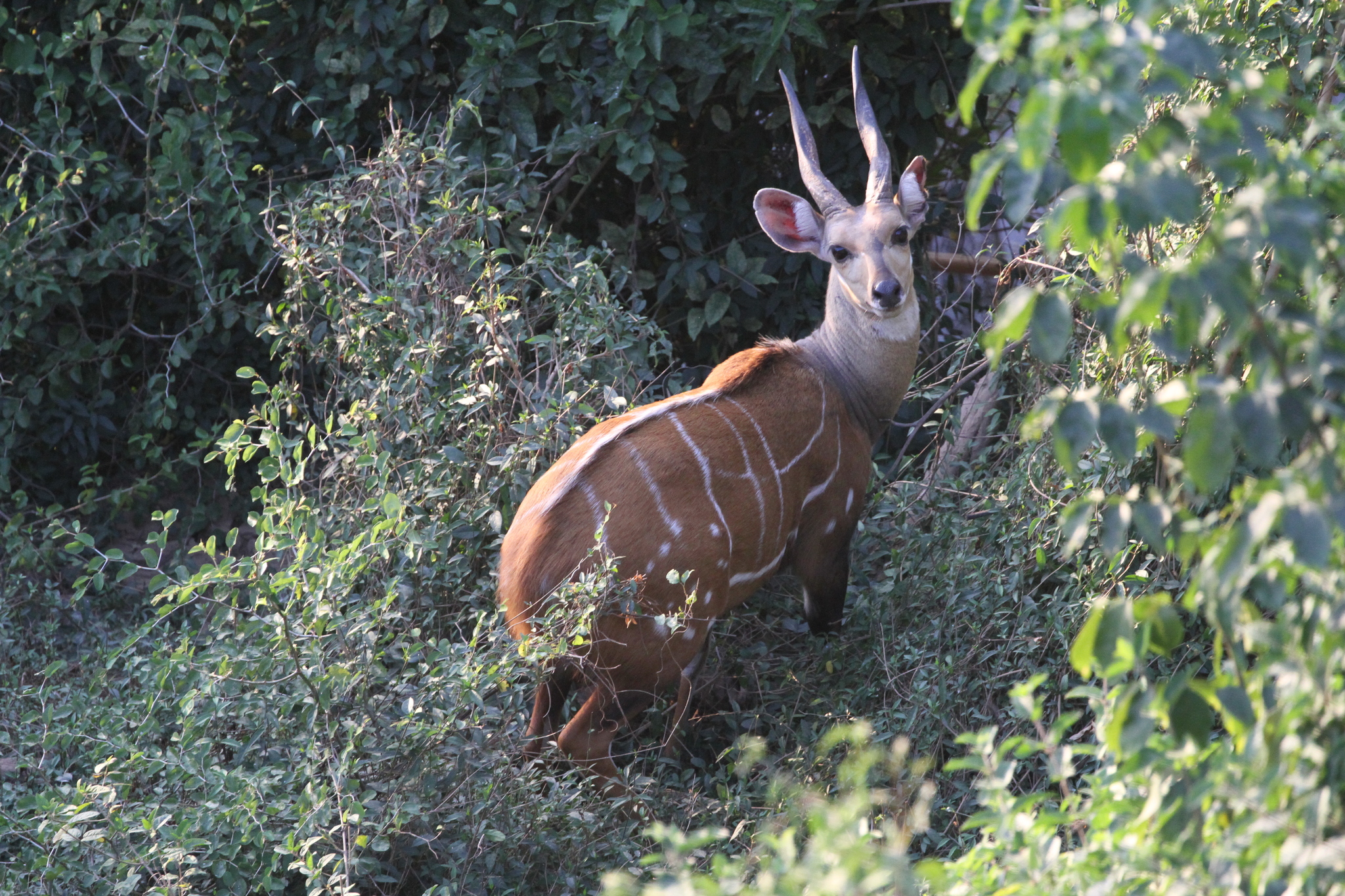
A solitary antelope of the forest margins, silent and secretive along the Tano River
Scientific Name:Tragelaphus scriptus
Common names: Bushbuck, Forest antelope, "Agban" (Akan), "Gbè" (Baoulé)
Family: Bovidae
IUCN Status: Least Concern (but declining in some regions)
Habitat and Distribution
The bushbuck is one of the most widespread antelopes in sub-Saharan Africa. It is native to:
- Ghana, Côte d’Ivoire, Nigeria, Cameroon, and most of tropical Africa
In theTano River region, bushbucks inhabit:
- Forest edges, riverine thickets, and dense underbrush
- Particularly common in:
- The Tanoé-Ehy Swamp Forest
- Gallery forests and sacred groves along riverbanks
- Transition zones between wetlands and farmlands
They are one of the few antelopes that thrive in dense vegetation, adapting well to forested environments.
Physical Description
- Size: 60–90 cm (shoulder height)
- Weight: 30–45 kg (males), smaller for females
- Coloration:
- Coat varies from reddish-brown to dark brown
- Marked with white spots and vertical stripes on flanks and legs
- White throat patch and undersides
- Horns: Only males have them — short, spiraled, and sharp
Their coloration blends perfectly with dappled forest light, offering excellent camouflage.
Behavior and Ecology
- Solitary and secretive: often active at dawn and dusk
- Feeds on:
- Leaves, twigs, fruits, and herbs
- Occasionally crops, bringing them into conflict with farmers
- Water-dependent: often found near streams or rivers like the Tano
- Movement:
- Slow and cautious
- Uses dense vegetation for cover; rarely seen in open areas
Males are territorial, while females may overlap ranges with offspring.
Role in the Ecosystem
- Browsers that help shape vegetation structure
- Serve as prey for leopards, large pythons, crocodiles, and hunting birds
- Important seed dispersers, especially of forest fruit trees
Their survival depends on the integrity of understorey vegetation and forest cover.
Cultural Significance
In many Akan and Nzema traditions, the bushbuck is:
- Associated with shyness, vigilance, and stealth
- Featured in folktales as a clever trickster or elusive prey
- Sometimes considered a sacred animal in certain forest shrines
- Its horns and hides are occasionally used in rituals or as status symbols
Hunters often revere the bushbuck for its intelligence and awareness — it’s known to freeze silently when threatened rather than bolt.
Threats and Conservation
Although listed as Least Concern, bushbuck populations are threatened by:
- Habitat destruction from agriculture, logging, and mining
- Hunting for bushmeat, especially in unprotected forests
- Dog hunting and snare traps, often unselective and cruel
- Encroachment into protected riparian zones, including around the Tano
Local populations are declining in many parts of Ghana and Côte d’Ivoire.
Conservation Efforts
- Survives in community-managed forests and sacred groves
- Present in the Tanoé-Ehy Forest, though under pressure
- Conservation actions include:
- Ecotourism and forest monitoring
- Anti-poaching patrols
- Awareness campaigns about the species’ ecological importance
Why It Matters for the Tano River
The bushbuck is:
- A symbol of wilderness and natural secrecy
- A browser that sustains forest health and balance
- A reminder that even common species can vanish without protection
Where river meets forest, the bushbuck watches, listens, and vanishes — a quiet guardian of the Tano’s edge.
🔗 Have you encountered a bushbuck in the wild? Or heard stories from elders? Share your sightings at [TanoRiver.com/submit]