Spondias mombin – Le prunier mombin : le fruit doré de la rivière
Cet article n’est pas encore disponible en français : vous lisez la version originale en anglais. Voir la page anglaise
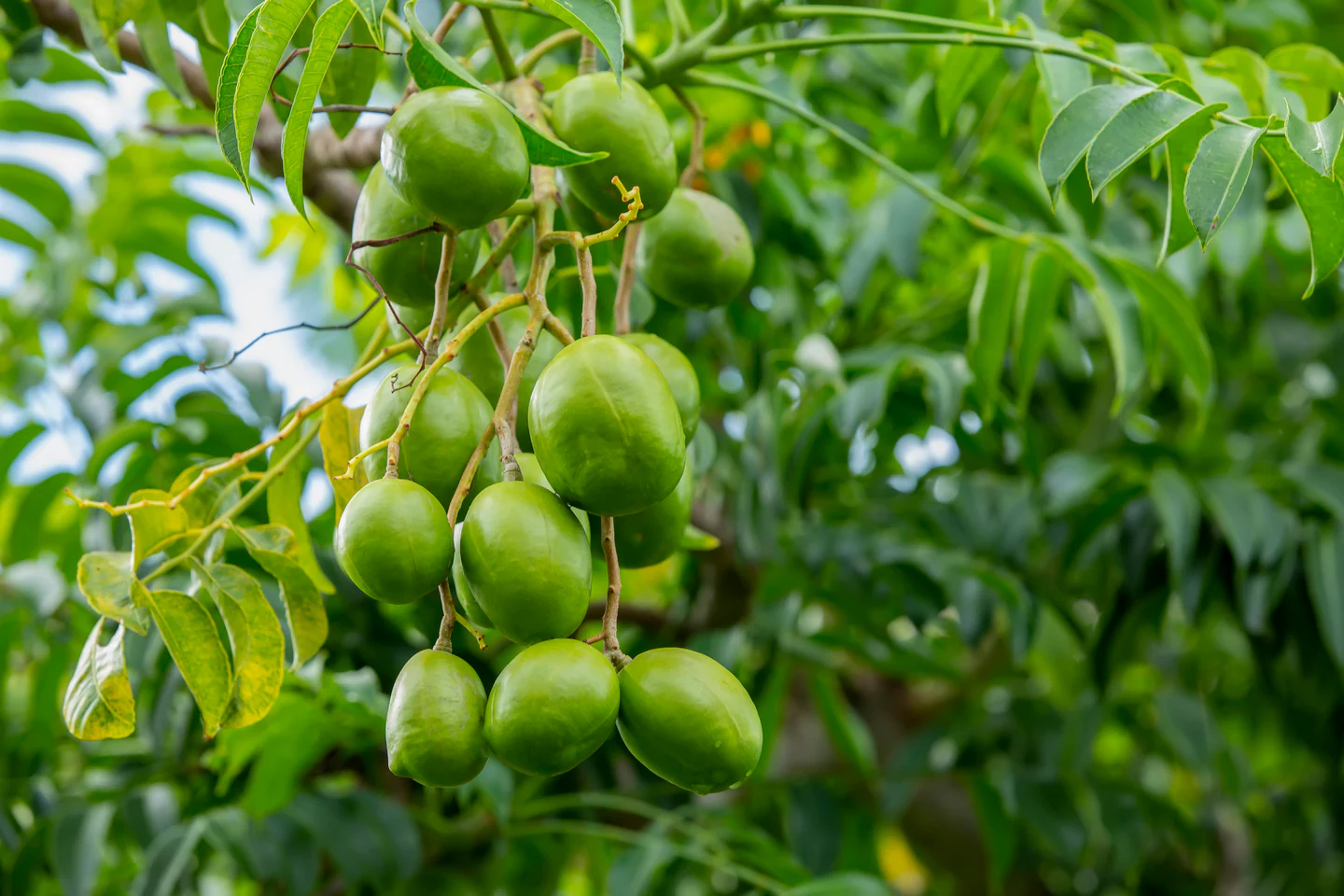
A sweet, tangy gift of the forest, rooted in tradition and thriving on the Tano River’s fertile banks
Scientific Name:Spondias mombin
Common names: Hog plum, Yellow mombin, “Atoa” (Akan), “Zaban” (Dioula), “Zézé” (Baoulé), “Ciruela amarilla” (Sp.), “Prune mombin” (Fr.)
Family: Anacardiaceae (cashew/mango family)
Habitat and Distribution
Native to tropical America, Spondias mombin was introduced to West Africa centuries ago, where it has become:
- Naturalized across tropical forests, savannah edges, and coastal zones
- Especially common in Ghana, Côte d’Ivoire, Nigeria, Togo, and Benin
In theTano River Basin, it grows:
- In village gardens, riverine farmlands, and secondary forests
- Along riverbanks, old trails, and sacred compounds
- Often planted intentionally or grown wild in fruit-rich fallows
It thrives in moist, loamy soils with plenty of sun, making it a perfect fit for the humid mid and lower Tano Basin.
Botanical Description
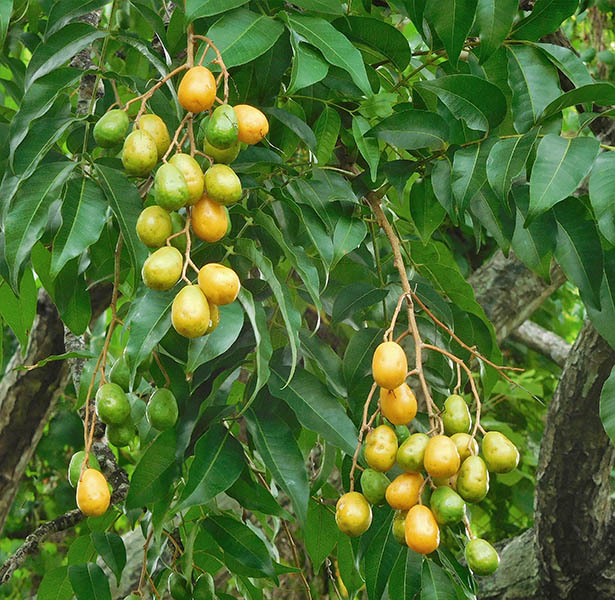
- Height: Medium-sized deciduous tree, growing 8–20 meters tall
- Leaves: Pinnate (feather-like), with numerous paired leaflets
- Flowers: Small, white, in dense inflorescences
- Fruits: Oval, yellow-orange when ripe, juicy with a fibrous interior and strong scent
- Bark: Grey, rough, and deeply fissured
The tree drops its leaves during the dry season, then explodes with fragrant flowers and fruits during rains.
Ecological Role
- Fruits are a vital food source for:
- Monkeys, bats, birds, and rodents
- Wild pigs and domestic livestock (hence “hog plum”)
- Flowers attract pollinators like bees and butterflies
- Acts as a pioneer species in regenerating disturbed forests
Its fruit-bearing presence supports biodiversity and food security in riverside communities.
Edible and Culinary Uses
- Eaten fresh, with a tangy, sweet-sour flavor
- Boiled or stewed into:
- Jams, juices, sauces, and pickles
- Fermented drinks (sometimes alcoholic)
- Ripe fruits are:
- Sold in local markets
- Shared during village festivals or river celebrations
Some elders use it in ancestral offerings, especially as a “sweetness of the land” symbol.
Traditional Medicinal Uses
The tree has multiple health uses in traditional medicine:
- Bark decoctions:
- Treat diarrhea, throat infections, and wounds
- Used in postpartum healing baths
- Leaves:
- Applied to skin rashes, boils, and sprains
- Used as a laxative or digestive aid
- Fruits:
- Aid digestion and appetite stimulation
- Boiled as a fever remedy in some areas
It is also considered a cooling plant, used in spiritual baths and cleansing rituals.
Cultural and Spiritual Significance
In many Tano River Basin traditions:
- Planted near homes and altars as a fruit of abundance
- Used in harvest ceremonies and fertility rites
- Considered a gift of sweetness and healing from the ancestors
Children often collect the fruit in the wild, while elders tell stories of how spirits love the smell of hog plum blossoms.
Conservation Notes
- Not endangered and often spreads naturally
- Still, faces risk from:
- Land conversion to monoculture farms
- Lack of value recognition in modern forestry plans
Encouraging its planting in agroforestry and community rewilding efforts helps preserve fruit diversity along the river.
Why It Matters for the Tano River
Spondias mombin is:
- A tree of food, medicine, and memory
- A symbol of riverine generosity
- A sweet taste of what the land can offer — if cared for, not cleared
From fruit to forest, the hog plum nourishes both body and spirit.
🔗 Do you harvest or cook with hog plum in your village? Submit your recipe or photos at [TanoRiver.com/submit]