Arbres et plantes de la Tano (Tanoé)
Arbres et plantes du bassin du fleuve Tano (Tanoé)
Cet article n’est pas encore disponible en français : vous lisez la version originale en anglais. Voir la page anglaise
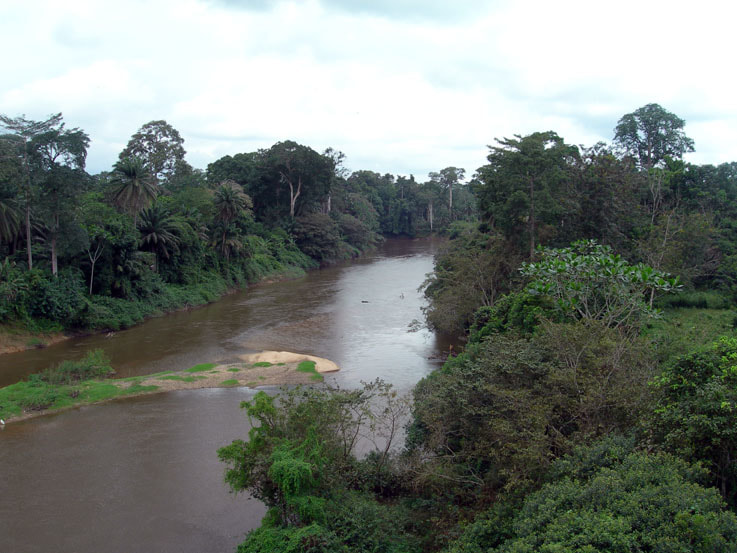
The green guardians of a sacred West African waterway
1.Riparian Forest Trees (Along the Riverbanks)
These species grow alongside the river, stabilizing the banks and providing shade, habitat, and erosion control.
- Milicia excelsa (Iroko tree)
– Tall hardwood tree, sacred in many communities
– Used for canoes, drums, and construction - Cola nitida / Cola acuminata (Kola nut trees)
– Culturally important; nuts used in ceremonies
– Common in southern Ghana and Côte d’Ivoire - Nauclea diderrichii (African peach / Opepe)
– Riverine hardwood tree; supports soil retention
– Flowers attract pollinators - Ceiba pentandra (Kapok tree)
– Towering, sacred tree in Akan and Nzema culture
– Provides cotton-like fiber, symbolic in rituals - Raphia hookeri (Raffia palm)
– Found in swampy zones and riverbanks
– Used for weaving mats, baskets, and palm wine
2.Mangroves and Estuarine Plants (Tano River Mouth)
In the Tendo, Ehy, and Aby lagoons, where freshwater meets the sea, you find coastal wetland vegetation:
- Rhizophora racemosa (Red mangrove)
– Forms dense root structures that prevent erosion
– Breeding grounds for fish and crabs - Avicennia germinans (Black mangrove)
– Tolerates saline water; vital to estuary health - Nymphaea lotus (Water lily)
– Aquatic plant in calm sections of the river and swamps
– Symbolic in African spirituality - Pistia stratiotes (Water lettuce)
– Floating plant, often seen in shallow river sections
– Helps oxygenate water but can overgrow if unchecked
3.Tanoé-Ehy Swamp Forest Trees (Côte d’Ivoire)
This zone holds some of the last intact swamp forests in West Africa. Notable tree species include:
- Alstonia boonei (Chewing stick tree)
– Medicinal bark, important in traditional healing - Uapaca spp. (Bush pear trees)
– Found in swampy or semi-flooded zones
– Fruits eaten by wildlife and people - Lophira alata (Azobé / Ironwood)
– Dense, water-resistant wood
– Found in old-growth wet forests - Elaeis guineensis (African oil palm)
– Native but increasingly cultivated
– Source of oil, but overexpansion threatens biodiversity
4.Medicinal and Sacred Plants
- Tetrapleura tetraptera (Aidan fruit / Prekese)
– Used in traditional medicine and rituals - Ocimum gratissimum (African basil)
– Fragrant herb used for purification and healing - Vernonia amygdalina (Bitter leaf)
– Widely used in cooking and for treating fevers
5.Grasslands and Wetland Flora
In periodically flooded zones and plains, especially in the middle basin, you’ll find:
- Cyperus papyrus (Papyrus reed)
- Panicum spp. (Riverbank grasses)
- Ferns and mosses in shaded, humid areas
- Floating fern (Azolla spp.) – key to water health and nitrogen fixing
Why This Matters
These plants:
- Regulate the river’s flow and prevent flooding
- Provide food, medicine, and income to riverside communities
- Create habitats for birds, fish, primates, and insects
- Are part of spiritual beliefs and traditional practices
Many of these species are now threatened by illegal mining, deforestation, and climate change.