Costus afer – Le costus d’Afrique (gingembre spiralé)
Cet article n’est pas encore disponible en français : vous lisez la version originale en anglais. Voir la page anglaise
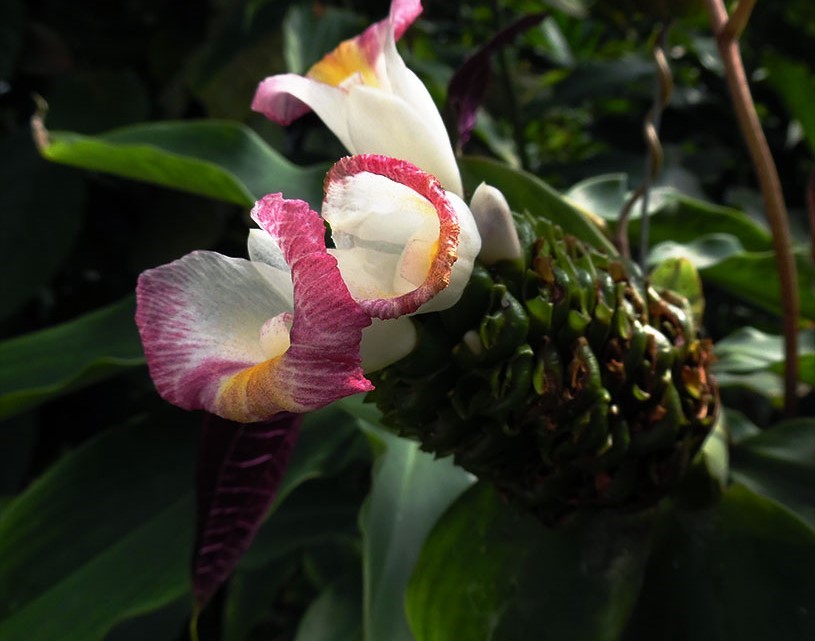
A wild forest bloom spiraling with beauty and healing power
Scientific Name:Costus afer
Common names: African spiral ginger, bush cane, wild ginger, “Etinkane” (Akan), “Kohoué” (Baoulé)
Family: Costaceae
Habitat and Range
Costus afer is native to:
- Tropical West and Central Africa, including Ghana, Côte d’Ivoire, and Nigeria
In the Tano River Basin, it grows in:
- Humid forest undergrowth
- Riverbank slopes and swamps
- Secondary forests and shady thickets
It prefers moist, well-drained soil and partial shade, making it common along lowland streambeds near the Tano.
Botanical Description
- Flower: Bright yellow or pale pink, trumpet-shaped, emerging from a spiral-shaped stalk
- Stem: Thick, succulent, with a spiral growth pattern
- Leaves: Broad, lance-shaped, arranged helically
- Height: 1–3 meters tall
The spiral stem and vivid blooms make it one of the most visually unique plants in the Tano ecosystem.
Ecological Role
- Attracts bees, butterflies, and other pollinators
- Helps stabilize moist soils along riverbanks
- Provides shelter for small reptiles and amphibians in undergrowth
- Adds organic matter to the forest floor when leaves drop
Medicinal and Traditional Uses
Costus afer is a powerful medicinal plant in West African ethnobotany:
- Juice from the stem used to:
- Treat coughs, sore throats, and respiratory infections
- Lower blood sugar and blood pressure
- Clean wounds and skin irritations
- Serve as an antiseptic for oral hygiene
- Leaves and roots may be:
- Boiled into herbal teas
- Applied as poultices for inflammation or joint pain
In rural areas along the Tano, it's known as a “first aid plant” for both humans and animals.
Cultural and Spiritual Significance
Though not as spiritually central as other trees, Costus afer has a place in ritual herbalism:
- Used in cleansing baths and fertility rites
- Sometimes planted near village borders as a protective charm
- Known among some elders as the “spiral of life”
Conservation and Awareness
Costus afer is not endangered, but:
- Overharvesting for herbal markets can threaten wild populations
- Habitat loss due to mining, farming, and deforestation affects its range
- Needs community education on sustainable harvesting
Why It Matters for the Tano River
Costus afer represents the hidden power of small forest flora:
- It heals bodies and supports biodiversity
- It thrives in wet, fragile habitats that need protection
- It is part of the green pharmacy of the Tano people
🔗 Do you use or grow Costus near the Tano River? Submit your story or recipe at [TanoRiver.com/submit]