Leptopelis occidentalis – La rainette forestière de Taï
Cet article n’est pas encore disponible en français : vous lisez la version originale en anglais. Voir la page anglaise
A rare voice of the rainforest canopy, echoing from the trees of the Tano basin
Quick Facts
- Common Name: Taï Forest Tree Frog
- Scientific Name: Leptopelis occidentalis
- Family: Arthroleptidae
- IUCN Status: Vulnerable
- Size: ~40–60 mm (adults)
- Activity: Nocturnal, arboreal
- Habitat: Lowland tropical rainforests and swamp forests
Distribution and Habitat
The Taï Forest Tree Frog is found in the Upper Guinean Forest zone of West Africa, including:
- Côte d’Ivoire, Liberia, Guinea, and Sierra Leone
In theTano River region, it may inhabit:
- The Tanoé-Ehy Forest Reserve and surrounding swampy rainforest zones
- Riparian forests and temporary pools near the river’s lower basin
- Areas where dense canopy cover meets ephemeral wetlands
Its name honors the Taï National Park, but it may also occur near the Ghana-Côte d’Ivoire border, including parts of the Tano Basin.
Description
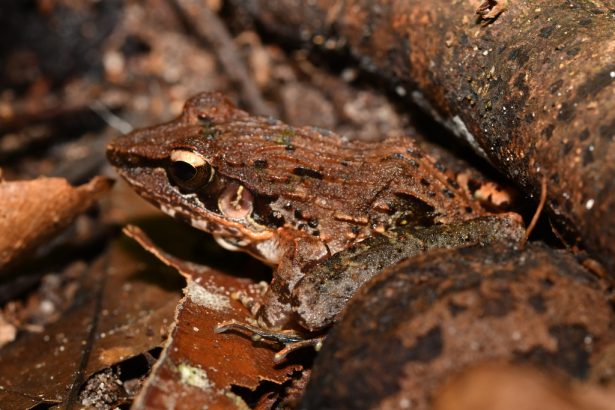
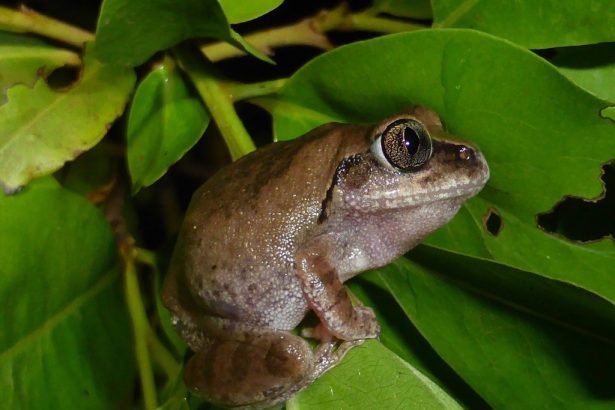
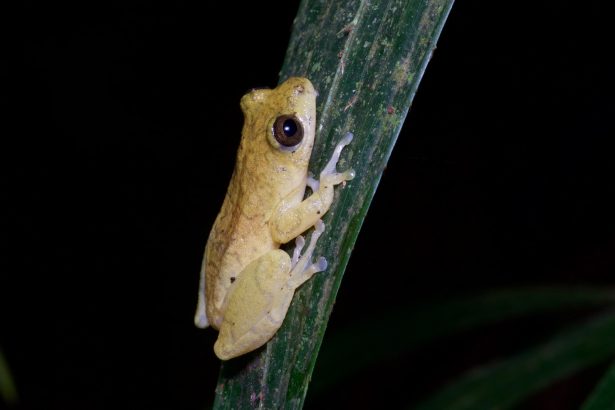
- Color: Green to olive-brown, with variable dark markings
- Body: Slender, with expanded toe pads for climbing
- Eyes: Prominent and adapted for low-light activity
- Sexual dimorphism: Males are slightly smaller and have a distinct call
Its coloration allows it to blend into leaves and branches, making it difficult to spot.
Behavior and Ecology
- Nocturnal and arboreal
- Comes down to lower vegetation or water edges during the rainy season
- Diet: Feeds on insects, spiders, and small invertebrates
- Known for its soft, whistling call, often heard at dusk or after rainfall
Breeding:
- Males call from leaves overhanging shallow pools
- Eggs are laid in moist ground, and tadpoles are washed into water bodies after hatching
- Tadpoles develop in temporary ponds or forest puddles
Conservation Concerns
The Taï Forest Tree Frog is listed as Vulnerable due to:
- 🚫 Severe deforestation in lowland forests
- 🛢️ Pollution and mining runoff, especially in riverine zones
- 🐾 Habitat fragmentation, which isolates populations
- ❌ Lack of research, meaning many local populations may be disappearing unnoticed
Its survival depends on the preservation of intact rainforest ecosystems with temporary freshwater breeding sites.
Why It Matters for the Tano River
This species is:
- An indicator of forest and wetland health
- A rare forest-edge amphibian that speaks to the importance of seasonal flooding and canopy shade
- A reminder that conservation must include invisible, quiet lives, not just iconic megafauna
Its call is faint, but it echoes the state of the forest.
🔗 Do you recognize this frog’s call near your farm or village? Have you seen bright green frogs at night near the forest edge? Share your findings at [TanoRiver.com/submit]