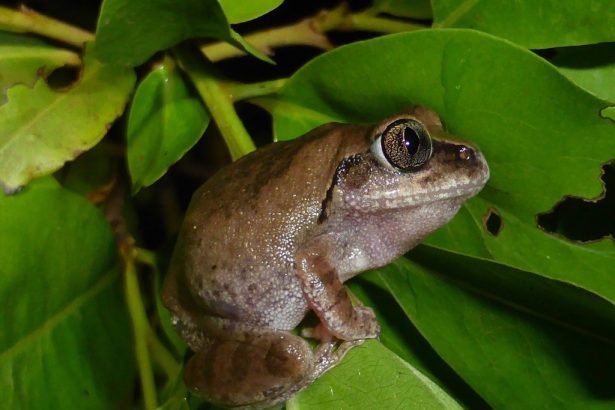
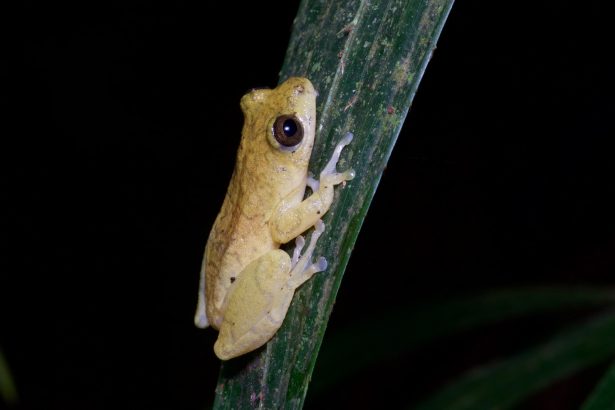
Ptychadena oxyrhynchus – La grenouille à crêtes de Victoria
Cet article n’est pas encore disponible en français : vous lisez la version originale en anglais. Voir la page anglaise
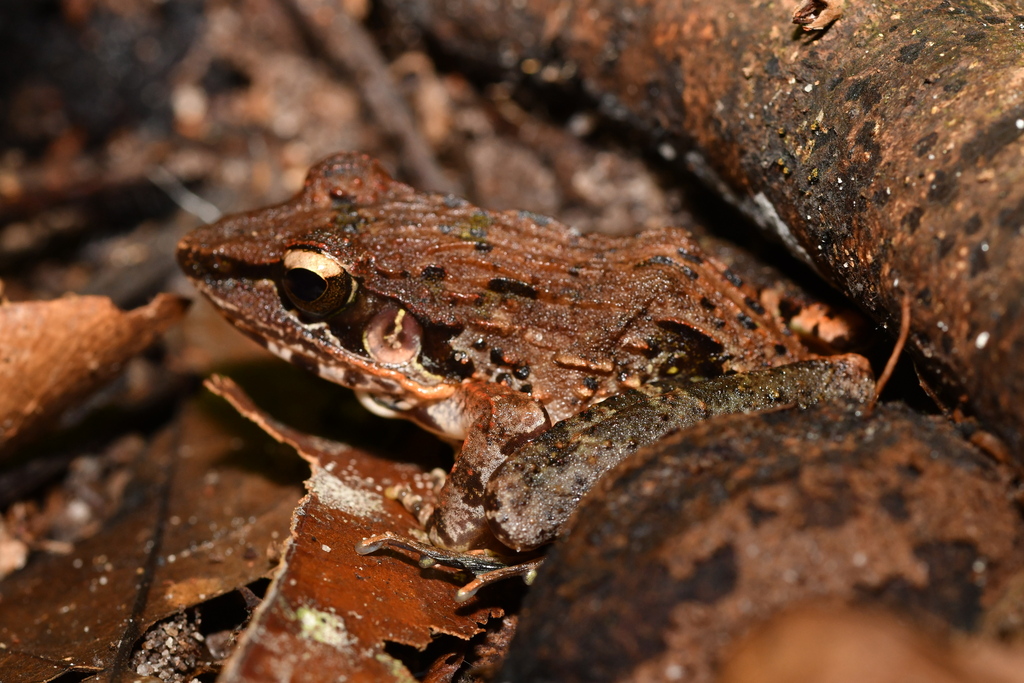
A leaping sentinel of Africa’s wetlands, found where grasses ripple and water glistens
Quick Facts
- Common Name: Victoria Ridged Frog
- Scientific Name: Ptychadena oxyrhynchus
- Family: Ptychadenidae
- IUCN Status: Least Concern
- Size: ~4.5–7 cm in length
- Activity: Primarily nocturnal
- Habitat: Grasslands, marshes, forest edges, and savannas near freshwater
Distribution and Habitat
While named after Lake Victoria, the Victoria Ridged Frog is found throughout sub-Saharan Africa, including:
- Côte d’Ivoire, Ghana, Nigeria, Cameroon, and Uganda
In theTano River Basin, it is likely to inhabit:
- Swampy grasslands and floodplains near the river
- Temporary rain pools, rice fields, and stream edges
- Clearings along the Tanoé-Ehy wet forest edge
It thrives in areas with seasonal flooding and shallow standing water.
Appearance
- Color: Olive to greenish-brown with distinct ridges running down the back
- Pattern: Dark blotches and stripes, especially on limbs
- Snout: Narrow and pointed (“oxyrhynchus” means sharp-snouted)
- Limbs: Long and muscular, made for powerful jumps
Its ridged back and streamlined body make it a fast, agile frog in both water and grass.
Behavior and Diet
- Active mostly at night, but often seen during rainstorms
- Diet:
- Insects, beetles, mosquitoes, ants, and spiders
- Known for its incredible jumping ability – up to 2 meters in a single leap
- Uses both camouflage and flight to escape predators
Often heard calling in choruses near flooded areas, especially after rain.
Reproduction
- Breeds explosively during the rainy season
- Males call with sharp, rapid trills to attract females
- Eggs are laid in temporary pools or flooded fields
- Tadpoles develop quickly to avoid desiccation
Adapted to make the most of short-lived aquatic habitats.
Ecological Role
The Victoria Ridged Frog plays a key role in:
- Controlling insect populations, including disease vectors
- Serving as prey for birds, snakes, and mammals
- Acting as a bioindicator of healthy freshwater systems
Its presence signals a functioning wetland ecosystem.
Conservation Concerns
Though currently stable, the species is locally threatened by:
- 🚧 Habitat loss due to agriculture and infrastructure
- 🛢 Pollution of wetlands from pesticides and mining
- 🌾 Drainage of swamps and conversion of floodplains
- 🔥 Grassland burning, which can kill adults and eggs
Maintaining seasonal wetlands and clean water is critical.
Why It Matters for the Tano River
The Victoria Ridged Frog is:
- A floodplain specialist, tied closely to the Tano’s seasonal pulse
- A reminder of the hidden networks of amphibian life
- A leaping symbol of resilience and adaptation
When we protect this frog, we protect the water-soaked edges of the river’s story.
🔗 Have you seen frogs leaping in rice fields or heard trills at night after rain? Report your sightings at [TanoRiver.com/submit]