Rainette d’Afrique de l’Ouest (Leptopelis viridis)
Cet article n’est pas encore disponible en français : vous lisez la version originale en anglais. Voir la page anglaise

A hidden voice of the Tano forests, calling from leaves after the rain
Scientific Name:Leptopelis viridis
Common names: West African Tree Frog, Olive Tree Frog
Family: Arthroleptidae
IUCN Status: Least Concern
Distribution and Habitat
The West African Tree Frog is native to tropical regions of West and Central Africa, found in:
- Ghana, Côte d’Ivoire, Nigeria, Benin, Togo, and extending into the Congo Basin
In theTano River region, it lives in:
- Moist forests, swamp edges, and riverine vegetation
- Common in the Tanoé-Ehy Forest Reserve and lowland secondary forests
- Can also be found near farm edges, village gardens, and flooded fields
It prefers areas with high humidity, dense foliage, and seasonal or permanent water bodies for breeding.
Physical Description
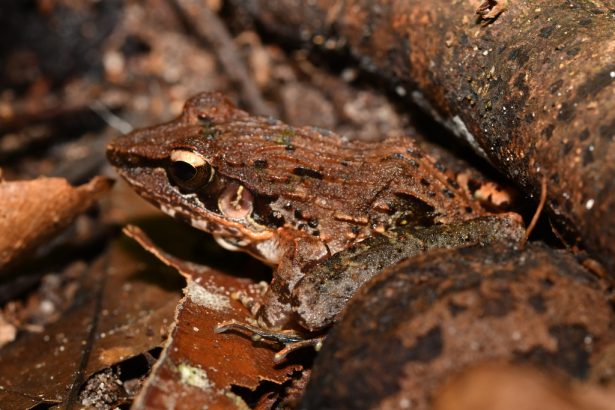
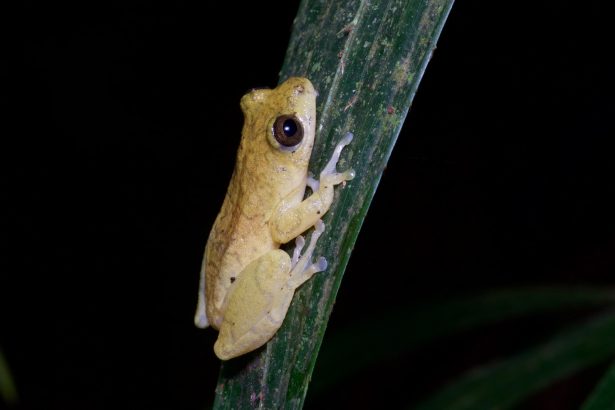
- Size: 4–6 cm (females slightly larger than males)
- Coloration:
- Variable: typically olive green, light brown, or grayish with darker markings
- Bright green or gold eyes with horizontal pupils
- Slender limbs and broad toe pads for climbing
Their camouflage helps them blend into leaves and mossy trunks.
Behavior and Ecology
- Nocturnal and arboreal (tree-dwelling)
- Comes down to the ground during breeding season to lay eggs
- Males call from elevated perches:
- Their distinctive “cluck-cluck” sound echoes after rains, especially at dusk
Diet:
- Small insects, spiders, and other invertebrates
- Helps control mosquitoes and crop pests
Reproduction
- Breeds during the rainy season
- Female lays eggs in moist soil depressions or leaf litter, not directly in water
- After hatching, tadpoles make their way to nearby water pools to complete development
This reproductive method helps avoid aquatic predators early in life.
Ecological Role
- Controls insect populations in forest and farmland ecosystems
- Prey for birds, snakes, and small mammals
- Indicator species for environmental health — sensitive to pollution and habitat disturbance
Their presence signals clean, moist, and balanced ecosystems.
Cultural Notes
While not as well-known in traditional folklore as larger animals, frogs in general are:
- Seen as symbols of fertility, rain, and transition in Akan and Nzema cultures
- Their croaking after rain is believed to welcome the spirits of the forest
Children are often taught not to harm frogs, especially those that “sing at night.”
Threats
Though Leptopelis viridis is classified as Least Concern, local populations are impacted by:
- Habitat loss from deforestation and gold mining (galamsey)
- Water pollution from agricultural runoff and mercury
- Climate change, which affects rainfall patterns and breeding cycles
Amphibians are especially sensitive to ecosystem changes, serving as early warning indicators.
Why It Matters for the Tano River
The West African Tree Frog is:
- A small but vital link in the food web
- A nighttime chorus of health and balance
- A creature whose survival reflects the purity of the forest and wetland system
When the forest breathes, the tree frog calls — a sign that the Tano River is still alive at night.
🔗 Have you heard the tree frogs calling after a storm? Share your recordings or memories at [TanoRiver.com/submit]