Ixora coccinea – La flamme de la jungle
Cet article n’est pas encore disponible en français : vous lisez la version originale en anglais. Voir la page anglaise
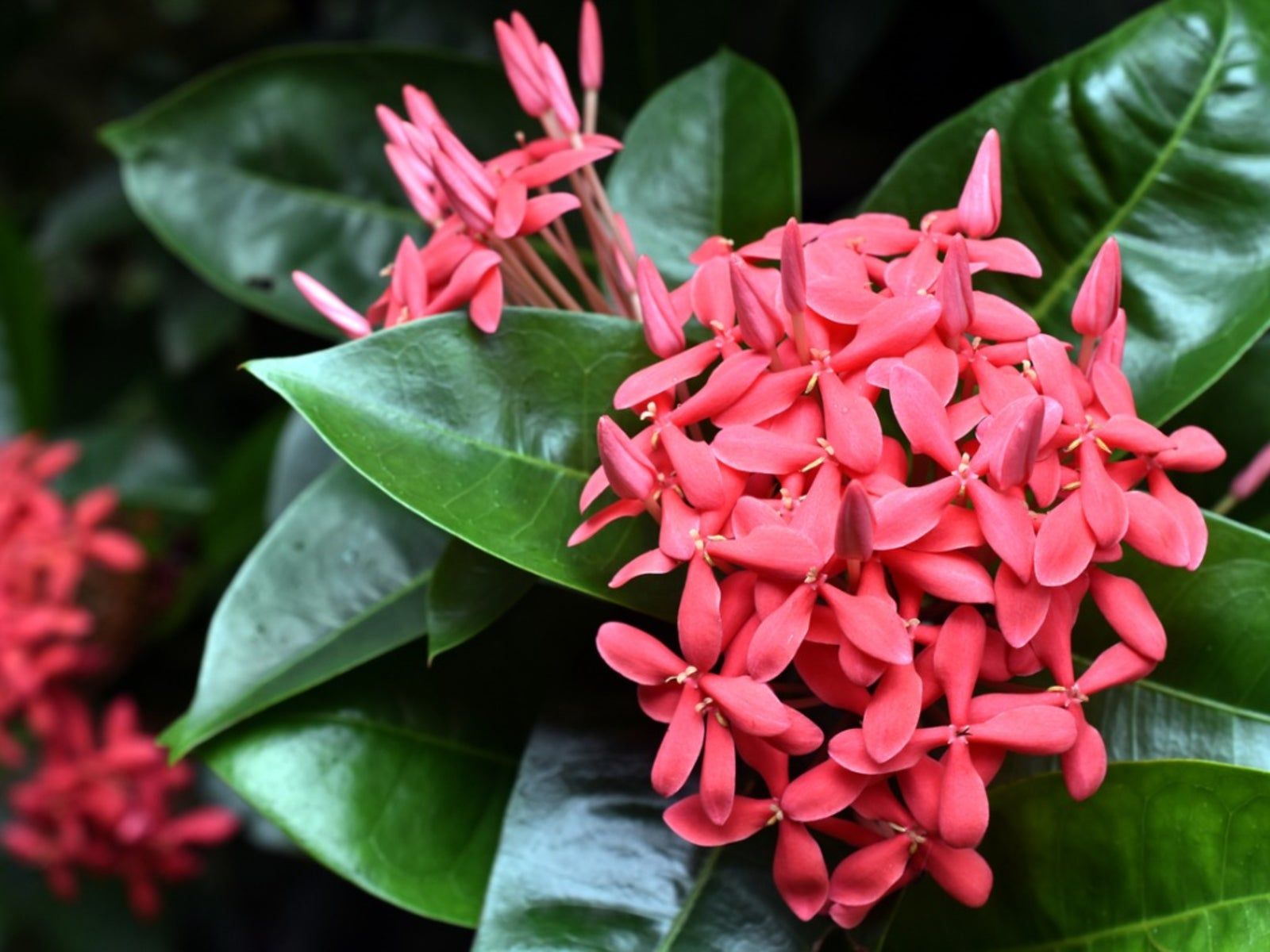
A fiery cluster of beauty, love, and healing in the villages of the Tano River
Scientific Name:Ixora coccinea
Common names: Jungle flame, Flame of the woods, Scarlet jungle flame, “Bebrebe” (Akan), “Fleur du feu” (Fr.)
Family: Rubiaceae (coffee family)
Habitat and Distribution
Native to South and Southeast Asia, Ixora coccinea has become a naturalized ornamental plant throughout tropical Africa. In the Tano River Basin, it is:
- Commonly grown in village gardens, schoolyards, and temple courtyards
- Found in rural paths and house compounds along the lower and middle Tano River
- Sometimes used to mark boundaries or shrine entrances
It thrives in moist, well-drained soils with partial to full sun.
Botanical Description
- Flowers: Small tubular blooms in dense, fiery clusters — typically red, but also pink, yellow, or orange in cultivated varieties
- Leaves: Dark green, leathery, oblong
- Growth habit: Evergreen shrub, typically 1–2 meters tall
- Blooming: Year-round, with peak during rainy seasons
Its vivid color and round flower heads make it one of the most recognizable ornamental shrubs in the region.
Ecological and Aesthetic Role
- Attracts butterflies, bees, and sunbirds, supporting local pollinators
- Provides aesthetic value to homes, schools, and riverside temples
- Often used to create floral hedges that protect against soil erosion
- Brightens the built environment near the river
Though not native, its presence reflects a human-nature connection in landscaped spaces.
Cultural and Spiritual Significance
Ixora coccinea is valued for more than just its beauty:
- In Akan and Baoulé communities, red Ixora flowers are sometimes used:
- In love charms or romantic blessings
- In ritual baths for vitality or confidence
- In symbolic offerings at river shrines, especially in purification rites
- In funerals, it may be planted or woven into farewell garlands to signify love and light sent with the departed.
In some Ghanaian traditions, the plant is believed to attract blessings and ward off negative energy when placed at the home’s entrance.
Traditional Medicinal Uses
Though less used medicinally than some trees or herbs, Ixora coccinea has local applications:
- Flower infusions used to treat:
- Dysentery
- Fever
- Skin rashes
- Crushed leaves applied to:
- Cuts and bruises
- Boils or swellings
- Occasionally used in herbal tonics for vitality
Its astringent and antibacterial properties are respected in traditional medicine.
Conservation and Cultivation Notes
- Not endangered and widely cultivated
- However, urbanization and neglect of local landscaping traditions may reduce its use
- Often replaced by imported hybrids, leading to loss of cultural floral heritage
Why It Matters for the Tano River
Though ornamental, Ixora coccinea brings together:
- Beauty and tradition
- Healing and spiritual strength
- Human design and natural color
It represents the living spirit of riverside communities, where flowers are not only decorative, but meaningful symbols of life, love, and renewal.
🔗 Do you grow Jungle Flame near the Tano? Share your flower photos at [TanoRiver.com/submit]