Ichneumia albicauda – La mangouste à queue blanche
Cet article n’est pas encore disponible en français : vous lisez la version originale en anglais. Voir la page anglaise
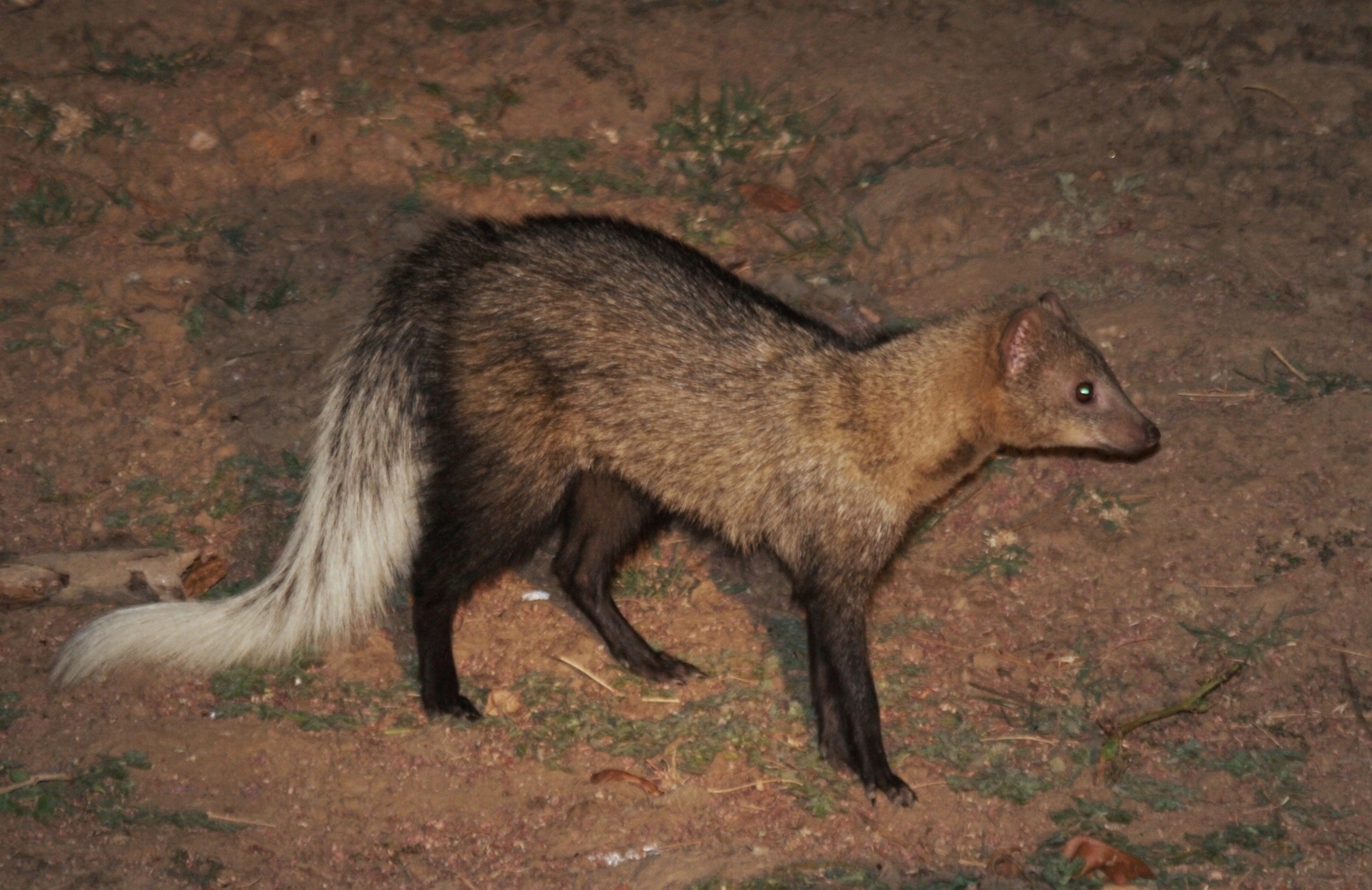
A stealthy night prowler of the Tano’s forest edges, marked by its striking tail and solitary habits
Quick Facts
- Common Name: White-tailed Mongoose
- Scientific Name: Ichneumia albicauda
- Family: Herpestidae (mongoose family)
- IUCN Status: Least Concern
- Size: Body length ~60–70 cm; tail ~40 cm
- Weight: 2.5–4.2 kg
- Activity: Nocturnal
- Habitat: Forest edges, savannas, riverine woodland, and farmlands
Distribution and Habitat
The White-tailed Mongoose is one of the most widespread mongoose species in Africa, including:
- Côte d’Ivoire, Ghana, Nigeria, and across sub-Saharan Africa
In theTano River Basin, it likely roams:
- Along forest margins of the Tanoé-Ehy Swamp Forest
- Near village edges and abandoned farms
- Riverbanks and paths through dense undergrowth, hunting at night
It is elusive and rarely seen, but leaves distinctive tracks and white tail flashes at night.
Appearance
- Fur: Grey to dark brown, coarse and thick
- Tail: Long and bushy with a conspicuous white tip
- Body: Slender and elongated with a pointed snout
- Ears: Rounded; eyes shine orange-red in torchlight
The white tail is visible even in moonlight, used for signaling and confusion of predators.
Behavior and Diet
- Solitary and territorial
- Mostly active from dusk to dawn
- Diet:
- Insects (beetles, termites), rodents, frogs, reptiles, bird eggs
- Also scavenges carrion and raids poultry in rural areas
- Uses sharp claws and teeth to break into nests and burrows
Often follows forest trails or dry streambeds, silently foraging with nose to ground.
Reproduction
- Breeds year-round in some regions
- Gestation: ~60–70 days
- Litter size: 2–3 pups
- Young raised in burrows or hollow logs, remaining hidden for several weeks
Very little is known about its parenting behavior, due to its secretive nature.
Ecological Importance
The White-tailed Mongoose helps maintain balance by:
- Controlling rodent and insect populations
- Scavenging carcasses, keeping forest areas cleaner
- Acting as prey for large owls, leopards, and pythons
Its movements help disperse nutrients and affect small prey dynamics.
Threats
While adaptable, it faces pressures near the Tano River such as:
- 🧱 Persecution, especially where it is blamed for poultry losses
- 🏞 Habitat fragmentation from farming and mining
- 🔥 Loss of cover, reducing hunting success and hiding places
- 🚧 Road mortality in areas where forest tracks intersect villages
Still, it remains resilient in mixed landscapes.
Why It Matters for the Tano River
The White-tailed Mongoose is:
- A symbol of ecological balance, living quietly on the edges of wild and human spaces
- An important predator and scavenger, contributing to ecosystem cleanup
- A sign of coexistence, surviving in both forest and farmland environments
Its glowing eyes and bright tail remind us that not all forest life sleeps when the sun goes down.
🔗 Have you seen glowing eyes near the river at night or found mysterious pawprints along trails? Share your stories at [TanoRiver.com/submit]