Elaeis guineensis – Le palmier à huile africain
Cet article n’est pas encore disponible en français : vous lisez la version originale en anglais. Voir la page anglaise

An ancient tree of nourishment, economy, and ecological tension in the Tano River Basin
Scientific Name:Elaeis guineensis
Common names: African oil palm, “Abé” (Akan), “Gbô” (Baoulé), “Palmier à huile” (French)
Family: Arecaceae (palm family)
Native Range and Habitat
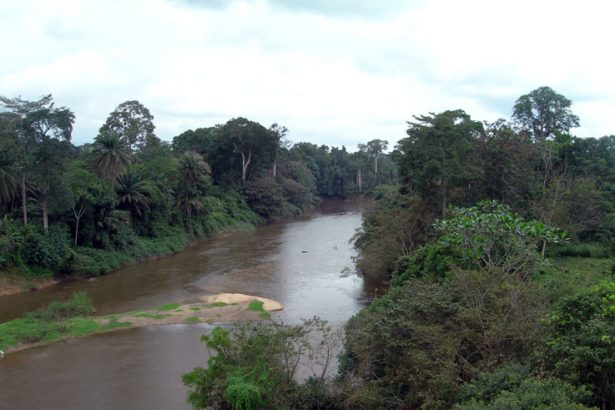
The African oil palm is indigenous to West and Central Africa, especially in the humid equatorial zone. It grows naturally and is also cultivated across the Tano River Basin in both Ghana and Côte d’Ivoire.
It thrives in:
- Moist lowland forests
- Abandoned farms or fallows
- Village groves and riverine fringes
- Large industrial plantations
Wild varieties still grow in the Tanoé-Ehy wetland forest and along rural riverbanks.
Botanical Characteristics
- Height: 10–20 meters tall
- Trunk: Single, sturdy, ringed with old leaf scars
- Leaves: Long, feather-like, spiny at the base
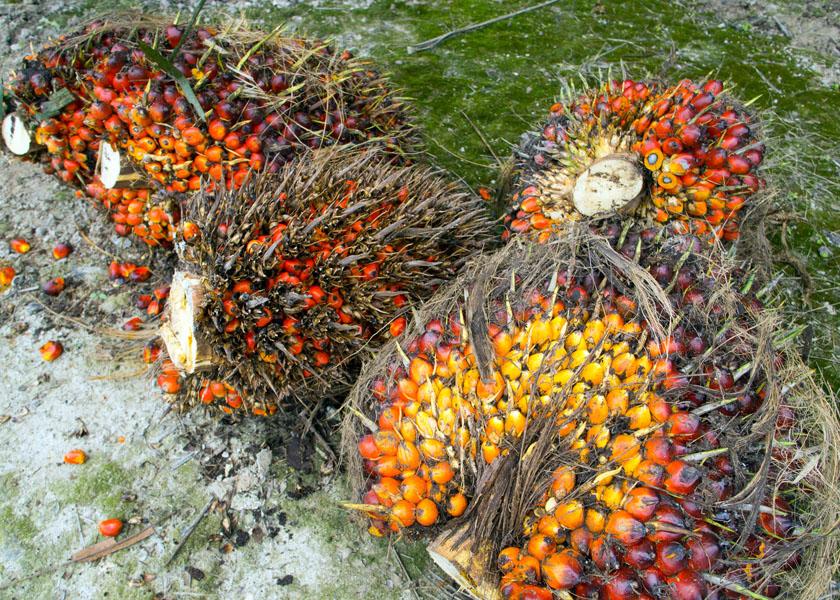
- Fruit: Bright orange-red bunches of oval fruits (3–6 cm)
- Seeds: Contain palm kernel, used for oil extraction
Each tree can produce up to 40–50 kg of fruit per harvest.
Traditional and Economic Importance
Elaeis guineensis is one of Africa’s most economically important plants — and also deeply culturally significant in the Tano region.
1.Palm Oil Production
- Red oil is extracted from the fleshy fruit pulp
- Used in:
- Cooking
- Soap-making
- Ceremonies and medicine
- Local trade
2.Kernel Oil
- Extracted from the inner seed
- Used for cosmetic, soap, and industrial purposes
3.Palm Wine and Leaves
- The sap is tapped for fermented palm wine, especially in Akan and Nzema areas
- Leaves are used for:
- Broom-making
- Roof thatching
- Basketry and fencing
Cultural and Spiritual Uses
In many Akan and Baoulé traditions, the palm tree is:
- A symbol of resourcefulness and continuity
- Used in libation rituals and funerals
- Associated with fertility, food, and ancestral blessings
Palm nuts are sometimes placed in sacred river offerings along the Tano.
Environmental Challenges
The African oil palm has two faces:
As a native species:
It regenerates naturally in forest-fallow cycles, supports wildlife, and provides a local livelihood.
As an industrial crop:
Large-scale plantations often lead to:
- Deforestation, especially in swamp forests like the Tanoé-Ehy
- Loss of biodiversity (primates, pangolins, birds)
- Water stress and pollution
- Displacement of local communities
This creates tension between development and conservation, especially near wetlands and riverbanks.
Why It Matters for the Tano River
The African oil palm is a tree of abundance and caution:
- It is a gift of the forest, but must be managed with respect for nature
- In the Tano Basin, its role is both economic and ecological
- Communities that plant and harvest it traditionally are stewards of a sustainable future
The challenge is to balance local use with conservation of wetland forests and riverbanks.
🔗 Explore more about local livelihoods and ecological practices at [TanoRiver.com/communities]