Ctenopoma kingsleyae – Le cténopoma à tache caudale
Cet article n’est pas encore disponible en français : vous lisez la version originale en anglais. Voir la page anglaise
A secretive climber and ambush predator of West Africa’s shadowy streams
Scientific Name:Ctenopoma kingsleyae
Common names: Tailspot Ctenopoma, Kingsley's climbing perch
Family: Anabantidae (Climbing gouramis)
Distribution and Habitat
Ctenopoma kingsleyae is native to the freshwater systems of West and Central Africa, found in:
- Ghana, Côte d’Ivoire, Nigeria, Cameroon, Gabon, and the Congo Basin
In theTano River region, it likely inhabits:
- Still or slow-moving waters with heavy vegetation
- Swamps, backwaters, and flooded forest zones
- Shallow areas with leaf litter, submerged roots, and low light
It thrives in low-oxygen waters, thanks to its labyrinth organ which allows it to breathe air directly.
Physical Description
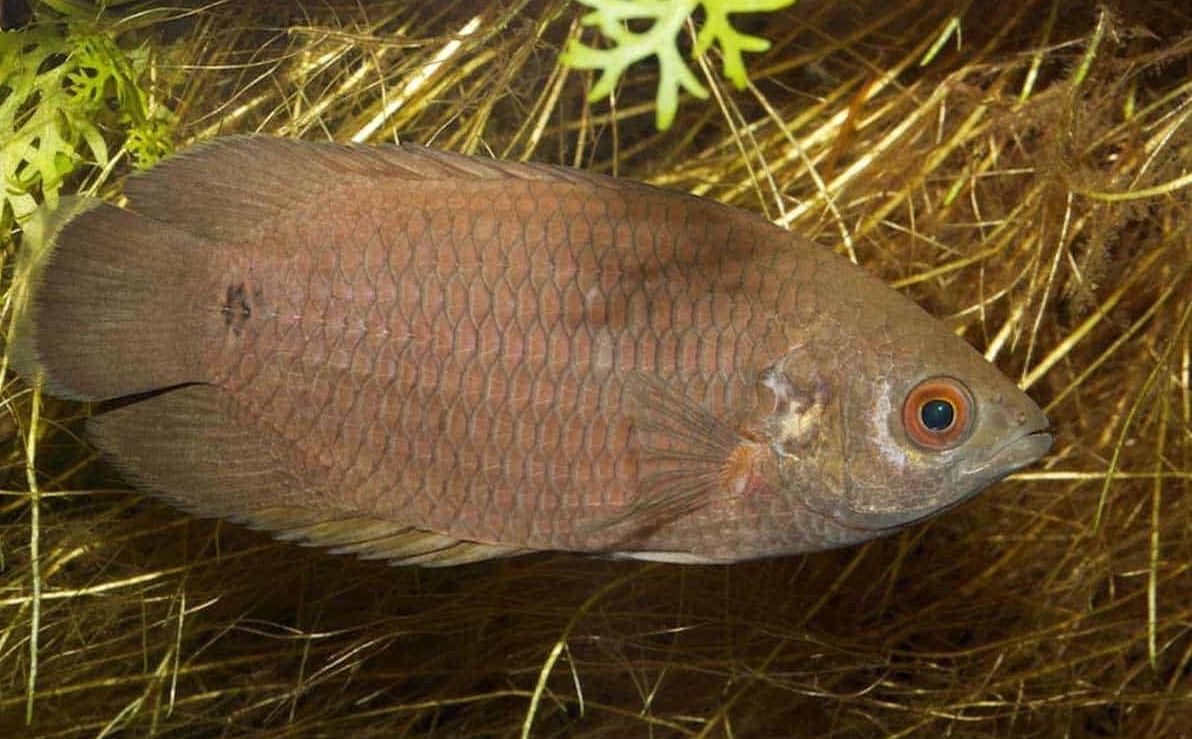
- Size: Typically 10–15 cm (4–6 inches), with some growing larger
- Coloration:
- Dark brown or olive body with subtle mottled patterns
- A distinctive black spot at the base of the tail fin (the “tailspot”)
- Body: Deep, oval shape with rounded fins
- Fins: Dorsal and anal fins are often spiny and elongated
- Eyes: Large, adapted for dimly lit waters
Its camouflaged appearance helps it blend into leafy riverbeds and swamp margins.
Behavior and Ecology
- Feeding: Carnivorous
- Ambush predator that feeds on:
- Insects, small fish, crustaceans, and larvae
- Worms and aquatic invertebrates
- Ambush predator that feeds on:
- Hunting style:
- Moves slowly and stealthily, then strikes rapidly at prey
- Often active at dawn, dusk, or night
- Breathing:
- Uses a labyrinth organ to gulp air at the surface
- Can survive in oxygen-depleted water
- Behavior:
- Solitary or in small, scattered groups
- Highly territorial and secretive
Reproduction
- Little is known about its breeding in the wild
- In captivity, spawning involves:
- Bubble nest building (unlike some other Ctenopoma species)
- Eggs float and hatch in a few days
- Parental care is limited after spawning
Its reproductive behavior in the Tano River remains a mystery waiting to be studied.
Ecological Importance
- Helps control insect and small fish populations
- Acts as a mesopredator in the aquatic food web
- Plays a role in nutrient cycling, especially in swamp habitats
Because of its air-breathing ability, it helps colonize stagnant or disturbed habitats where few fish can survive.
Conservation and Threats
Ctenopoma kingsleyae is not currently threatened, but sensitive to:
- Swamp drainage and deforestation
- Mining pollution and siltation
- Pesticide runoff in wetland farming zones
- Overharvesting for the aquarium trade in some regions
It relies on intact wetland systems, making it vulnerable to wetland degradation along the Tano.
Why It Matters for the Tano River
Ctenopoma kingsleyae is:
- A symbol of adaptation, stealth, and survival
- A guardian of quiet swamp waters and forgotten corners of the river
- A representative of the often-overlooked biodiversity of forested African wetlands
Where the water slows and shadows deepen, the Tailspot Ctenopoma waits — a predator in stillness.
🔗 Have you spotted this elusive fish in your region? Share your photos or stories at [TanoRiver.com/submit]