Epiplatys bifasciatus – Le panchax à deux bandes
Cet article n’est pas encore disponible en français : vous lisez la version originale en anglais. Voir la page anglaise
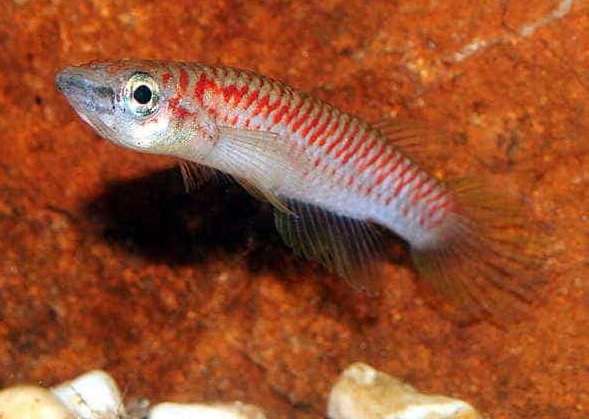
A surface-dwelling jewel of the Tano River, darting between light and shadow
Scientific Name:Epiplatys bifasciatus
Common names: Two-banded panchax, African killifish
Family: Nothobranchiidae (Killifish family)
Distribution and Habitat
This small, colorful killifish is native to freshwater systems of West Africa, with known presence in:
- Ghana, Côte d’Ivoire, Nigeria, Sierra Leone, and Liberia
In theTano River Basin, it thrives in:
- Slow-moving, shallow waters, including:
- Shaded forest streams
- Swampy margins of the river
- Flooded areas and pools near the riverbanks
It prefers clear to slightly turbid water, with dense vegetation near the surface.
Description
- Size: Typically 5–6 cm (2–2.5 inches)
- Body: Elongated, flat on the back (adapted to surface life)
- Coloration:
- Silvery to olive base color
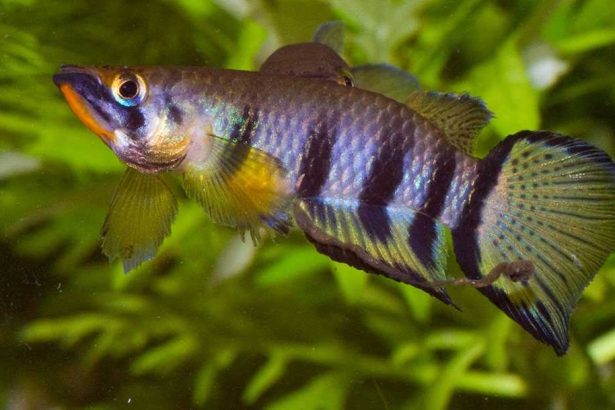
- Two dark horizontal bands running the length of the body (its defining feature)
- Males may show yellowish or red highlights on fins
- Eyes: Large and adapted for upward vision, as it hunts near the surface
Behavior and Ecology
- Diet: Insectivorous and carnivorous:
- Feeds on mosquito larvae, aquatic insects, and crustaceans
- Plays an important role in mosquito control in stagnant zones
- Reproduction:
- Eggs are laid on fine-leaved aquatic plants or submerged roots
- The species exhibits seasonal breeding, typically during rainy periods
- Behavior:
- A surface dweller, rarely venturing to deeper water
- Often found in small groups, hiding among overhanging plants
It’s known for its agility and sharp predatory reflexes, despite its small size.
Ecological Role
- Helps control insect populations, especially mosquitoes
- Serves as prey for larger fish and birds
- Its presence often indicates relatively clean, oxygenated waters
A valuable bioindicator of ecological stability in shallow riverine habitats.
Cultural and Scientific Interest
- Sometimes kept in aquariums, prized for:
- Its hardiness and adaptability
- Its simple elegance and natural coloration
- Used in scientific research on fish behavior and surface-feeding ecology
Though not widely known in traditional contexts, it is part of local ecological memory—many elders recall seeing it in calm pools and flooded rice fields.
Conservation Status
- Not considered globally threatened, but vulnerable in some areas due to:
- Habitat loss from deforestation and farming near riverbanks
- Pesticide and mining runoff
- Dry-season water reduction and habitat fragmentation
Maintaining natural vegetation, clean water, and seasonal flow patterns is key to its survival.
Why It Matters for the Tano River
Epiplatys bifasciatus represents:
- The micro-wonders of African rivers
- An efficient, natural pest control ally
- A symbol of balance between forest and water
Small, swift, and shimmering, it tells the story of how delicate life thrives on the surface of still waters.
🔗 Have you seen this little predator in shallow pools or streams? Share your sightings at [TanoRiver.com/submit]