Chromidotilapia guntheri – L’incubateur buccal de Günther
Cet article n’est pas encore disponible en français : vous lisez la version originale en anglais. Voir la page anglaise
A devoted parent and elegant swimmer of the Tano’s slow waters
Scientific Name:Chromidotilapia guntheri
Common names: Günther’s mouthbrooder, African pink cichlid, West African jewel
Family: Cichlidae
Distribution and Habitat
Chromidotilapia guntheri is a West African freshwater cichlid, naturally found in:
- Ghana, Côte d’Ivoire, Nigeria, Cameroon, Liberia, and Sierra Leone
In theTano River system, it inhabits:
- Slow-flowing streams, backwaters, and shaded forest creeks
- Prefers:
- Soft, slightly acidic water
- Sandy or muddy substrates
- Areas with dense aquatic vegetation or submerged roots
It’s common in transitional areas between the river and flooded forest margins.
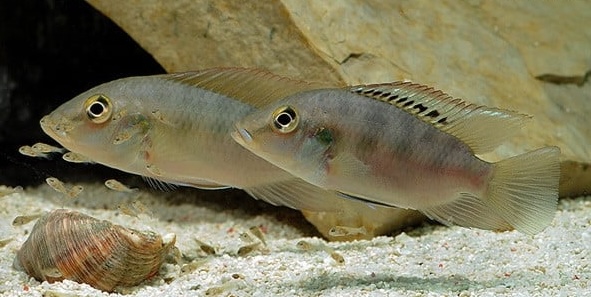
Physical Description
- Size: Up to 12–15 cm (5–6 inches)
- Body: Oval, laterally compressed
- Coloration:
- Soft pink to olive body
- Faint horizontal lines and iridescent highlights
- Mature males may show red hues in their fins
- Fins: Rounded, with trailing extensions on the dorsal and anal fins
- Eyes: Large and expressive, typical of cichlids
Their gentle appearance hides a fierce devotion to family.
Behavior and Ecology
- Diet: Omnivorous
- Consumes small invertebrates, algae, and organic debris
- Forages on riverbed detritus, turning over substrate with its mouth
- Social behavior:
- Peaceful but territorial during breeding
- Forms monogamous pairs
- Reproduction:
- Biparental mouthbrooders: both parents carry the eggs and fry in their mouths
- After spawning, each parent may take turns protecting and nurturing the young
- Fry remain under parental care for weeks, increasing survival
This cooperative parenting is rare in fish and a hallmark of this species.
Ecological Importance
- Helps control aquatic insect populations
- Contributes to nutrient turnover by stirring sediment
- Indicator of clean, stable habitats with good oxygen and low pollutants
Its presence often reflects healthy, forested waterways.
Local Knowledge and Aquarium Trade
- Rarely targeted for food, but occasionally caught in subsistence nets
- Appreciated by some communities for its color and behavior
- In the aquarium world, C. guntheri is admired for:
- Its parental care and compatibility in naturalistic tanks
- Its adaptability to soft, planted water systems
Its elegant swimming style and intelligent gaze make it a favorite among African cichlid enthusiasts.
Conservation and Threats
Not currently listed as endangered, but declining in some areas due to:
- Habitat degradation from deforestation and agriculture
- Water pollution, including sediment and chemical runoff
- Mining activities that disturb spawning zones and oxygen levels
Protection of riparian vegetation, clean flow, and natural stream cover is essential.
Why It Matters for the Tano River
Chromidotilapia guntheri represents:
- The delicate harmony of family and environment
- A freshwater fish whose parenting instincts rival those of mammals
- A subtle but important piece of the Tano’s ecological puzzle
It is a model of care, survival, and natural grace in the heart of the forest stream.
🔗 Have you observed this peaceful parent in your village’s streams? Share your story or photo at [TanoRiver.com/submit]