Crocidura theresae – La musaraigne de Thérèse
Cet article n’est pas encore disponible en français : vous lisez la version originale en anglais. Voir la page anglaise
A secretive insect-eater of West Africa’s undergrowth, small in size but vital to soil and ecosystem health
Quick Facts
- Common Name: Thérèse’s Shrew
- Scientific Name: Crocidura theresae
- Family: Soricidae (Shrews)
- IUCN Status: Least Concern
- Size: ~6–8 cm body length; ~3–5 grams
- Activity: Mostly nocturnal or crepuscular
- Habitat: Moist lowland forests, secondary growth, savanna-forest transitions
Distribution and Habitat
Thérèse’s Shrew is found in West and Central Africa, including:
- Côte d’Ivoire, Ghana, Nigeria, Benin, Cameroon, and the Central African Republic
In theTano River Basin, it likely lives:
- Beneath leaf litter, fallen logs, and thick underbrush in moist forest areas
- Along the edges of seasonal wetlands, swampy zones, and agroforestry plots
- In secondary growth forests, where it can remain hidden from predators
Despite being widespread, it is rarely seen due to its tiny size and cryptic habits.
Appearance
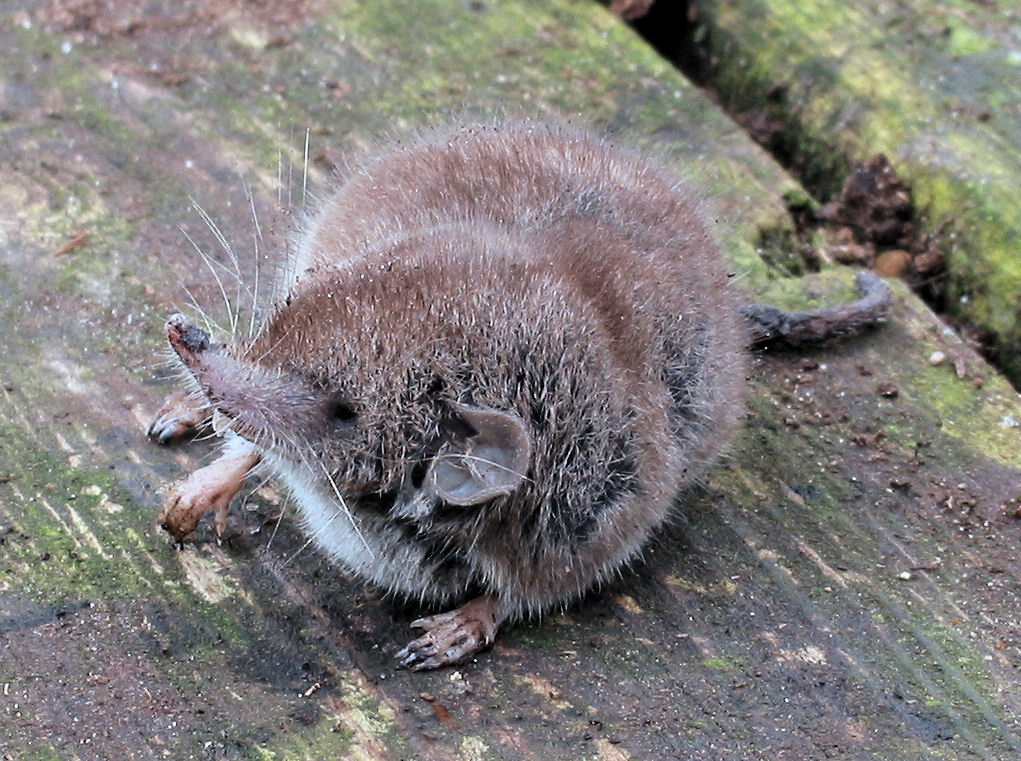
- Fur: Uniform gray or brownish-gray, fine and velvety
- Tail: Short and hairy
- Ears: Small and rounded, barely visible in the fur
- Snout: Long and pointed with highly sensitive whiskers
Its appearance is typical of small Crocidura shrews, adapted to a life close to the soil surface.
Behavior and Diet
- Diet:
- Insects, worms, spiders, larvae, and other small invertebrates
- Foraging:
- Uses scent and touch to detect prey in leaf litter and loose soil
- Metabolism: Extremely high—must feed frequently to survive
- Moves quickly and erratically, often covering a wide area at night
A single Thérèse’s shrew can consume nearly its body weight in food each day.
Reproduction
- Breeding is thought to occur throughout the year, especially in warm, moist conditions
- Litter size: 2–6 pups
- Nests in hidden chambers beneath roots or dense vegetation
- Young are born blind and furless, maturing in a matter of weeks
Little is known about its detailed reproductive cycle due to its elusive nature.
Ecological Role
Thérèse’s Shrew plays an essential role by:
- Controlling insect populations, including soil-dwelling pests
- Contributing to decomposition and nutrient cycling
- Serving as prey for snakes, owls, and small carnivores
- Maintaining micro-level balance in the forest floor ecosystem
It is a key species for soil health and invertebrate regulation.
Conservation Concerns
Although listed as Least Concern, threats include:
- 🌳 Deforestation and clearing of undergrowth
- 🧱 Habitat fragmentation, reducing cover and food sources
- 🧪 Chemical exposure, including pesticides in farming zones
- 🔍 Lack of monitoring, due to its small size and cryptic habits
Maintaining leaf litter and ground cover is critical for its survival.
Why It Matters for the Tano River
Thérèse’s Shrew is:
- A microscopic engineer of the forest floor
- A symbol of biodiversity often hidden beneath our feet
- A tiny but essential player in the health of the Tano’s forest underlayers
To protect this shrew is to protect the foundation of forest life.
🔗 Have you noticed rustling in the leaves or found small burrows in soft soil? Report your sightings at [TanoRiver.com/submit]