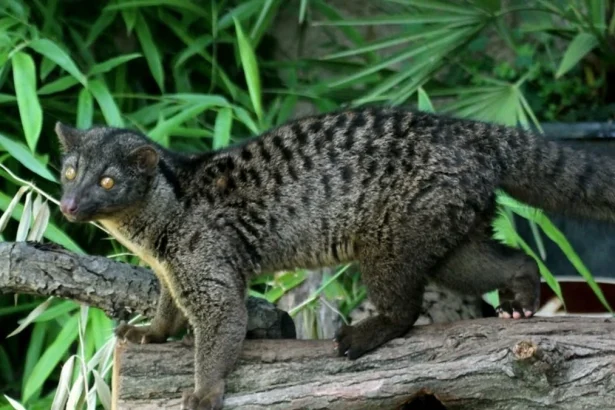
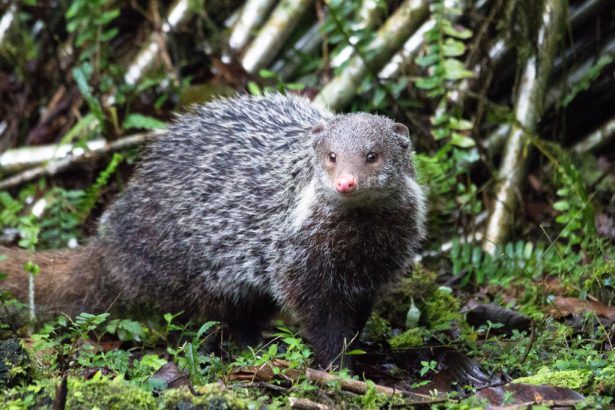
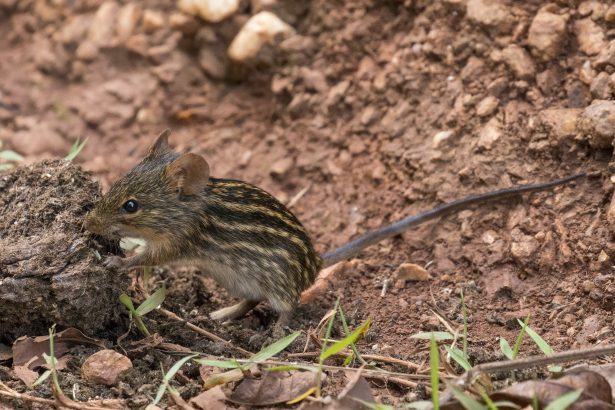
Musaraigne grimpeuse (Scutisorex spp. ou genres apparentés)
Cet article n’est pas encore disponible en français : vous lisez la version originale en anglais. Voir la page anglaise
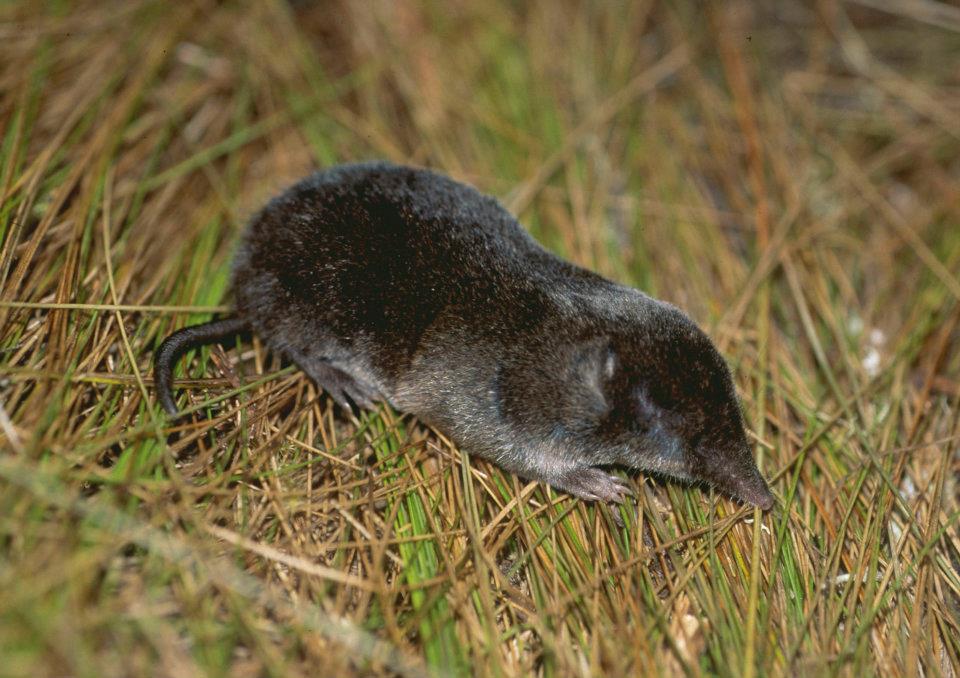
A tiny acrobat of the undergrowth and low branches — always in motion, always hunting
Quick Facts
- Common Name: Climbing Shrew
- Scientific Group: Family Soricidae
- Likely Species in Region: Sylvisorex johnstoni, Sylvisorex ollula, or other forest shrews with arboreal tendencies
- IUCN Status: Varies by species – some are Least Concern, others Data Deficient
- Size: ~6–12 cm body; tail often equal or longer
- Activity: Nocturnal or crepuscular
- Habitat: Moist lowland forests, especially with fallen logs and undergrowth
Distribution and Habitat
Climbing shrews occur in dense tropical forests of Central and West Africa, including:
- Côte d’Ivoire, Ghana, Liberia, and parts of Nigeria
In theTano River basin, they are likely to be found:
- In the Tanoé-Ehy Forest Reserve, within leaf litter, fallen trunks, and vines
- Along humid riverbanks and swamp edges, especially in untouched forest
- Occasionally ascending low shrubs or tree trunks in search of prey
Their presence is rarely seen but detected through quick rustling or sharp chirps.
Appearance
- Color: Usually dark brown or blackish-gray with lighter underparts
- Tail: Long and semi-prehensile for balance
- Feet: Equipped with claws and gripping pads for climbing
- Snout: Long and pointed, with sensitive whiskers
- Eyes and Ears: Tiny, but functional — relies mostly on touch and smell
Lightweight and hyperactive, the climbing shrew is always on the move.
Behavior and Ecology
- Extremely active hunters, consuming up to twice their body weight daily
- Diet:
- Insects, spiders, worms, larvae
- Occasionally small amphibians or carrion
- Uses dense vines, moss, bark, and logs as highways for movement
- Likely solitary, maintaining overlapping territories
They use high-pitched chirps and scent marking to navigate and communicate.
Reproduction
- Breeds multiple times a year
- Gestation: ~20–25 days
- Litters of 2–6 young born in nest chambers made from leaves or bark
- Young are born blind and hairless, developing rapidly
Due to their small size and fast metabolism, they need constant feeding and shelter.
Ecological Role
Climbing shrews are:
- Essential insect controllers, consuming pest populations
- Prey for owls, snakes, civets, and cats
- Indicators of forest health, especially in undisturbed microhabitats
Their ecological footprint may be small, but their biological role is enormous.
Conservation Concerns
While some species are common, others may be severely undercounted due to:
- 🏞 Habitat loss from deforestation and mining
- 🧬 Poor research, especially in swamp forests
- 🧱 Fragmentation of microhabitats like fallen logs and moist thickets
- ❌ Pesticide use affecting insect availability
In the Tano River basin, their survival depends on leaf litter integrity and forest floor continuity.
Why It Matters for the Tano River
Climbing shrews are:
- Masters of the hidden forest floor
- Biodiversity barometers, reflecting subtle changes in the forest micro-ecosystem
- Among the least-known but most hard-working insectivores in the forest
To protect them is to preserve the intricate food webs beneath the trees and along the streams of the Tano.
🔗 Have you noticed tiny rustlings in forest leaves or heard high-pitched squeaks at night? Report signs of shrews at [TanoRiver.com/submit]