Clerodendrum splendens – Le clérodendron éclatant
Cet article n’est pas encore disponible en français : vous lisez la version originale en anglais. Voir la page anglaise
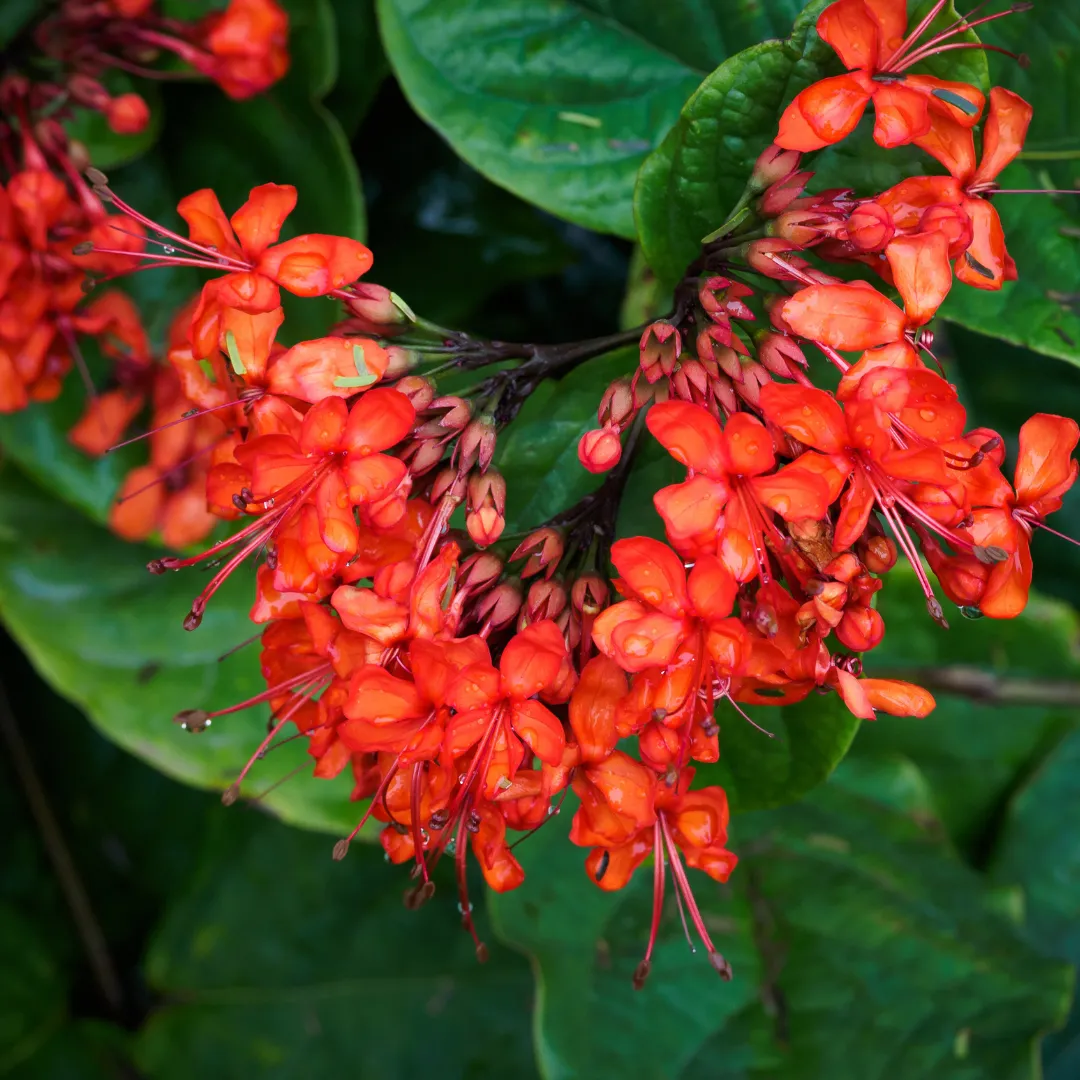
A fiery climber illuminating the forest edges of the Tano River
Scientific Name:Clerodendrum splendens
Common names: Flaming glorybower, Glory tree, “Nyaato” (Akan, possible local reference), “Liane rouge” (Fr.)
Family: Lamiaceae (mint family)
Habitat and Distribution
Clerodendrum splendens is native to West Africa, particularly:
- Ghana, Côte d’Ivoire, Nigeria, and surrounding forested areas
In the Tano River Basin, it is found:
- Along forest margins, riverbanks, and village fences
- In wet evergreen and moist semi-deciduous forests, especially near cleared pathways
- Occasionally grown as an ornamental climber in community compounds near the river
It thrives in moist, well-drained soil, and loves sunlight with partial shade.
Botanical Description
- Flowers: Clusters of brilliant scarlet-red tubular flowers, often blooming year-round
- Leaves: Heart-shaped or oval, slightly rough to the touch
- Growth: Woody vine, can climb up to 3–5 meters with support
- Fragrance: Light, pleasant scent when flowers open
Its bright flowers and climbing habit make it a striking presence wherever it grows.
Ecological Role
- Attracts butterflies, bees, and sunbirds
- Supports pollinator biodiversity along forest edges and riparian zones
- Provides cover and nesting space for small birds and reptiles
- Helps stabilize slopes or erosion-prone riverbanks when growing wild
Cultural and Traditional Significance
While not the most spiritually central plant, Clerodendrum splendens holds symbolic value:
- Often planted at village entrances or sacred groves to mark protection
- Red flowers are associated with energy, strength, and spiritual power
- In some Akan and Nzema beliefs, red-flowering plants are thought to repel negative forces
It is also used in decorative rituals and community festivals, where garlands or floral borders feature red climbers like glorybower.
Medicinal Uses
Though not as well-documented as trees like Alstonia boonei, Clerodendrum splendens is occasionally used in folk medicine:
- Infusions of the leaves or flowers may be used to:
- Treat fevers and headaches
- Stimulate blood circulation
- Support postpartum recovery in some oral traditions
In Côte d’Ivoire and Ghana, local healers may mix its flowers with other plants in cleansing baths.
Conservation Status
- Not endangered, and often grown deliberately
- However, deforestation and loss of traditional home gardens may reduce its wild presence
- As a forest margin species, it is vulnerable to agricultural expansion and mining
Why It Matters for the Tano River
Clerodendrum splendens symbolizes:
- The vibrant edge between wild and cultivated space
- The beauty of native flora often overlooked
- A living link between humans, pollinators, and riverside ecology
Its blooms remind us that the forest still burns with life and color, even on the margins.
🔗 Do you have a glorybower climbing near your home or farm along the Tano? Share your photos at [TanoRiver.com/submit]