Cercopithecus campbelli – Le singe mona de Campbell
Cet article n’est pas encore disponible en français : vous lisez la version originale en anglais. Voir la page anglaise
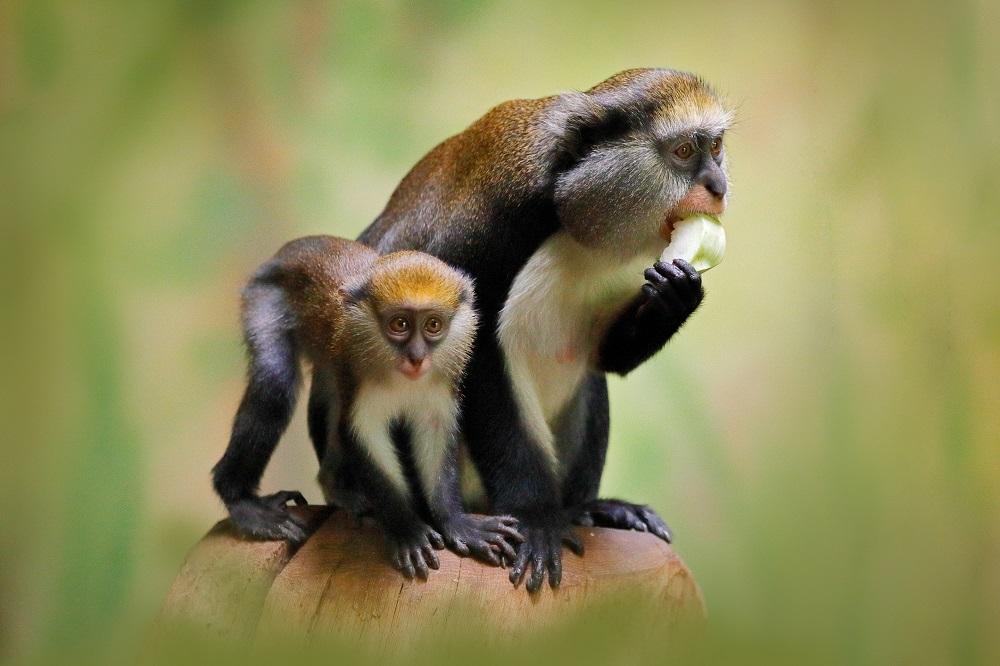
A social acrobat of the canopy, calling from the treetops of the Tano River forest
Quick Facts
- Common Name: Campbell’s Mona Monkey
- Scientific Name: Cercopithecus campbelli
- Family: Cercopithecidae (Old World monkeys)
- IUCN Status: Near Threatened
- Size: ~40–55 cm (body); tail up to 75 cm
- Weight: 3–5 kg
- Activity: Diurnal and arboreal
- Habitat: Moist lowland forests, swamp forests, and forest edges
Distribution and Habitat
Campbell’s Mona Monkey is native to West Africa, with populations in:
- Côte d’Ivoire, Ghana, Liberia, Sierra Leone, Togo, and Benin
In theTano River basin, it is likely found:
- In riparian forests, swamp woodlands, and the Tanoé-Ehy Forest Reserve
- Along canopy corridors close to the river
- Near human settlements, sometimes seen raiding farms
Appearance
- Fur: Grizzled brown or grey upper parts with creamy white underparts
- Face: Pale face with a distinctive dark brow line and white cheek whiskers
- Tail: Long and used for balance, not prehensile
- Eyes: Alert and expressive, with social gaze signaling
They are elegant climbers, known for quick jumps and graceful movement.
Behavior and Ecology
- Lives in groups of 10–30 individuals, led by a dominant male
- Highly vocal, using alarm calls, contact calls, and social chatter
- Diet: Omnivorous
- Fruits, leaves, flowers
- Insects, eggs, and small animals
May descend to the ground occasionally to forage but stays primarily in the mid to upper canopy.
Reproduction
- Breeds year-round in suitable conditions
- Females give birth to a single infant after ~5–6 months gestation
- Infants cling to their mother’s belly and are cared for by group members
Mothers are attentive, and infants stay close to family for protection.
Cultural and Ecological Significance
In many West African cultures:
- Monkeys like Campbell’s Mona are seen as tricksters, messengers, or totems
- Their mimicry and expressive faces lead to folktales and proverbs
- Sometimes hunted for bushmeat or captured for pets
Ecologically, they play key roles:
- Dispersing seeds across forest floors and riverbanks
- Helping regenerate fruiting tree species
- Supporting predators like eagles, leopards, and pythons
Conservation Concerns
Though not yet endangered, Cercopithecus campbelli faces mounting pressure in the Tano River region:
- 🌳 Deforestation for agriculture and illegal mining
- 🔫 Hunting for bushmeat
- 🧱 Fragmentation, which disrupts group movement and social structure
- 🧬 Hybridization risk with other mona monkey species in disturbed zones
Why It Matters for the Tano River
Campbell’s Mona Monkey is:
- A forest ambassador, bringing sound and motion to the canopy
- A sentinel species — its presence reflects forest health
- A critical actor in seed dispersal and food web stability
To hear its call is to know the forest still breathes and speaks.
🔗 Have you heard monkey calls from the canopy or seen groups moving in fruit trees near the river? Help us map their range by contributing to [TanoRiver.com/submit]