Cephalophus niger – Le céphalophe noir
Cet article n’est pas encore disponible en français : vous lisez la version originale en anglais. Voir la page anglaise
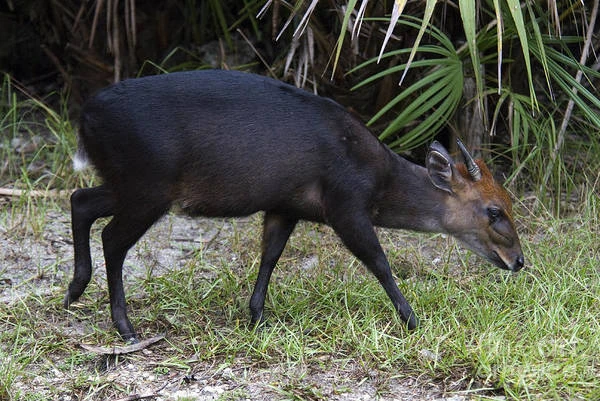
A secretive shadow of the Tano forest floor, quiet but essential to the life of the undergrowth
Quick Facts
- Common Name: Black Duiker
- Scientific Name: Cephalophus niger
- Family: Bovidae
- IUCN Status: Least Concern, but declining locally
- Size: ~50 cm shoulder height; 15–20 kg
- Activity: Diurnal (daytime active), often solitary
- Habitat: Dense tropical lowland forests and thick undergrowth
Distribution and Habitat
Native to West Africa, the Black Duiker is found in:
- Côte d’Ivoire, Ghana, Liberia, Sierra Leone, and Guinea
In theTano River ecosystem, it is likely found:
- In undisturbed swamp forests of the Tanoé-Ehy Forest Reserve
- Along riparian corridors where forest density remains intact
- Near fallen fruit trees and leafy cover, where it forages undetected
It avoids open terrain and requires dense ground-level vegetation.
Appearance
- Color: Deep black or dark brown coat, often with a reddish tint on the back
- Face: Short snout with a distinct reddish forehead patch
- Horns: Both sexes have short, backward-curving horns
- Size: Smaller than savanna antelopes, with a stocky build
Its coloration helps it blend perfectly into the shadows of the forest floor.
Behavior and Diet
- Solitary, or seen in male-female pairs
- Travels along narrow tunnels in the vegetation
- Diet:
- Fallen fruit, seeds, leaves, fungi, and occasionally small insects or carrion
- Plays a key role in seed dispersal
Known for being elusive, it may freeze completely when startled before bolting.
Reproduction
- Breeds year-round
- Gestation: ~6.5 months
- Females give birth to a single fawn, which is hidden in thick vegetation
- Fawns are scentless and well-camouflaged, remaining still for days
Like other duikers, the young rely entirely on invisibility and silence.
Ecological Importance
The Black Duiker helps:
- Disperse seeds across the forest, supporting regeneration
- Shape the undergrowth through selective feeding
- Provide prey for leopards, eagles, and pythons
Its presence is a positive indicator of forest health and low human disturbance.
Threats
While still listed as Least Concern, this duiker faces several local threats:
- 🏞 Habitat loss from farming, logging, and illegal gold mining
- 🔫 Poaching for bushmeat, even in protected areas
- 🧱 Habitat fragmentation, isolating populations
- ❌ Low reproductive rate, making recovery slow if populations are disturbed
In the Tano Basin, degradation of forest corridors puts this species at risk.
Why It Matters for the Tano River
The Black Duiker is:
- A symbol of forest quietness and resilience
- A key contributor to plant diversity and regeneration
- A reminder that some of the most important animals are the ones we rarely see
Protecting it means keeping the forest floor alive and balanced — a space essential to the river's broader ecosystem.
🔗 Have you ever spotted this shy antelope or seen signs like tracks or droppings? Help us track their presence at [TanoRiver.com/submit]