Cephalophus dorsalis – Le céphalophe bai
Cet article n’est pas encore disponible en français : vous lisez la version originale en anglais. Voir la page anglaise
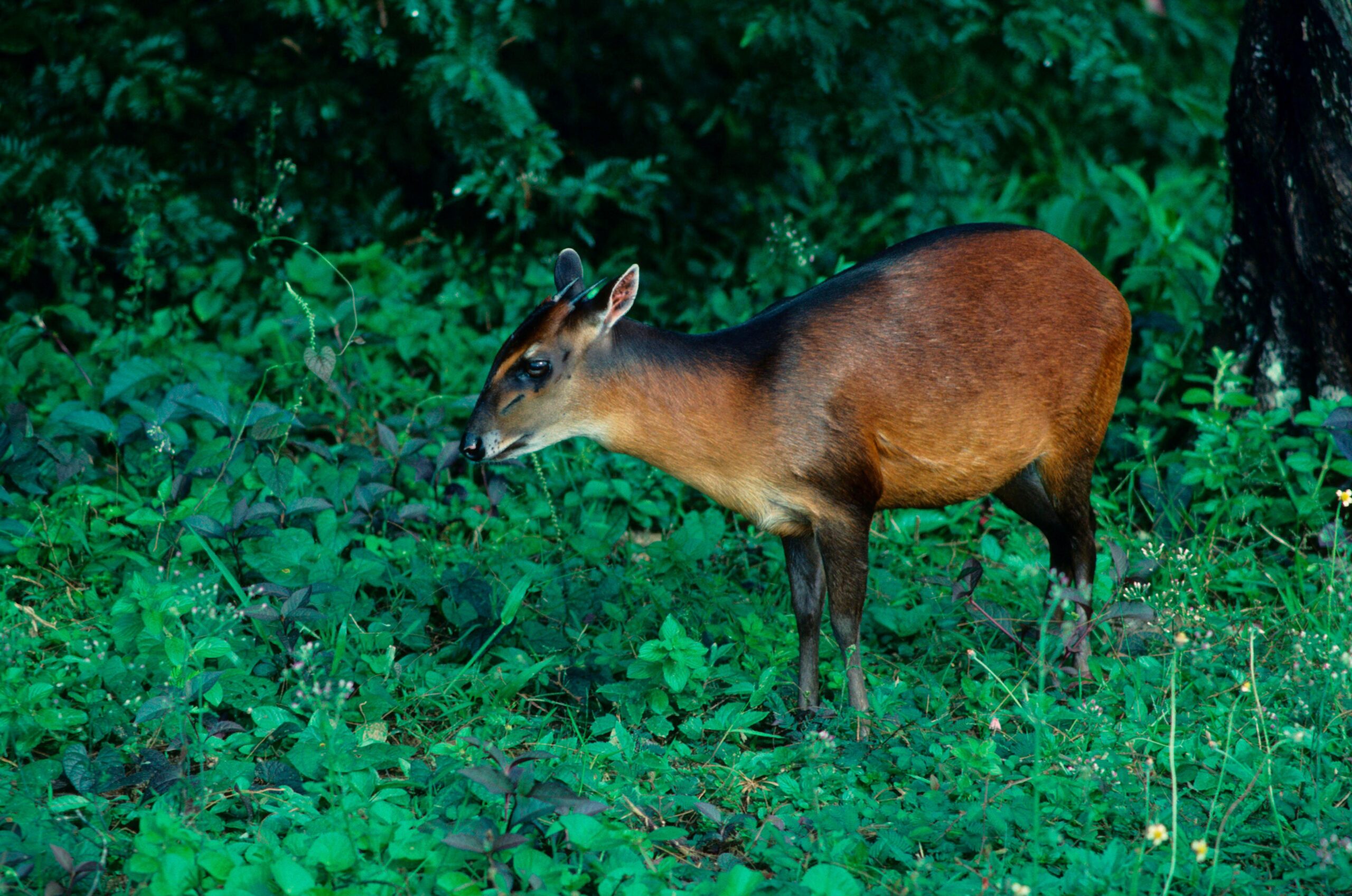
A shy forest shadow feeding beneath the canopy of the Tano River basin
Quick Facts
- Common Name: Bay Duiker
- Scientific Name: Cephalophus dorsalis
- Family: Bovidae
- IUCN Status: Least Concern (but vulnerable in fragmented forests)
- Activity: Nocturnal and crepuscular (active at night and twilight)
- Habitat: Dense tropical rainforests and swamp forests
- Size: 45–50 cm at shoulder; ~20–25 kg weight
Distribution and Habitat
The Bay Duiker is found across the Upper Guinean forest zone of West Africa, including:
- Ghana, Côte d’Ivoire, Liberia, Nigeria, and Sierra Leone
In theTano River region, it is believed to inhabit:
- The Tanoé-Ehy Forest Reserve and adjacent swamp forests
- Riparian zones and deep undergrowth along the river’s path
- Untouched or old secondary forests, far from human settlement
Its elusive habits and preference for dense foliage make it rarely seen but often present.
Appearance
- Coat: Rich reddish-brown (bay) body with a dark dorsal stripe from neck to tail
- Legs: Blackish lower limbs, helping with camouflage in low light
- Face: Pale markings and short, slightly curved horns in both sexes
- Body: Compact and muscular, built for quiet movement in tight undergrowth
Its coloring and stealth make it blend into shadows, especially at dusk.
Behavior and Diet
- Nocturnal and mostly solitary or found in pairs
- Follows well-trodden forest paths to feeding and resting sites
- Diet:
- Fruits, leaves, fungi, twigs, and even small animal carrion
- Known to eat snails, showcasing an omnivorous tendency
Despite their size, Bay Duikers can move silently through dense brush.
Reproduction
- Breeds throughout the year
- Gestation: ~6.5 months
- Usually gives birth to a single fawn, which is hidden in dense vegetation
- Mothers nurse and visit the young infrequently to avoid attracting predators
The fawn stays motionless for days or weeks, relying on camouflage and scentlessness.
Ecological Role
The Bay Duiker is:
- A major seed disperser, especially for large-seeded forest trees
- A forager that aids in nutrient cycling by consuming fruit, fungi, and detritus
- Prey for leopards, large pythons, and crowned eagles
Its feeding helps support a balanced forest floor ecosystem.
Threats
Even though classified as Least Concern, the Bay Duiker faces local threats:
- 🌳 Deforestation for cocoa, mining, and logging
- 🔫 Hunting for bushmeat
- 🚫 Habitat fragmentation, making it harder for individuals to find mates or escape predators
In the Tano River basin, pressure from illegal mining and agriculture could shrink key duiker habitats.
Why It Matters for the Tano River
The Bay Duiker is:
- A symbol of the hidden wealth of the Tano’s forest floor
- A forest engineer, shaping ecosystems with each bite and step
- A reminder that the forest’s quietest lives are often the most essential
To walk in the forest and never see a duiker is normal — but their quiet footsteps keep the ecosystem alive.
🔗 Have you seen hoof prints, droppings, or heard rustling near fruiting trees at night? Share your field observations at [TanoRiver.com/submit]