Anthurium – Le cœur flamboyant de la forêt
Cet article n’est pas encore disponible en français : vous lisez la version originale en anglais. Voir la page anglaise
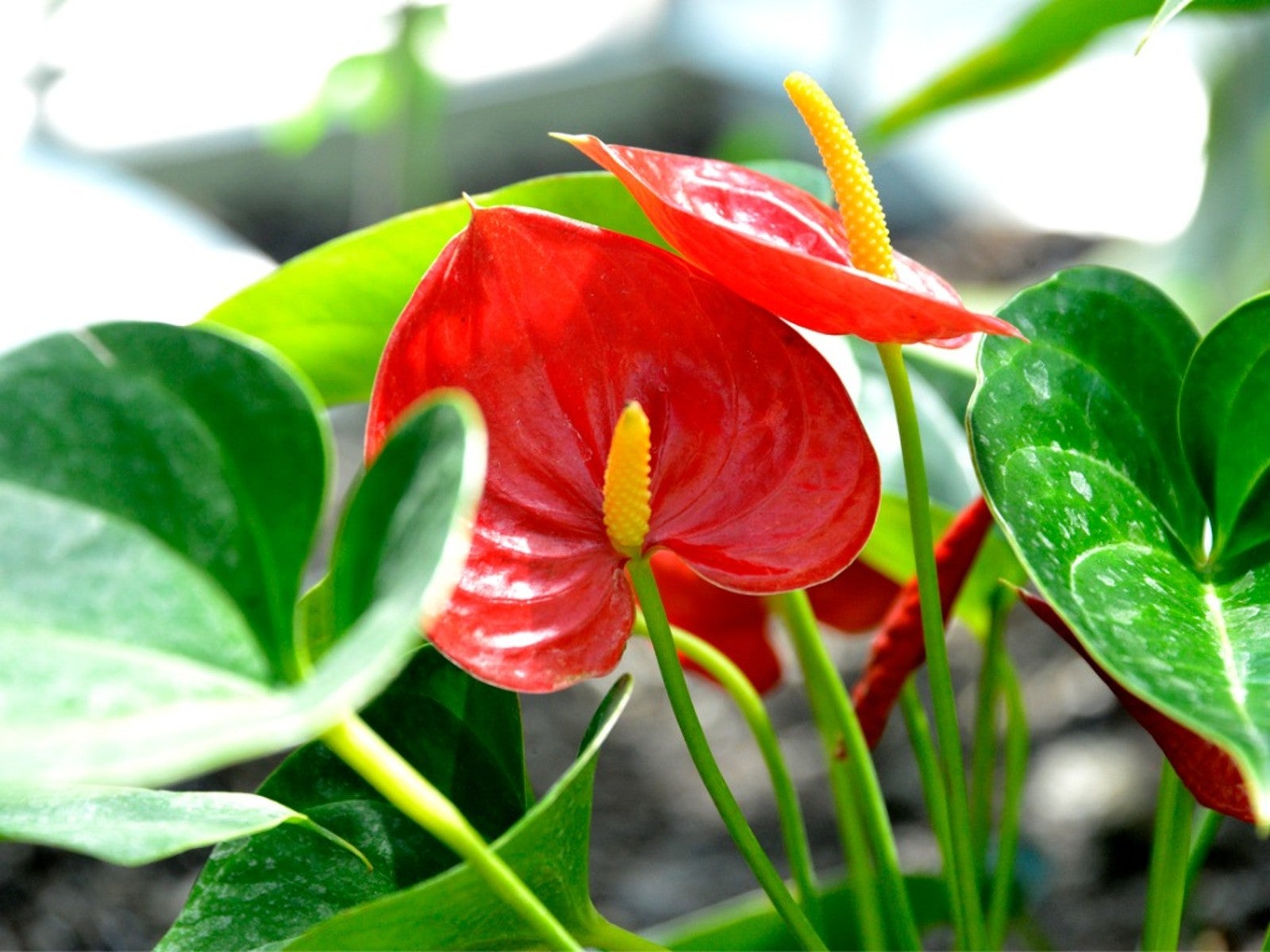
Glossy, bold, and tropical – a flower that thrives in the shadows of the Tano River
Botanical Name:Anthurium spp.
Common names: Flamingo flower, Laceleaf, Heartleaf, “Fleur-cœur” (Fr.), "Aboabo dua" (in some Akan regions, loosely "forest heart")
Family: Araceae (arum family)
Habitat and Distribution
Anthurium species are native to Central and South America, but several varieties (including Anthurium andraeanum) have been:
- Naturalized or introduced in West African tropical gardens
- Found growing in shady, moist areas near homes, sacred groves, and forest trails
- Common in decorative gardens, cemeteries, and shrine surroundings near the Tano River Basin
They thrive in humid forest conditions, especially where shade and rich soil are abundant.
Botanical Description
- Flowers: What appears to be the flower is a glossy, heart-shaped spathe (often red, but also pink, white, or green), surrounding a yellow or white spadix (the true flower spike)
- Leaves: Large, dark green, leathery, often with a heart or lance shape
- Growth: Herbaceous plant, often between 30–90 cm tall
- Roots: Aerial and ground roots help anchor the plant in loose, organic forest soil
Their elegant, waxy appearance makes them popular in funeral and wedding floral displays.
Ecological Role
- While not native, cultivated Anthurium can:
- Provide moisture retention in shaded gardens
- Attract insects that visit its floral spadix
- Contribute to home-based biodiversity in forest-edge communities
In wild zones of the Tano, related native arum family plants (such as Philodendrons) share similar ecological functions.
Cultural and Symbolic Significance
Although Anthurium is an introduced plant, its symbolism has been embraced across the region:
- The heart-shaped flower is a **symbol of:
- Love and connection
- Spiritual protection
- Respect for ancestors
- Often planted in:
- Shrines and memorial gardens
- Ritual spaces near water
- Gravesites for women and children
Some local traditions use the red flamingo flower as a protective charm or beauty symbol.
Medicinal and Domestic Uses
Anthurium is not widely used medicinally, as it contains calcium oxalate crystals, which can be irritating or toxic if ingested.
However:
- Some believe its presence in a home brings calm and good energy
- Dried flowers are occasionally used in symbolic offerings or libations
In some cases, the plant is blessed and planted near homes as a guardian spirit flower.
Conservation and Cultivation Notes
- Not endangered
- Often cultivated and sold in local markets for funerals, altars, or gifts
- Can be threatened by:
- Drought or poor soil conditions
- Overuse of chemical fertilizers in garden settings
In wild areas, native aroids related to Anthurium play a more natural ecological role.
Why It Matters for the Tano River
Anthurium represents:
- The blending of human memory and floral beauty
- The spiritual aesthetics of riverine communities
- A reminder that even ornamental plants carry meaning, when planted with care
Though not wild, its presence in sacred and memorial spaces near the river makes it part of the emotional landscape of the Tano.
🔗 Do you grow or photograph Anthuriums near the Tano River? Submit your flower stories at [TanoRiver.com/submit]