Alchornea cordifolia – Le buisson de Noël africain
Cet article n’est pas encore disponible en français : vous lisez la version originale en anglais. Voir la page anglaise
A healing shrub of riverside wisdom, protecting health and heritage along the Tano River
Scientific Name:Alchornea cordifolia
Common names: African Christmas bush, Christmas berry, “Otan” (Akan), “Sisi” (Baoulé), “Vɔgbɔ” (Ewé), “Faux muirier” (Fr.)
Family: Euphorbiaceae (spurge family)
Habitat and Distribution
Native to sub-Saharan Africa, Alchornea cordifolia thrives in:
- Tropical forests, river valleys, savannas, and secondary growth zones
- Grows across Ghana, Côte d’Ivoire, Nigeria, and most West and Central African countries
In the Tano River Basin, it is found:
- Along streambanks and wetlands
- In fallow fields, village groves, and herbal gardens
- Cultivated by traditional healers and rural families
It prefers moist, fertile soils, often thriving in partly disturbed but regenerating landscapes.
Botanical Description
- Height: A fast-growing shrub or small tree, typically 2–6 meters tall
- Leaves: Large, heart-shaped (cordate), soft and velvety, often reddish when young
- Flowers: Tiny, yellow-green spikes (male and female on separate plants)
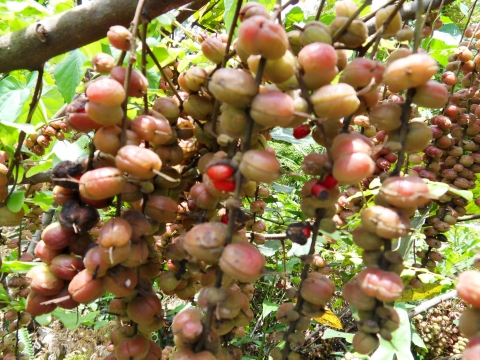
- Fruits: Small reddish capsules that split open to reveal black seeds
- Roots: Shallow but strong, helping control erosion
Ecological Role
- Pioneer species – helps restore degraded land and prevent soil erosion
- Provides shade and protection for young forest trees
- Attracts pollinators and seed-dispersing birds
- A key part of natural reforestation near the Tano’s floodplain zones
Traditional Medicinal Uses
Alchornea cordifolia is one of West Africa’s most trusted traditional medicine plants, known for its versatility:
Leaves:
- Crushed or brewed to treat:
- Diarrhea, dysentery, and stomach upset
- Eye infections (eye wash or poultice)
- Coughs, fever, and respiratory illness
- Applied topically for:
- Wounds, ulcers, boils, and skin infections
Roots and Bark:
- Used in tonics for fertility and reproductive health
- Boiled for malaria and internal cleansing
- Used in spiritual baths for cleansing and protection
Fruits:
- Chewed or used in decoctions for treating urinary tract infections
It is gentle enough for children and often the first plant used in rural homes when illness arises.
Cultural and Spiritual Significance
In many Tano Basin communities:
- The bush is believed to “guard the home” when planted at entrances
- Used in ritual baths and ancestral libations
- Burnt leaves may be used in protective smudging against bad spirits or misfortune
- Some consider it a symbol of rebirth and purification — used after illness or mourning
Its reddish young leaves and heart-shaped foliage give it symbolic links to love, renewal, and inner strength.
Conservation Notes
- Widespread and not endangered, thanks to:
- Its fast growth and ability to regenerate disturbed areas
- Continued use by healers and midwives in local medicine
However, land clearing and habitat degradation still threaten its wild habitats near rivers.
Promoting Alchornea cordifolia in agroforestry and conservation projects strengthens both ecological and cultural resilience.
Why It Matters for the Tano River
Alchornea cordifolia is:
- A guardian plant of the people
- A bridge between forest, medicine, and tradition
- A symbol of how the Tano River’s biodiversity sustains daily survival and ancestral wisdom
🔗 Do you grow or use this plant near the Tano River? Send us your stories or photos at [TanoRiver.com/submit]