Les touracos des forêts du fleuve Tano (Tanoé)
Cet article n’est pas encore disponible en français : vous lisez la version originale en anglais. Voir la page anglaise
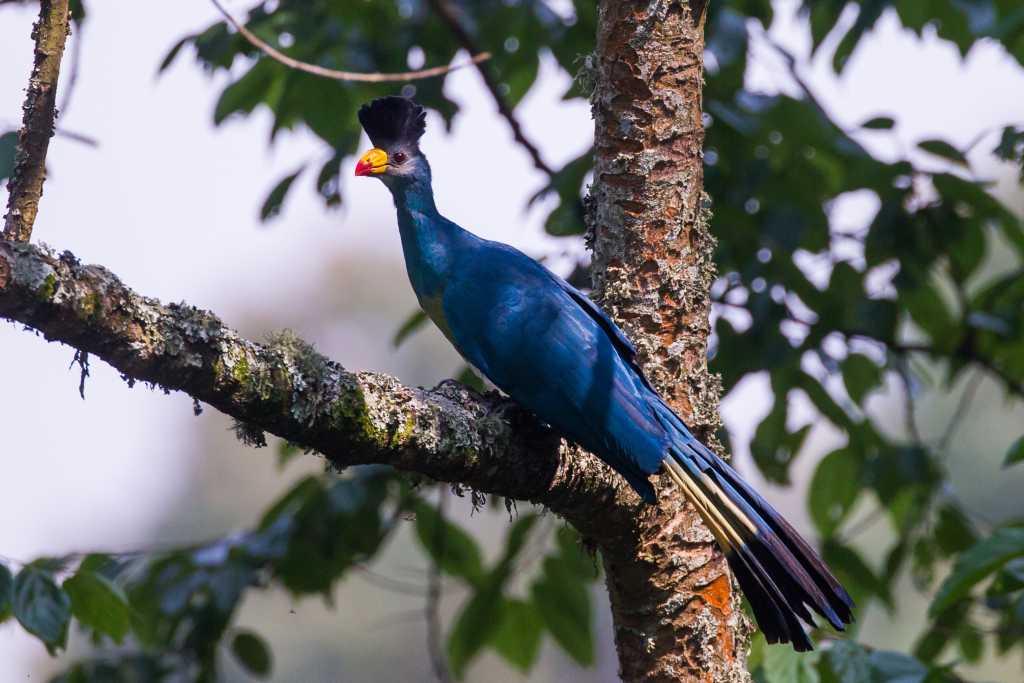
Flash of green, crest of royalty — the secret singers of the canopy
Overview
Turacos are a family of medium-sized, fruit-eating birds endemic to sub-Saharan Africa. Known for their vibrant plumage, elegant crests, and distinctive calls, they belong to the family Musophagidae, meaning “banana-eaters.”
Common species in the Tano River region include:
- Guinea Turaco (Tauraco persa) – also called Green Turaco
- Violet Turaco (Musophaga violacea)
- Yellow-billed Turaco (Tauraco macrorhynchus) (in deeper forests)
These species are found in Ghana and Côte d’Ivoire, particularly around the Tanoé-Ehy Forest, and in gallery forests and secondary woodland along the Tano River.
Habitat and Distribution
Turacos prefer:
- Forest canopy, riparian woodlands, and mangrove edges
- In the Tano Basin, they are spotted near:
- Swamp forests near Aby Lagoon
- Rainforest edges, cocoa farms, and sacred groves
They are rarely seen on the ground, using trees for feeding, calling, and nesting.
Physical Description
- Coloration:
- Guinea Turaco: brilliant emerald green, red flight feathers, white face
- Violet Turaco: deep violet body, yellow forehead, crimson wings
- Yellow-billed Turaco: lush green body, striking yellow beak
- All turacos have:
- Crests that rise when alarmed
- Short, rounded wings and long tails
- Unique pigments: turacins (red) and turacoverdins (green), found in no other birds
Their flight is clumsy but visually dramatic, especially when flushed from trees.
Diet and Behavior
- Frugivorous:
- Eat mainly figs, berries, bananas, mangos, and wild forest fruits
- Occasionally consume flowers, leaves, and small invertebrates
- Social: Often found in pairs or small family groups
- Territorial: Loud, cackling calls to defend feeding areas
Behavior:
- Move gracefully through treetops with semi-zygodactyl feet (two toes forward, two back)
- Use tail for balance and often freeze when disturbed, making them hard to spot despite their color
Reproduction
- Build shallow nests in trees using twigs
- Lay 2–3 eggs, incubated by both parents
- Chicks are born covered in down and climb before they can fly, using claws on their wings (a primitive trait)
Turacos rely on undisturbed canopy for successful breeding.
Cultural Significance
In West African cultures, especially among the Akan and Nzema:
- Turacos are symbols of peace, fertility, and mystery
- Their feathers, especially the red wing feathers, were once used by royalty and warriors
- Featured in folktales and proverbs as messengers, bringers of rain, or keepers of forest secrets
Their eerie calls, especially at dawn, are sometimes seen as warnings or omens.
Threats
Turacos face increasing pressure from:
- Deforestation and illegal logging
- Hunting for feathers or traditional medicine
- Loss of fruit-bearing trees due to land conversion
While not currently endangered, habitat fragmentation may lead to local extinctions.
Why Turacos Matter for the Tano River
Turacos are:
- Seed dispersers critical to forest regeneration
- Symbols of forest vitality and biodiversity
- A reminder that even the most colorful creatures can vanish silently
Their calls echo through the treetops — a chorus for conservation.
🔗 Have you seen a flash of red wings or heard the laughing call of the turaco in the forest? Share your story at [TanoRiver.com/submit]