Scopus umbretta – L’ombrette africaine
Cet article n’est pas encore disponible en français : vous lisez la version originale en anglais. Voir la page anglaise
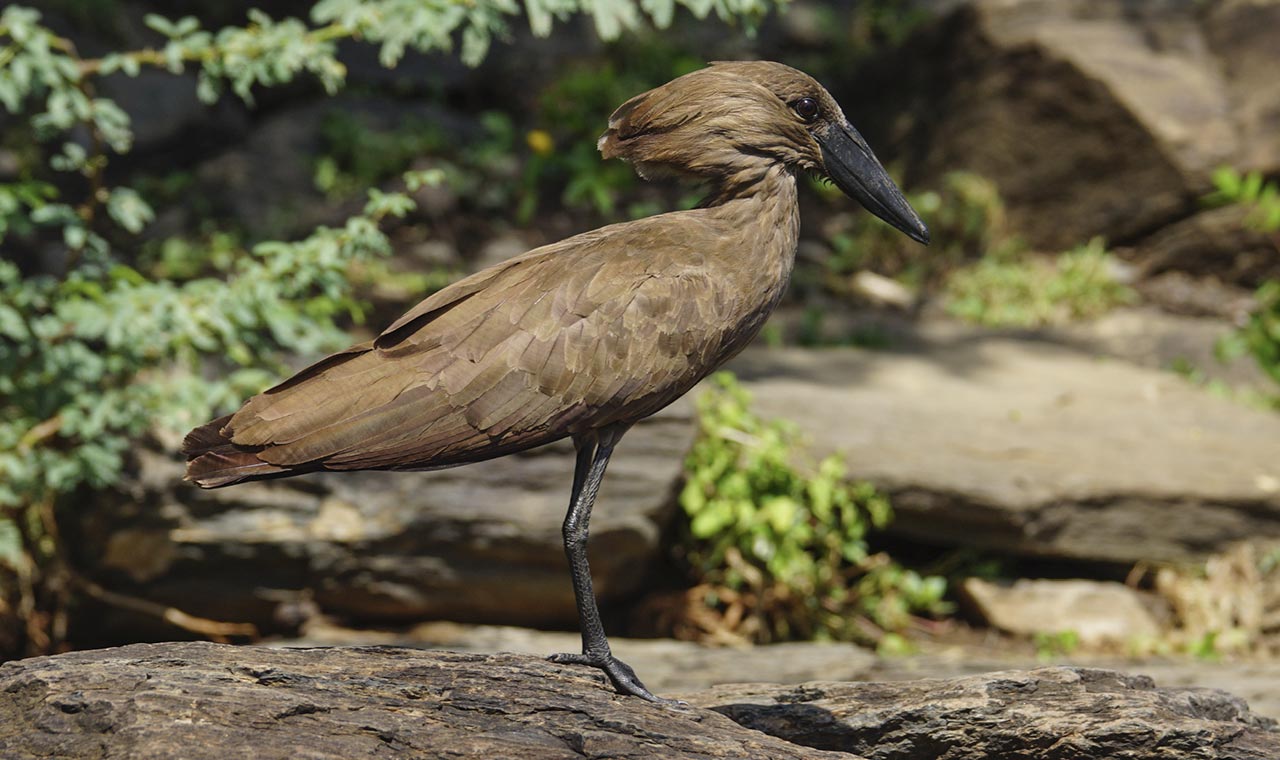
A bird of mystery and architecture, where the Tano’s waters touch the sky
Scientific Name:Scopus umbretta
Common names: Hammerkop, Hammerhead stork, Umbrella bird
Family: Scopidae (only species in its family)
IUCN Status: Least Concern
Habitat and Distribution
The Hammerkop is widely distributed across sub-Saharan Africa, found near almost any permanent freshwater source.
In theTano River system, it inhabits:
- Swampy edges, lagoon margins, and riverbanks
- Especially common around:
- Aby Lagoon and Tendo Lagoon
- Shallow pools, mudflats, and flooded rice fields
It prefers quiet wetlands with abundant frogs and open nesting trees.
Physical Description
- Size: About 50 cm (20 inches) tall
- Coloration: Rich brown with a slight purple sheen
- Head: Distinctive hammer-shaped crest, from which it gets its name
- Bill: Long, slightly hooked
- Legs: Long and dark, adapted for wading
Its silhouette is unmistakable — like a mix of heron, eagle, and dinosaur.
The World’s Most Remarkable Nester
The Hammerkop’s nest is legendary:
- Built in large trees near water, or on rock ledges
- Constructed with over 10,000 sticks, mud, and debris
- Dome-shaped, massive and waterproof, with a small side tunnel
- Big enough for a human child to sit inside!
Nests are often reused, renovated, or used by other species (owls, genets, snakes).
Behavior and Ecology
- Feeds primarily on:
- Frogs, fish, tadpoles, insects, and small aquatic prey
- Uses a quick stabbing motion with its bill in shallow water
- Often seen walking slowly in wetlands, pausing to strike
Social behavior:
- Often solitary or in pairs
- Known for ritualistic “ceremonial dancing” — wing flapping, calling, and head bobbing
- Considered monogamous, with lifelong pair bonds
Vocalizations
- Emits a cackling or croaking call, often during flight or nesting
- Not especially loud, but distinct — part of the wetland’s soundscape
Cultural and Spiritual Importance
The Hammerkop is deeply woven into African folklore:
- In many West African traditions, including Akan and Nzema culture, it is:
- Regarded as sacred or taboo to harm
- Linked to rain and water spirits
- Believed to bring misfortune if its nest is disturbed
Some beliefs:
- Destroying a Hammerkop’s nest may cause storms or sickness
- Others believe it is the messenger of gods or a soul guide
Its elaborate nests and solitary ways make it a symbol of mystery and respect.
Threats and Conservation
- Not currently endangered, but faces local threats:
- Wetland drainage
- Pollution and pesticide use
- Loss of nesting trees due to logging and farming
Its survival is tied to clean water, tall trees, and intact floodplains — all endangered by human activity around the Tano River.
Why It Matters for the Tano River
The Hammerkop is:
- A guardian of freshwater ecosystems
- A builder that shapes the landscape for many other species
- A living link between folklore and biodiversity
To see a Hammerkop is to be reminded that even the strangest creatures serve the balance of the wetlands.
🔗 Have you spotted a Hammerkop or its enormous nest along the Tano? Share your experience at [TanoRiver.com/submit]