Psittacus erithacus – Le perroquet gris du Gabon
Cet article n’est pas encore disponible en français : vous lisez la version originale en anglais. Voir la page anglaise
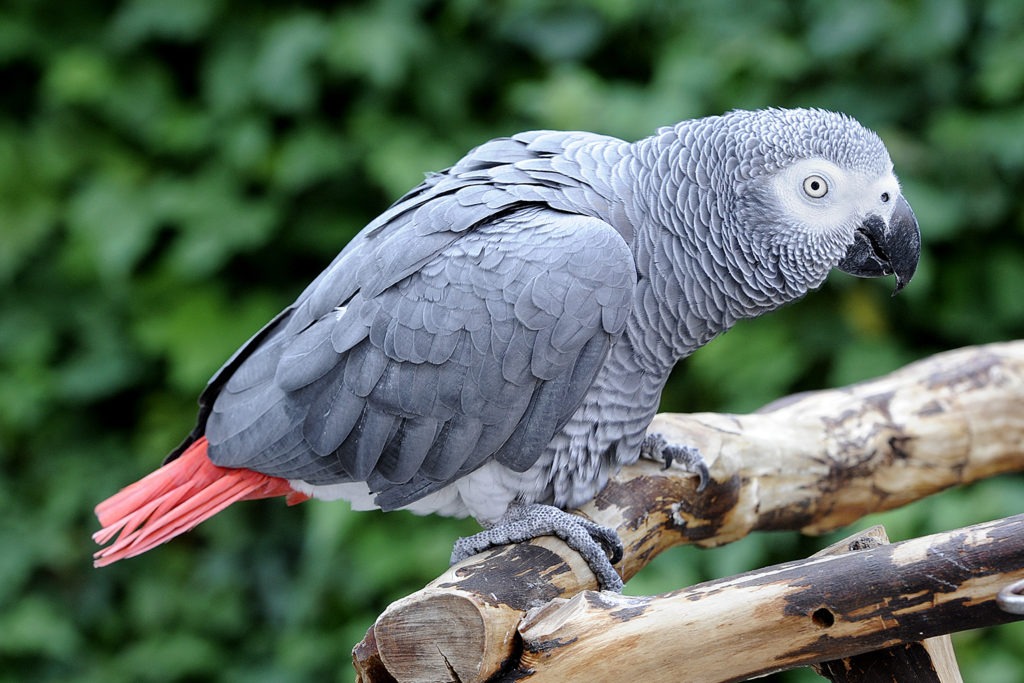
A voice of the rainforest, echoing through the canopies of the Tano
Scientific Name:Psittacus erithacus
Common names: African Grey Parrot, Grey parrot, “Kɔkɔɔ-bere” (Twi), “Klaklakla” (Baoulé)
Family: Psittacidae
IUCN Status: Endangered
Habitat and Distribution
The African Grey Parrot is native to tropical forests of West and Central Africa, including:
- Ghana, Côte d’Ivoire, Cameroon, Democratic Republic of Congo, Gabon, and Nigeria
In theTano River region, it inhabits:
- Old-growth forests, swamp forests, and tall riverine forests
- Especially in and around the Tanoé-Ehy Forest Reserve, where it depends on undisturbed canopy for nesting and roosting
It is a canopy-dwelling species, rarely seen on the ground.
Physical Description
- Size: 30–35 cm (12–14 inches)
- Wingspan: About 50 cm
- Coloration:
- Ash-grey plumage with white mask around the eyes
- A striking red tail (in the nominate species Psittacus erithacus)
- Black beak and pale yellow eyes in adults
Its appearance is both elegant and instantly recognizable — especially in flight.
Behavior and Ecology
- Highly intelligent and social
- Known for:
- Mimicking human speech and sounds
- Complex problem-solving, memory, and vocal communication
- Often lives in small flocks or mated pairs, communicating with a wide range of calls, whistles, and clicks
Diet:
- Primarily frugivorous (fruit-eating):
- Oil palm fruits, figs, nuts, berries
- Also eats bark, seeds, flowers, and occasionally soil for minerals
Reproduction
- Monogamous — pairs bond for life
- Nest in natural tree cavities, especially in emergent or dead trees
- Female lays 2–4 eggs, which she incubates alone for about 30 days
- Both parents feed the chicks, which fledge in 10–12 weeks
They require large, mature trees to nest successfully.
Cultural Significance
In West African tradition, the grey parrot is:
- Seen as a messenger between humans and the spirit world
- Symbol of wisdom, communication, and ancestral knowledge
- Featured in folk tales, particularly among Akan and Baoulé communities, where its mimicry is said to reflect the voices of the forest spirits
Its feathers and calls were once used by diviners and traditional healers.
Threats and Conservation
The African grey parrot is classified as Endangered due to:
- Massive trapping for the pet trade
- Ghana alone was exporting thousands per year until restrictions
- Deforestation, especially the loss of tall nesting trees
- Habitat fragmentation, which isolates flocks
- Hunting in some areas for meat or traditional medicine
In the Tano Basin, it has become rare, with sightings decreasing due to loss of primary canopy forest.
Conservation Actions
- Listed under CITES Appendix I: international trade is banned
- Protected in many countries, including Ghana and Côte d’Ivoire
- Conservation projects in the Tanoé-Ehy area focus on:
- Forest preservation
- Community education
- Monitoring wild populations
Some sanctuaries also work on rehabilitation and release of rescued parrots.
Why It Matters for the Tano River
The African grey parrot is:
- A voice of the ancient forest
- A symbol of intelligence, mystery, and beauty
- A canary in the coal mine: its decline warns of deeper ecological trouble
When the grey parrot disappears, it means the forest is falling silent — and the Tano River loses one of its most eloquent guardians.
🔗 Have you seen or heard the call of the grey parrot in your village? Share your memory or photos at [TanoRiver.com/submit]